THE ADVENTURE COLLECTIVE® · Independent discovery and booking for outdoor travel

See Rio’s beaches, Sugarloaf and Christ the Redeemer from a private helicopter in a focused 30-minute panoramic flight. Expect dramatic coastal views, a quick survey of the Tijuca Forest and practical requirements like weight limits and traffic buffers.
See Rio’s beaches, Sugarloaf and Christ the Redeemer from a private helicopter in a focused 30-minute panoramic flight. Expect dramatic coastal views, a quick survey of the Tijuca Forest and practical requirements like weight limits and traffic buffers.
The rotor’s thrum rises and the city falls away: golden swells of Copacabana and Ipanema unfold below while the Tijuca Forest pushes a green shoulder up against urban sprawl. In a half hour the helicopter threads a route above Sugarloaf’s granite dome, sweeps past the outstretched Christ the Redeemer statue and traces the coastline from São Conrado to Barra.
Verified experiences and guided adventures in the surrounding area.
Operated by rio adventures tour operator · Rio de Janeiro, Rio de Janeiro
The rotor’s thrum rises and the city falls away: golden swells of Copacabana and Ipanema unfold below while the Tijuca Forest pushes a green shoulder up against urban sprawl. In a half hour the helicopter threads a route above Sugarloaf’s granite dome, sweeps past the outstretched Christ the Redeemer statue and traces the coastline from São Conrado to Barra.
Rio’s landscape is pure contrasts — coastal sands, steep granite inselbergs and one of the world’s largest urban rainforests. Sugarloaf (Pão de Açúcar) is a granite monolith carved by millennia of erosion; Corcovado’s statue, completed in 1931, watches over neighborhoods whose culture centers on beach life, samba and futebol. From the air you see how colonial-era port development and modern apartment blocks meet preserved forest patches and informal settlements; pilots keep a respectful distance from favelas for safety and privacy.
Practical notes matter on a short flight: plan to arrive 20 minutes early, leave ample time for Rio traffic (allow an hour from Copacabana), and expect flights to vary with wind — 25–35 minutes is common. The operator enforces a total weight limit (roughly 360 kg per flight), staff may speak only Portuguese, and flights follow international safety standards with trained pilots and mechanics.
For photographers bring a fast lens and a polarizer; wear a light wind layer; hydrate before you fly to avoid headaches. This is a compact, high-impact way to read Rio’s geography and culture from an aerial vantage without intensive physical effort.
easy.
25–35 minutes (typical flight window).
Minimal physical fitness required; suitable for most travelers in good general health
Flights are scheduled for 30 minutes but can vary with wind and routing; typical durations range from about 25 to 35 minutes.
Yes — the operator caps total flight weight at roughly 360 kg; individual weights are requested during booking to ensure safe seating and balance.
Pilots have varying language skills and may speak only Portuguese; they routinely point out major landmarks during the flight.
Flights are canceled in unsafe weather; the operator’s cancellation policy allows a full refund if canceled at least 24 hours in advance or if the operator cancels due to weather.
The Corcovado statue was completed in 1931 and Sugarloaf’s granite towers were important nautical landmarks for colonial-era navigation.
Tijuca is one of the world’s largest urban reforestation projects; flights over sensitive areas follow routes that minimize disturbance and comply with aviation rules.
rio adventures tour operator operates guided outdoor trips and adventures with an emphasis on safety, stewardship, and memorable experiences.



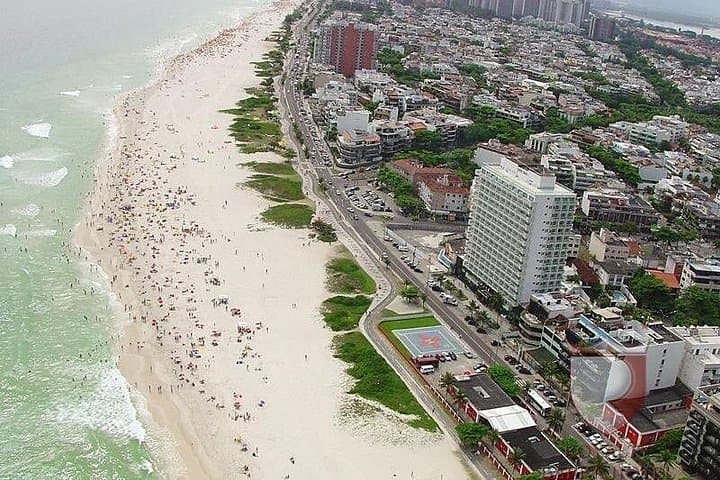
The rotor’s thrum rises and the city falls away: golden swells of Copacabana and Ipanema unfold below while the Tijuca Forest pushes a green shoulder up against urban sprawl. In a half hour the helicopter threads a route above Sugarloaf’s granite dome, sweeps past the outstretched Christ the Redeemer statue and traces the coastline from São Conrado to Barra.
The rotor’s thrum rises and the city falls away: golden swells of Copacabana and Ipanema unfold below while the Tijuca Forest pushes a green shoulder up against urban sprawl. In a half hour the helicopter threads a route above Sugarloaf’s granite dome, sweeps past the outstretched Christ the Redeemer statue and traces the coastline from São Conrado to Barra.
Rio’s landscape is pure contrasts — coastal sands, steep granite inselbergs and one of the world’s largest urban rainforests. Sugarloaf (Pão de Açúcar) is a granite monolith carved by millennia of erosion; Corcovado’s statue, completed in 1931, watches over neighborhoods whose culture centers on beach life, samba and futebol. From the air you see how colonial-era port development and modern apartment blocks meet preserved forest patches and informal settlements; pilots keep a respectful distance from favelas for safety and privacy.
Practical notes matter on a short flight: plan to arrive 20 minutes early, leave ample time for Rio traffic (allow an hour from Copacabana), and expect flights to vary with wind — 25–35 minutes is common. The operator enforces a total weight limit (roughly 360 kg per flight), staff may speak only Portuguese, and flights follow international safety standards with trained pilots and mechanics.
For photographers bring a fast lens and a polarizer; wear a light wind layer; hydrate before you fly to avoid headaches. This is a compact, high-impact way to read Rio’s geography and culture from an aerial vantage without intensive physical effort.