THE ADVENTURE COLLECTIVE® · Independent discovery and booking for outdoor travel

Soar above Iceland’s newest lava fields on a short helicopter flight from Reykjavík. Expect close-up views of recent eruptions, dramatic fissures, and an experience that’s as geological field trip as airborne spectacle.
Soar above Iceland’s newest lava fields on a short helicopter flight from Reykjavík. Expect close-up views of recent eruptions, dramatic fissures, and an experience that’s as geological field trip as airborne spectacle.
The helicopter rises, rotors slicing a cold, salt-steeped air as Reykjavík shrinks into a grid of roofs and harbor. Below, black glassy rivers of recent lava braid across the Reykjanes Peninsula; the new terrain looks purposeful, as if the earth itself is still arranging its work. From five or six seats you get an intimate, cinematic sweep: craters, fissures, and cooled pahoehoe that dare you to trace the lava’s path with your eyes.
Verified experiences and guided adventures in the surrounding area.
Operated by GlacierHeli · Grindavík, Southern Peninsula
The helicopter rises, rotors slicing a cold, salt-steeped air as Reykjavík shrinks into a grid of roofs and harbor. Below, black glassy rivers of recent lava braid across the Reykjanes Peninsula; the new terrain looks purposeful, as if the earth itself is still arranging its work. From five or six seats you get an intimate, cinematic sweep: craters, fissures, and cooled pahoehoe that dare you to trace the lava’s path with your eyes.
Reykjanes is a frontline of the Mid-Atlantic Ridge; eruptions at Fagradalsfjall and Geldingadalir since 2021 rewrote maps and drew scientists worldwide. Geology here is immediate — basalt flows, steam vents, and tectonic scars visible at flight level. Culturally, locals treat volcanic change as part of daily life: fishing ports, geothermal plants and spa towns like Grindavík and the Blue Lagoon sit cheek-by-jowl with raw geology.
Practical guidance: flights run 35–45 minutes and are weather-dependent; expect cancellations or reschedules in high winds or low visibility. Weight and passenger minimums apply — book earlier to lock a seat and request window seating. Dress in windproof layers and bring a camera with spare batteries; the cold at altitude drains devices fast. The ride is low-effort physically but high on sensory impact — be ready for sudden shifts in light and a panorama that emphasizes why Iceland keeps erupting onto travel lists. Keep to operator instructions on boarding, and remember that new lava is fragile and often off-limits on the ground; the safest, most complete view is from the air.
easy.
35–45 minutes.
No special fitness required; suitable for most travelers though boarding may require stepping up into the helicopter.
Operators typically offer a full refund or reschedule; check the specific policy but expect flexibility if cancellations are weather-related.
Yes — you’ll be asked to provide passenger weights at booking and there may be age or health restrictions; pregnant travelers are usually not recommended to fly.
Yes — photography is allowed; bring spare batteries and secure equipment during takeoff and landing as instructed by crew.
Flights depart near Reykjavík and fly roughly 19–30 km (12–19 miles) over the Reykjanes Peninsula to the eruption area; exact helipad location is provided at booking.
The Reykjanes Peninsula sits on the Mid-Atlantic Ridge; recent eruptions since 2021 at Fagradalsfjall and Geldingadalir dramatically altered the local landscape and scientific attention to the region.
New lava fields are fragile and often unstable; aerial viewing limits ground impact, but onshore visits should follow marked paths, heed closures, and practice leave-no-trace principles.
GlacierHeli operates guided outdoor trips and adventures with an emphasis on safety, stewardship, and memorable experiences.
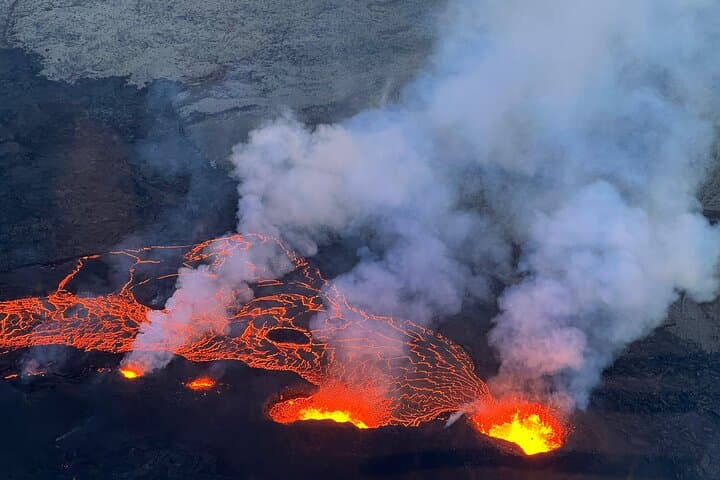

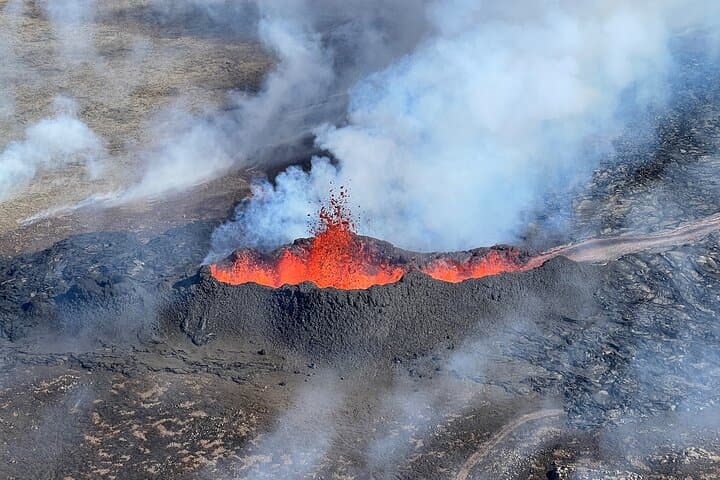

The helicopter rises, rotors slicing a cold, salt-steeped air as Reykjavík shrinks into a grid of roofs and harbor. Below, black glassy rivers of recent lava braid across the Reykjanes Peninsula; the new terrain looks purposeful, as if the earth itself is still arranging its work. From five or six seats you get an intimate, cinematic sweep: craters, fissures, and cooled pahoehoe that dare you to trace the lava’s path with your eyes.
The helicopter rises, rotors slicing a cold, salt-steeped air as Reykjavík shrinks into a grid of roofs and harbor. Below, black glassy rivers of recent lava braid across the Reykjanes Peninsula; the new terrain looks purposeful, as if the earth itself is still arranging its work. From five or six seats you get an intimate, cinematic sweep: craters, fissures, and cooled pahoehoe that dare you to trace the lava’s path with your eyes.
Reykjanes is a frontline of the Mid-Atlantic Ridge; eruptions at Fagradalsfjall and Geldingadalir since 2021 rewrote maps and drew scientists worldwide. Geology here is immediate — basalt flows, steam vents, and tectonic scars visible at flight level. Culturally, locals treat volcanic change as part of daily life: fishing ports, geothermal plants and spa towns like Grindavík and the Blue Lagoon sit cheek-by-jowl with raw geology.
Practical guidance: flights run 35–45 minutes and are weather-dependent; expect cancellations or reschedules in high winds or low visibility. Weight and passenger minimums apply — book earlier to lock a seat and request window seating. Dress in windproof layers and bring a camera with spare batteries; the cold at altitude drains devices fast. The ride is low-effort physically but high on sensory impact — be ready for sudden shifts in light and a panorama that emphasizes why Iceland keeps erupting onto travel lists. Keep to operator instructions on boarding, and remember that new lava is fragile and often off-limits on the ground; the safest, most complete view is from the air.