THE ADVENTURE COLLECTIVE® · Independent discovery and booking for outdoor travel

Rise over vineyards and reservoirs on a short helicopter circuit from Hoffnungsthal. This scenic flight gives birds‑eye views of Jacob's Creek tanks, the Whispering Wall and the southern Barossa ranges in a compact, photo‑friendly package.
Rise over vineyards and reservoirs on a short helicopter circuit from Hoffnungsthal. This scenic flight gives birds‑eye views of Jacob's Creek tanks, the Whispering Wall and the southern Barossa ranges in a compact, photo‑friendly package.
You lift off from Hoffnungsthal Valley and the world contracts to a ribbon of vineyards, ponds and patchwork paddocks; the helicopter hums and the Barossa spreads beneath you like a living map. Rows of vines arrange themselves into precise lines, the South Para reservoirs catch the light and the Whispering Wall cuts a clean curve through the hills. The air feels purposeful — the river dares you to follow its course from above.
Verified experiences and guided adventures in the surrounding area.
Operated by Barossa Helicopters · Tanunda, South Australia
You lift off from Hoffnungsthal Valley and the world contracts to a ribbon of vineyards, ponds and patchwork paddocks; the helicopter hums and the Barossa spreads beneath you like a living map. Rows of vines arrange themselves into precise lines, the South Para reservoirs catch the light and the Whispering Wall cuts a clean curve through the hills. The air feels purposeful — the river dares you to follow its course from above.
The Barossa is a region born of ancient geology and human craft. Granite and sedimentary outcrops push up through loam soils that feed vines planted since the 1840s by German settlers. Jacob’s Creek sits in the lowlands at Rowland Flat — its massive wine tanks are visible from the air, a modern industrial punctuation in a landscape shaped by centuries of farming.
Culturally the valley balances cellar doors and family-owned farms; small towns like Lyndoch and Tanunda still trade stories over bakery counters. From the sky you’ll notice mining scars of the Barossa Goldfields and the engineered curve of the Whispering Wall at the reservoirs — infrastructure that shaped local life as much as grapevines did.
Practical guidance: arrive 20–30 minutes early for a safety briefing; weight and seating are managed by crew for balance. Cameras are essential — leave loose items behind and stow hats. The flight is short (15–30 minutes), so plan transport back to town; mornings and late afternoons offer the best light and calmer air. Bring layered clothing, sunglasses and a charged phone; expect a smooth, easy aerial introduction to one of Australia’s most storied wine regions.
easy.
15–30 minutes.
Suitable for most fitness levels; must be able to board/exit step into a helicopter
The advertised scenic circuit runs about 15–30 minutes depending on routing and conditions; allow extra time for check‑in.
Yes — maximum individual weight and combined passenger limits apply for safety and seating balance; confirm when booking.
Children are permitted but must meet minimum height requirements (check operator); infants may ride in laps only if allowed and declared.
Flights are weather‑dependent; operators will cancel or reschedule if conditions are unsafe and offer refunds if cancelled at least 24 hours prior.
German settlers established vineyards in the mid‑19th century; the Barossa grew into a major wine region with infrastructure like Jacob’s Creek shaping its modern identity.
Operators follow no‑landing rules over sensitive reservoir infrastructure and request minimal noise on approach; stick to marked public access and respect private vineyards to limit impact.
Barossa Helicopters operates guided outdoor trips and adventures with an emphasis on safety, stewardship, and memorable experiences.
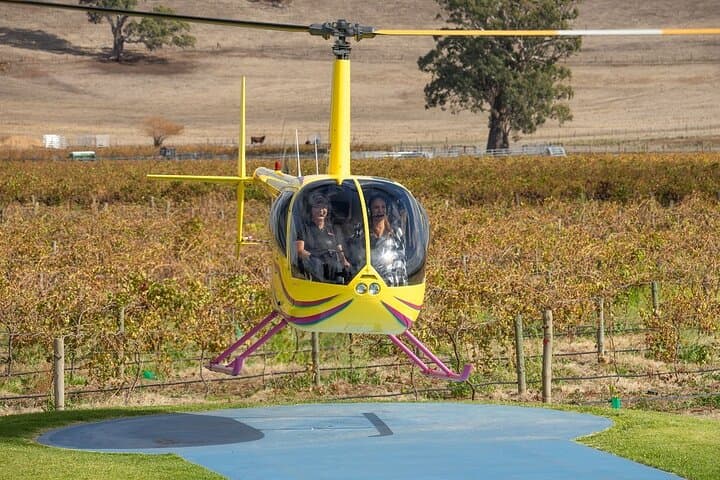
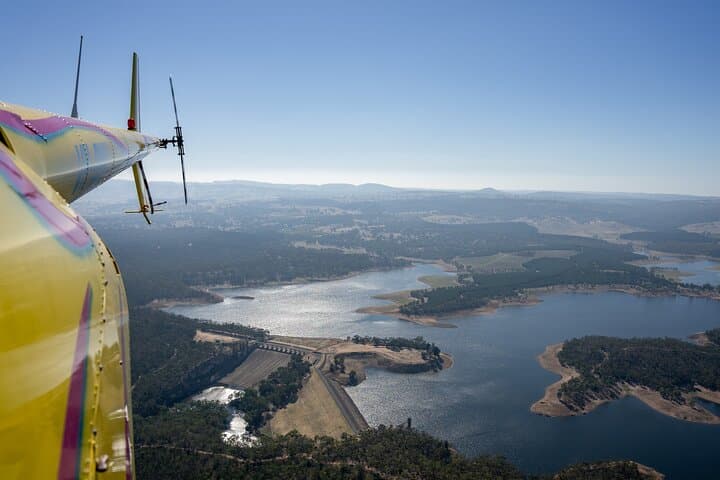
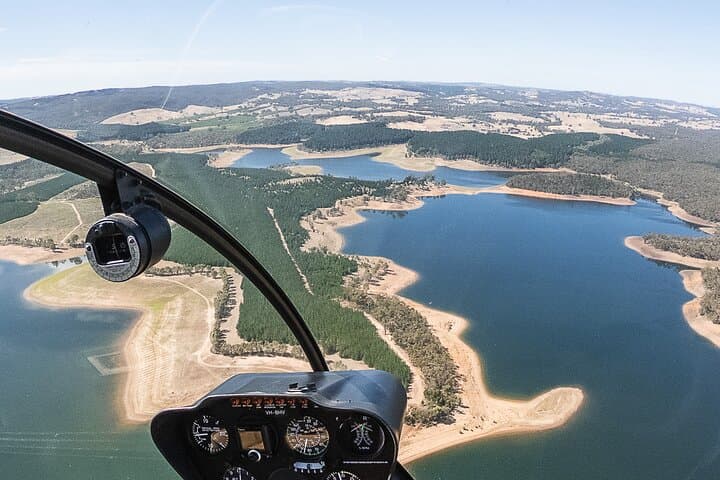
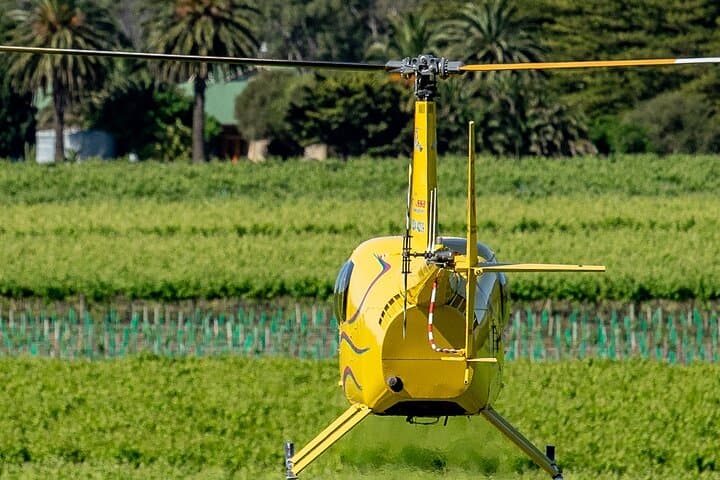
You lift off from Hoffnungsthal Valley and the world contracts to a ribbon of vineyards, ponds and patchwork paddocks; the helicopter hums and the Barossa spreads beneath you like a living map. Rows of vines arrange themselves into precise lines, the South Para reservoirs catch the light and the Whispering Wall cuts a clean curve through the hills. The air feels purposeful — the river dares you to follow its course from above.
You lift off from Hoffnungsthal Valley and the world contracts to a ribbon of vineyards, ponds and patchwork paddocks; the helicopter hums and the Barossa spreads beneath you like a living map. Rows of vines arrange themselves into precise lines, the South Para reservoirs catch the light and the Whispering Wall cuts a clean curve through the hills. The air feels purposeful — the river dares you to follow its course from above.
The Barossa is a region born of ancient geology and human craft. Granite and sedimentary outcrops push up through loam soils that feed vines planted since the 1840s by German settlers. Jacob’s Creek sits in the lowlands at Rowland Flat — its massive wine tanks are visible from the air, a modern industrial punctuation in a landscape shaped by centuries of farming.
Culturally the valley balances cellar doors and family-owned farms; small towns like Lyndoch and Tanunda still trade stories over bakery counters. From the sky you’ll notice mining scars of the Barossa Goldfields and the engineered curve of the Whispering Wall at the reservoirs — infrastructure that shaped local life as much as grapevines did.
Practical guidance: arrive 20–30 minutes early for a safety briefing; weight and seating are managed by crew for balance. Cameras are essential — leave loose items behind and stow hats. The flight is short (15–30 minutes), so plan transport back to town; mornings and late afternoons offer the best light and calmer air. Bring layered clothing, sunglasses and a charged phone; expect a smooth, easy aerial introduction to one of Australia’s most storied wine regions.