THE ADVENTURE COLLECTIVE® · Independent discovery and booking for outdoor travel

Ascend from Kathmandu into the Himalayan skyline on a private helicopter charter that overflies Lukla, the Khumbu Glacier, Kala Patthar and Everest Base Camp, with a scenic breakfast stop at Everest View Hotel. Learn what to expect, how to prepare, and essential safety details for this high-altitude aerial experience.
Ascend from Kathmandu into the Himalayan skyline on a private helicopter charter that overflies Lukla, the Khumbu Glacier, Kala Patthar and Everest Base Camp, with a scenic breakfast stop at Everest View Hotel. Learn what to expect, how to prepare, and essential safety details for this high-altitude aerial experience.
The morning begins before dawn at Kathmandu’s domestic terminal: rotors hum, mountain air sharpens, and the city falls away as the helicopter climbs toward the ragged silhouette of the Himalayas.
Verified experiences and guided adventures in the surrounding area.
Operated by Liberty Holidays · Kathmandu, Bagmati Province
The morning begins before dawn at Kathmandu’s domestic terminal: rotors hum, mountain air sharpens, and the city falls away as the helicopter climbs toward the ragged silhouette of the Himalayas.
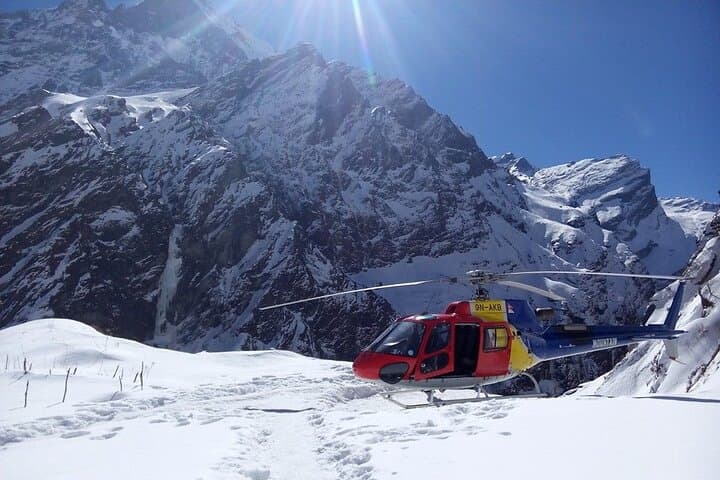
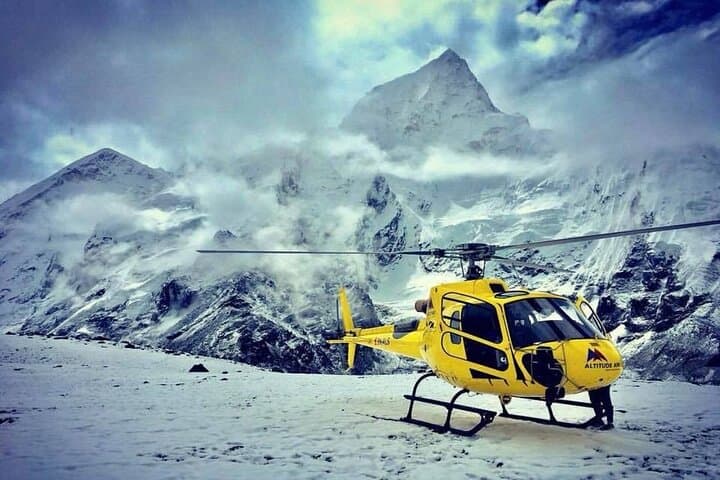
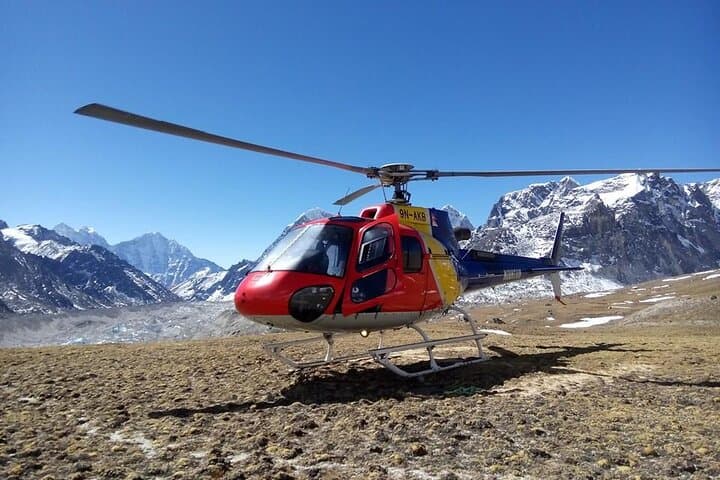
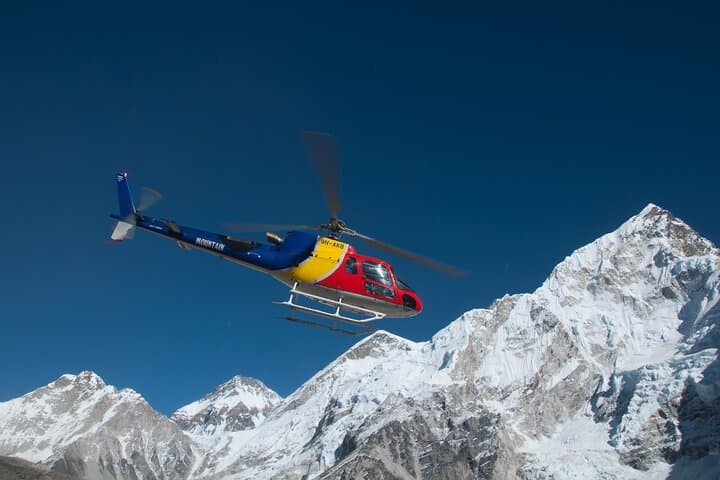
From the cabin you watch the Khumbu Valley unfold—sheets of ice carving through steep flanks, ridgelines catching the first light, and the needle of Everest rising above its neighbors. The flight follows classic routes over Lukla and the Khumbu Glacier, touches Syangboche for a breakfast stop at the Everest View Hotel, and circles Kala Patthar and Everest Base Camp for unobstructed aerial views.
This corridor of peaks is the product of the Indian and Eurasian plates colliding—young, uplifted rock still shedding loose scree and hosting glaciers that carve the terrain.
Sherpa villages dot the lower slopes; their culture has evolved around trade, high-altitude agriculture, and mountaineering support. Pilots brief visitors on safety, and local landing fees and oxygen provisions are standard practice at high elevations.
Practical guidance: book early-morning departures to maximize clear skies and reduced turbulence, and expect a total outing of about 4–5 hours including transfers. Dress in warm layers and closed shoes; temperatures at Syangboche can be near freezing even when Kathmandu is mild. Bring your passport for domestic aviation checks and keep camera batteries warm—the cold saps charge quickly. Travelers with serious cardiovascular, spinal, or pregnancy concerns should avoid this flight; emergency oxygen is carried, but altitude exposure still matters.
The trip is an efficient way to experience Everest’s scale without days of trekking—fast, vivid, and logistically compact for travelers pressed for time.
easy.
4–5 hours.
Minimal fitness required for the flight and short ground stops, but participants should be able to board ladders/steps and tolerate brief high-altitude exposure.
Plan on roughly 4–5 hours total including hotel pickup, airport transfers, flight legs, a brief refuel/overfly stop in Lukla, a 30-minute breakfast at Syangboche, and return to Kathmandu.
Flights overfly Everest Base Camp and Kala Patthar; landings take place at Syangboche (Everest View Hotel) for breakfast—landing at EBC itself is not typical or permitted.
Helicopter charters enforce strict weight and size limits for safety and balance; expect limits on checked or cabin baggage and be prepared to provide passenger weights at booking.
Those with serious heart conditions, recent spinal injuries, pregnancy, or severe altitude sickness history should not participate; operators usually advise against travel for people over 70 without medical clearance.
The Everest region has long been inhabited by Sherpa communities who developed high-altitude expertise; mountaineering routes expanded after the 1953 Everest ascent.
The Khumbu area is within Sagarmatha National Park, where trekking and aviation operations follow permit systems to limit impacts and fund local conservation and community projects.
Liberty Holidays operates guided outdoor trips and adventures with an emphasis on safety, stewardship, and memorable experiences.
The morning begins before dawn at Kathmandu’s domestic terminal: rotors hum, mountain air sharpens, and the city falls away as the helicopter climbs toward the ragged silhouette of the Himalayas.
The morning begins before dawn at Kathmandu’s domestic terminal: rotors hum, mountain air sharpens, and the city falls away as the helicopter climbs toward the ragged silhouette of the Himalayas.
From the cabin you watch the Khumbu Valley unfold—sheets of ice carving through steep flanks, ridgelines catching the first light, and the needle of Everest rising above its neighbors. The flight follows classic routes over Lukla and the Khumbu Glacier, touches Syangboche for a breakfast stop at the Everest View Hotel, and circles Kala Patthar and Everest Base Camp for unobstructed aerial views.
This corridor of peaks is the product of the Indian and Eurasian plates colliding—young, uplifted rock still shedding loose scree and hosting glaciers that carve the terrain.
Sherpa villages dot the lower slopes; their culture has evolved around trade, high-altitude agriculture, and mountaineering support. Pilots brief visitors on safety, and local landing fees and oxygen provisions are standard practice at high elevations.
Practical guidance: book early-morning departures to maximize clear skies and reduced turbulence, and expect a total outing of about 4–5 hours including transfers. Dress in warm layers and closed shoes; temperatures at Syangboche can be near freezing even when Kathmandu is mild. Bring your passport for domestic aviation checks and keep camera batteries warm—the cold saps charge quickly. Travelers with serious cardiovascular, spinal, or pregnancy concerns should avoid this flight; emergency oxygen is carried, but altitude exposure still matters.
The trip is an efficient way to experience Everest’s scale without days of trekking—fast, vivid, and logistically compact for travelers pressed for time.