THE ADVENTURE COLLECTIVE® · Independent discovery and booking for outdoor travel

Combine a 20‑minute helicopter flight over Angkor’s temple plain with a private overland circuit of Angkor Wat, Angkor Thom, the Bayon and Ta Prohm. Expect sweeping aerial perspective followed by close-up archaeology, Khmer lunch and six to seven hours of guided exploration.
Combine a 20‑minute helicopter flight over Angkor’s temple plain with a private overland circuit of Angkor Wat, Angkor Thom, the Bayon and Ta Prohm. Expect sweeping aerial perspective followed by close-up archaeology, Khmer lunch and six to seven hours of guided exploration.
Dawn light strips the jungle roof in thin gold as the helicopter lifts from Siem Reap and the Angkor plain unfolds—stone galleries, temple towers and the broad moat of Angkor Wat shrinking into a detailed relief beneath you.
Verified experiences and guided adventures in the surrounding area.
Operated by Green Era Travel · Siem Reap, Siem Reap Province
Dawn light strips the jungle roof in thin gold as the helicopter lifts from Siem Reap and the Angkor plain unfolds—stone galleries, temple towers and the broad moat of Angkor Wat shrinking into a detailed relief beneath you.
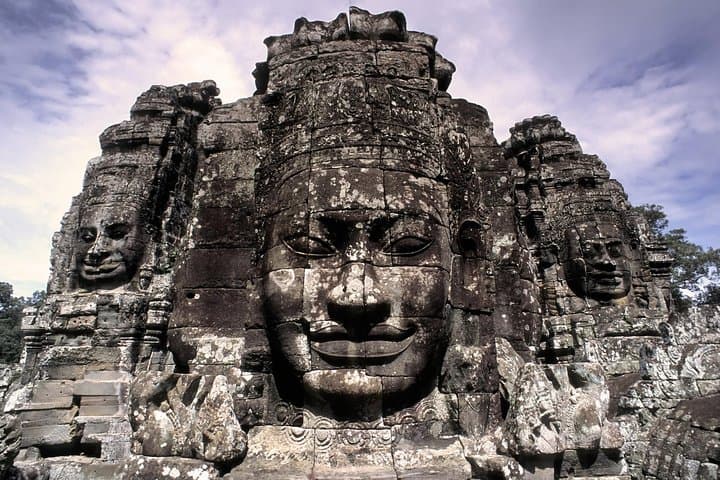
The experience pairs a 20‑minute aerial reconnaissance of the UNESCO archaeological park with a full overland circuit: Angkor Wat’s bas‑reliefs, the carved faces of the Bayon, the elevated terraces and the root‑entwined ruins of Ta Prohm. The aerial view clarifies the Khmer city grid and the symbolic relationship of temples to the cosmological Mount Meru; on the ground the layers of laterite, sandstone and centuries of monastic life become tactile.
Geology here is mostly sandstone quarried nearby and fitted into corbelled lintels; the flat floodplain shaped the Khmer water management system—barays (ancient reservoirs) and moats that still define circulation.
Culturally, the circuit illustrates the shift from Hindu to Mahayana Buddhist patronage under Jayavarman VII, whose imprint is obvious in Ta Prohm and Angkor Thom’s civic scale.
Practical notes: plan for 6–7 hours including transfers, allow for uneven steps and damp shade, and expect a mix of short walks and stair climbs. Helicopter flights are weather dependent—book morning slots for gentler winds and light. Bring insect repellent, sun protection and modest clothing for temple entry. Hydrate early and carry small bills for onsite donations or snacks. The aerial segment gives a compact orientation; the ground tour delivers the close, sensory archaeology that the flyover promises.
moderate.
6–7 hours.
Moderate fitness required—able to walk several kilometers on uneven ground and climb stone steps.
Helicopter operators typically restrict pregnant passengers and require children under supervision; check provider rules and disclose health conditions before booking.
The tour includes a 1‑day Angkor Wat entrance ticket as stated, but additional or extended passes are the traveller’s responsibility.
Modest dress is required—cover shoulders and knees; avoid revealing clothing to respect local customs and gain access to inner areas.
Flights are weather dependent; operators may refund the flight fee or reschedule and continue the ground tour where possible—confirm the policy at booking.
Angkor was the seat of the Khmer Empire (9th–15th centuries) and its monumental planning reflects hydraulic engineering and royal cosmology, especially under Jayavarman VII in the 12th–13th centuries.
The park balances tourism with preservation—stay on marked paths, avoid touching bas‑reliefs and support local conservation initiatives to minimize wear on fragile stone.
Green Era Travel operates guided outdoor trips and adventures with an emphasis on safety, stewardship, and memorable experiences.


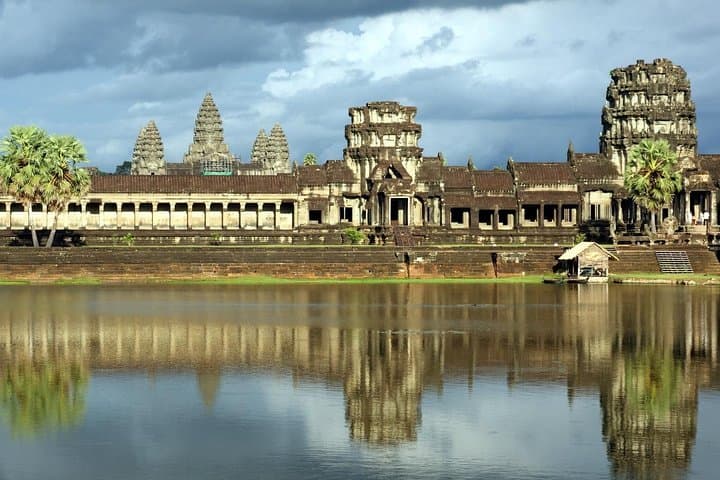
Dawn light strips the jungle roof in thin gold as the helicopter lifts from Siem Reap and the Angkor plain unfolds—stone galleries, temple towers and the broad moat of Angkor Wat shrinking into a detailed relief beneath you.
Dawn light strips the jungle roof in thin gold as the helicopter lifts from Siem Reap and the Angkor plain unfolds—stone galleries, temple towers and the broad moat of Angkor Wat shrinking into a detailed relief beneath you.
The experience pairs a 20‑minute aerial reconnaissance of the UNESCO archaeological park with a full overland circuit: Angkor Wat’s bas‑reliefs, the carved faces of the Bayon, the elevated terraces and the root‑entwined ruins of Ta Prohm. The aerial view clarifies the Khmer city grid and the symbolic relationship of temples to the cosmological Mount Meru; on the ground the layers of laterite, sandstone and centuries of monastic life become tactile.
Geology here is mostly sandstone quarried nearby and fitted into corbelled lintels; the flat floodplain shaped the Khmer water management system—barays (ancient reservoirs) and moats that still define circulation.
Culturally, the circuit illustrates the shift from Hindu to Mahayana Buddhist patronage under Jayavarman VII, whose imprint is obvious in Ta Prohm and Angkor Thom’s civic scale.
Practical notes: plan for 6–7 hours including transfers, allow for uneven steps and damp shade, and expect a mix of short walks and stair climbs. Helicopter flights are weather dependent—book morning slots for gentler winds and light. Bring insect repellent, sun protection and modest clothing for temple entry. Hydrate early and carry small bills for onsite donations or snacks. The aerial segment gives a compact orientation; the ground tour delivers the close, sensory archaeology that the flyover promises.