THE ADVENTURE COLLECTIVE® · Independent discovery and booking for outdoor travel

Lift off from Skaftafell and land on Vatnajökull for an up-close hour among icefalls, crevasse fields and volcanic ridgelines. This 60-minute helicopter tour pairs aerial perspective with a brief on-glacier landing—weather permitting.
Lift off from Skaftafell and land on Vatnajökull for an up-close hour among icefalls, crevasse fields and volcanic ridgelines. This 60-minute helicopter tour pairs aerial perspective with a brief on-glacier landing—weather permitting.
A low thrum grows beneath you as the helicopter lifts from the Skaftafell Terminal and the ring-road falls away. Below, blue ice ribs and black-sand plains unfold; the pilot tilts the aircraft and the ice cap’s texture—crevasses, moulins, and sculpted glacier tongues—comes into focus. When the skids touch a chosen glacier terrace, the rotor wash scatters the silence and the land, momentarily alive, seems to breathe around you.
Verified experiences and guided adventures in the surrounding area.
Operated by Atlantsflug/Flightseeing · Skaftafell, Suðurland
A low thrum grows beneath you as the helicopter lifts from the Skaftafell Terminal and the ring-road falls away. Below, blue ice ribs and black-sand plains unfold; the pilot tilts the aircraft and the ice cap’s texture—crevasses, moulins, and sculpted glacier tongues—comes into focus. When the skids touch a chosen glacier terrace, the rotor wash scatters the silence and the land, momentarily alive, seems to breathe around you.
Vatnajökull is Europe’s largest ice cap; its scale is the product of long winters, volcanic fire, and repeated jökulhlaups (glacial outburst floods) that carved the outwash plains. The Öræfajökull massif, whose summit hides Iceland’s tallest peak, is a volcanic heart that has shaped local histories—from early settlement routes to modern rescue infrastructure.
Culture here is practical and weather-wise: communities learned to read wind and snow, and today guides, pilots and park managers balance access with safety. Expect sharp light, sudden wind, and horizons that alternate between cobalt sky and veiled glacial mist.
Practical guidance: the flight lasts about 60 minutes; dress in warm layers and a windproof shell, wear sturdy boots for the short on-glacier time, and bring a camera with a fast shutter for movement. Flights are weather-dependent and may be rescheduled; travelers over 120 kg may need to buy an extra 50% seat for weight balance. Allow extra time for check-in at the Skaftafell Terminal on Route 1, and avoid loose bags in the cabin—use straps or secure pockets. If you’re prone to motion sickness, take precautions before boarding; otherwise, arrive ready to stare down one of Iceland’s most elemental ice landscapes.
easy.
1 hour.
Suitable for all fitness levels; the landing requires only short, level walking on compacted snow or firm glacier surface
The advertised duration is approximately 60 minutes; the exact on-glacier landing time varies with conditions but typically lasts several minutes for photos and short exploration.
Flights are weather-dependent; the operator will cancel or reschedule unsafe flights and offers a full refund if canceled at least 24 hours prior under their policy.
Infants are not recommended on shared flights; contact the operator about private options and specific child-safety requirements.
No technical glacier skills are required—the landing is supervised by the pilot and guides, but avoid walking beyond the marked landing area and follow instructions.
Skaftafell was an independent nature reserve until it joined Vatnajökull National Park in 2008; the landscape records both volcanic eruptions from Öræfajökull and massive glacial floods.
Landing sites and flight paths are managed to minimize disturbance to fragile ice and wildlife; stick to crew directions and avoid trampling moraine vegetation.
Atlantsflug/Flightseeing operates guided outdoor trips and adventures with an emphasis on safety, stewardship, and memorable experiences.
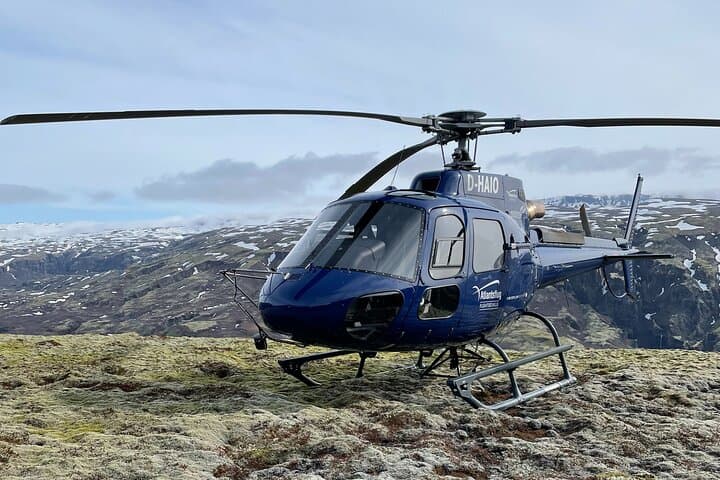
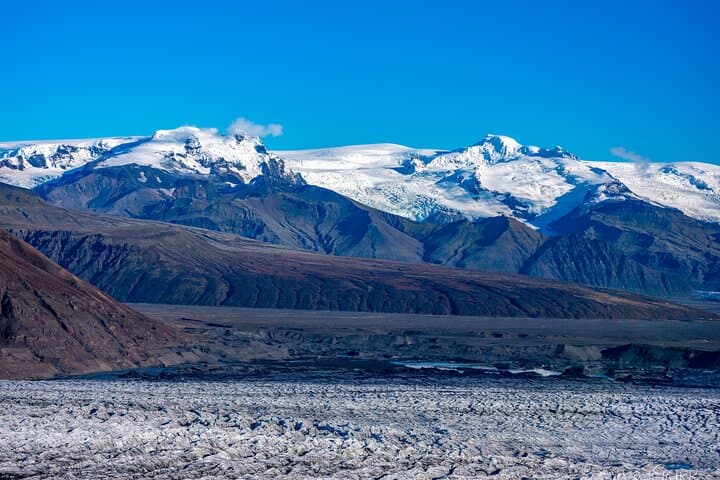
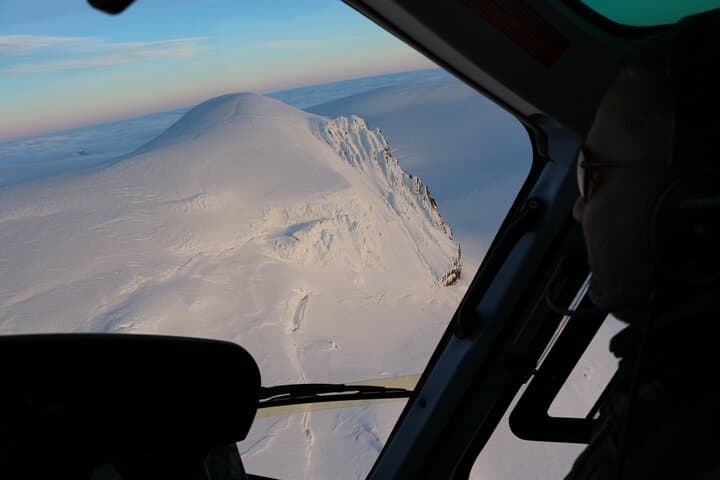
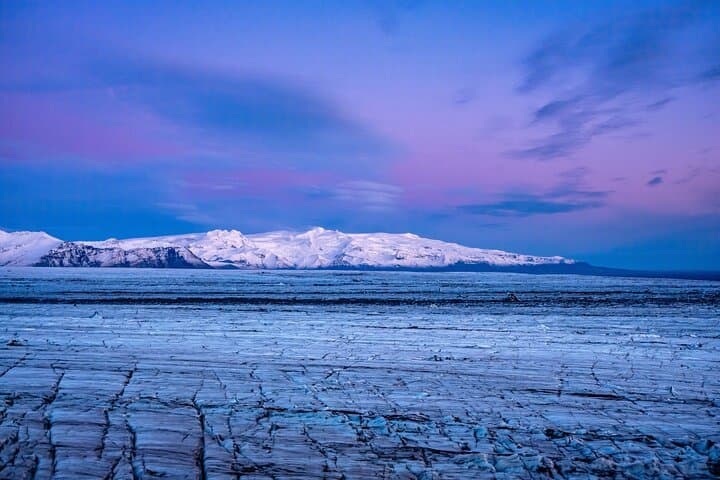
A low thrum grows beneath you as the helicopter lifts from the Skaftafell Terminal and the ring-road falls away. Below, blue ice ribs and black-sand plains unfold; the pilot tilts the aircraft and the ice cap’s texture—crevasses, moulins, and sculpted glacier tongues—comes into focus. When the skids touch a chosen glacier terrace, the rotor wash scatters the silence and the land, momentarily alive, seems to breathe around you.
A low thrum grows beneath you as the helicopter lifts from the Skaftafell Terminal and the ring-road falls away. Below, blue ice ribs and black-sand plains unfold; the pilot tilts the aircraft and the ice cap’s texture—crevasses, moulins, and sculpted glacier tongues—comes into focus. When the skids touch a chosen glacier terrace, the rotor wash scatters the silence and the land, momentarily alive, seems to breathe around you.
Vatnajökull is Europe’s largest ice cap; its scale is the product of long winters, volcanic fire, and repeated jökulhlaups (glacial outburst floods) that carved the outwash plains. The Öræfajökull massif, whose summit hides Iceland’s tallest peak, is a volcanic heart that has shaped local histories—from early settlement routes to modern rescue infrastructure.
Culture here is practical and weather-wise: communities learned to read wind and snow, and today guides, pilots and park managers balance access with safety. Expect sharp light, sudden wind, and horizons that alternate between cobalt sky and veiled glacial mist.
Practical guidance: the flight lasts about 60 minutes; dress in warm layers and a windproof shell, wear sturdy boots for the short on-glacier time, and bring a camera with a fast shutter for movement. Flights are weather-dependent and may be rescheduled; travelers over 120 kg may need to buy an extra 50% seat for weight balance. Allow extra time for check-in at the Skaftafell Terminal on Route 1, and avoid loose bags in the cabin—use straps or secure pockets. If you’re prone to motion sickness, take precautions before boarding; otherwise, arrive ready to stare down one of Iceland’s most elemental ice landscapes.