THE ADVENTURE COLLECTIVE® · Independent discovery and booking for outdoor travel

Fly from Pokhara into the Annapurna Sanctuary and land at Base Camp for one of the most direct Himalayan experiences available—an hour that trades days on trail for sweeping, high-altitude panoramas. Read on for seasonal timing, practical prep, and what to expect on the ground.
Fly from Pokhara into the Annapurna Sanctuary and land at Base Camp for one of the most direct Himalayan experiences available—an hour that trades days on trail for sweeping, high-altitude panoramas. Read on for seasonal timing, practical prep, and what to expect on the ground.
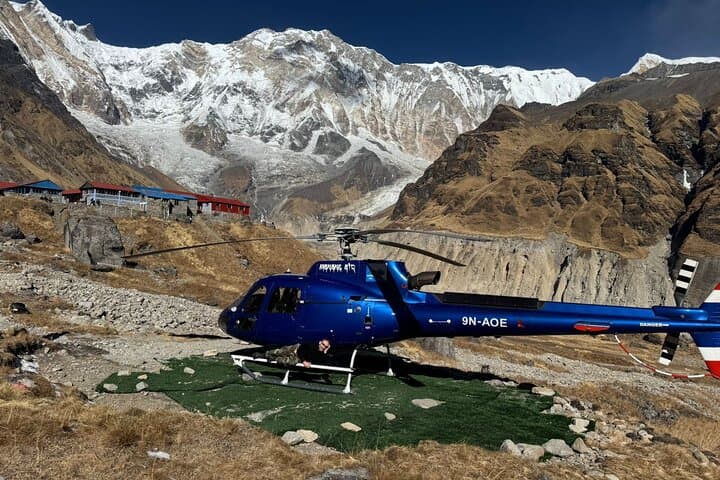
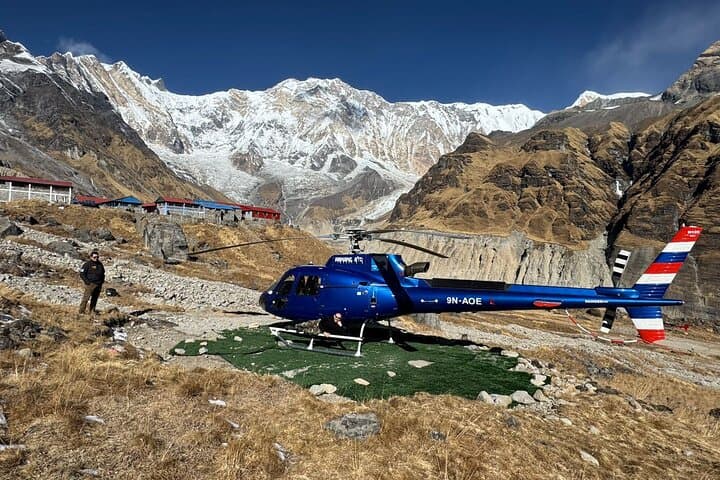
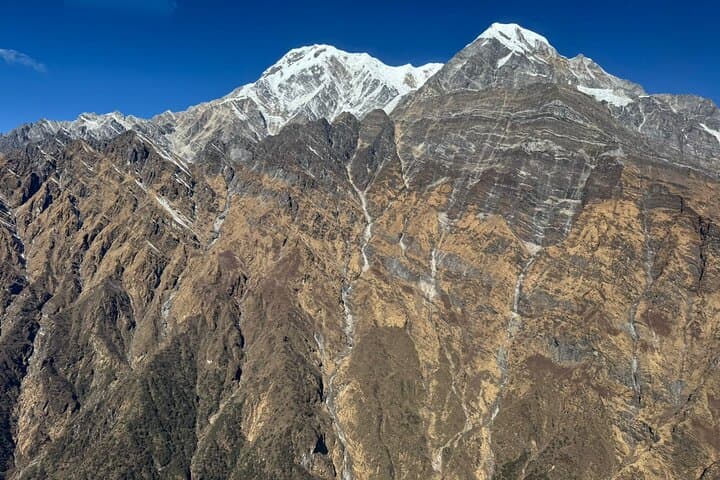
You lift off from Pokhara into a thinning sky and the landscape rearranges itself: terraced fields compress into quilted patches, villages recede, and the Annapurna massif moves forward like a living wall of stone. In an hour the helicopter carries you to 4,130 m—wheels biting snow-dusted moraine—and a landing inside the Annapurna Sanctuary places you face-to-face with jagged ridgelines and a bowl of glaciers.
Verified experiences and guided adventures in the surrounding area.
Operated by Himalaya Holiday service Pvt. Ltd.(HHS) · Pokhara, Gandaki Province
You lift off from Pokhara into a thinning sky and the landscape rearranges itself: terraced fields compress into quilted patches, villages recede, and the Annapurna massif moves forward like a living wall of stone. In an hour the helicopter carries you to 4,130 m—wheels biting snow-dusted moraine—and a landing inside the Annapurna Sanctuary places you face-to-face with jagged ridgelines and a bowl of glaciers.
The Annapurna range has long been home to Gurung and Magar communities and to climbers since Maurice Herzog’s 1950s era first ascents. Geologically it’s a young, uplifted section of the Himalaya—steep, folded rock and active glaciation that sculpts sudden cliffs and deep valleys. Culturally the hills below the massif host small farm settlements where stone terraces and rhododendron-clad slopes mark seasonal rhythms.
Practically, this is a flight for people who want big views without days on trail. Flights are weather-dependent—clear autumn and spring mornings give the best visibility; monsoon months often close the route. Expect a pre-dawn pickup in Pokhara, light briefing, and shared seating; weight and passenger limits apply. Dress in warm layers (temperatures fall sharply at altitude), bring sun protection and a camera, and allow time to acclimatize if you’ve come from sea level.
On arrival, spend 20–40 minutes on the ground taking in the scale; the air here bites and moves with its own intent. The pilot will judge landing safety—be ready for last-minute changes. For a concentrated Himalayan encounter, the Pokhara-to-ABC helicopter landing is direct, dramatic, and unapologetically elemental.
easy.
1 hour.
No special fitness required for the flight itself; able-bodied participants should be able to step into and out of the helicopter and tolerate brief high-altitude exposure.
No—landings depend on clear weather, pilot assessment, and visibility; flights may operate as flyovers or be canceled for safety.
Yes—shared flights allocate seats based on total passenger weight. You must declare accurate weights at booking and check-in.
Not recommended; operators typically advise against flying pregnant passengers due to altitude and safety considerations.
Short visits are generally tolerated, but if you’ve come from low altitude, allow a day in Pokhara to adjust and monitor for any symptoms of altitude sickness.
The Annapurna massif has been central to local Gurung and Magar communities and entered mountaineering history with early mid-20th century expeditions that opened Himalayan climbing to the world.
The Sanctuary is ecologically fragile; avoid leaving waste during landings, respect marked paths, and support operators who follow strict landing and waste protocols to limit footprint.
Himalaya Holiday service Pvt. Ltd.(HHS) operates guided outdoor trips and adventures with an emphasis on safety, stewardship, and memorable experiences.

You lift off from Pokhara into a thinning sky and the landscape rearranges itself: terraced fields compress into quilted patches, villages recede, and the Annapurna massif moves forward like a living wall of stone. In an hour the helicopter carries you to 4,130 m—wheels biting snow-dusted moraine—and a landing inside the Annapurna Sanctuary places you face-to-face with jagged ridgelines and a bowl of glaciers.
You lift off from Pokhara into a thinning sky and the landscape rearranges itself: terraced fields compress into quilted patches, villages recede, and the Annapurna massif moves forward like a living wall of stone. In an hour the helicopter carries you to 4,130 m—wheels biting snow-dusted moraine—and a landing inside the Annapurna Sanctuary places you face-to-face with jagged ridgelines and a bowl of glaciers.
The Annapurna range has long been home to Gurung and Magar communities and to climbers since Maurice Herzog’s 1950s era first ascents. Geologically it’s a young, uplifted section of the Himalaya—steep, folded rock and active glaciation that sculpts sudden cliffs and deep valleys. Culturally the hills below the massif host small farm settlements where stone terraces and rhododendron-clad slopes mark seasonal rhythms.
Practically, this is a flight for people who want big views without days on trail. Flights are weather-dependent—clear autumn and spring mornings give the best visibility; monsoon months often close the route. Expect a pre-dawn pickup in Pokhara, light briefing, and shared seating; weight and passenger limits apply. Dress in warm layers (temperatures fall sharply at altitude), bring sun protection and a camera, and allow time to acclimatize if you’ve come from sea level.
On arrival, spend 20–40 minutes on the ground taking in the scale; the air here bites and moves with its own intent. The pilot will judge landing safety—be ready for last-minute changes. For a concentrated Himalayan encounter, the Pokhara-to-ABC helicopter landing is direct, dramatic, and unapologetically elemental.