THE ADVENTURE COLLECTIVE® · Independent discovery and booking for outdoor travel

A two-hour alpine loop that pairs helicopter flightseeing with an hour of dogsledding and a lower-glacier landing. Expect rotor-swept landings on hard ice, time with Alaskan sled dogs, and close-up views of crevasses and blue melt pools.
A two-hour alpine loop that pairs helicopter flightseeing with an hour of dogsledding and a lower-glacier landing. Expect rotor-swept landings on hard ice, time with Alaskan sled dogs, and close-up views of crevasses and blue melt pools.
Sunlight slashes across a field of compressed blue ice as the chopper eases down—rotors stirring a wind that carries the scent of snow and diesel. You step onto a high glacier, where sled dogs bark and circle, eager and steady on a surface shaped by millennia of ice. For the next hour you’ll switch perspectives: pilot’s-eye flightseeing above serrated crevasses, then the low, thrilling rhythm of a dogsled team on real snow.
Verified experiences and guided adventures in the surrounding area.
Operated by Alaska Helicopter Tours · Anchorage, Alaska
Sunlight slashes across a field of compressed blue ice as the chopper eases down—rotors stirring a wind that carries the scent of snow and diesel. You step onto a high glacier, where sled dogs bark and circle, eager and steady on a surface shaped by millennia of ice. For the next hour you’ll switch perspectives: pilot’s-eye flightseeing above serrated crevasses, then the low, thrilling rhythm of a dogsled team on real snow.
The Knik Glacier sits at the edge of Alaska’s Chugach Range, a landscape carved by repeated advances and retreats of ice that have shaped local river corridors and forests. Indigenous Athabaskan people and later prospectors used these valleys for travel and subsistence; today small seasonal dog camps continue a long Alaskan mushing tradition. Geologically, the glacier’s lower ice reveals dense blue melt pools and crevasse patterns that betray differential stress and meltwater erosion.
Practically, expect roughly two hours total: ~30 minutes flightseeing, one hour on the glacier (including a ~30-minute sled ride), plus glacier-side exploration at lower ice. Operator briefings cover safety, and staff provide waterproof overboots. Weather and weight limits govern aircraft load; cancellations are possible for safety.
Bring layers that trap warmth and shed wind, a camera with extra batteries, and a readiness to stand on runners or sit comfortably on the sled. Timing morning flights for clearer light is advisable, and leave drones, loose straps, and open flames behind. This trip mixes aerial perspective, hands-on mushing, and close glacier study—an active two-hour window into Alaska’s dynamic ice and its working-dog culture.
moderate.
2 hours.
Suitable for most fitness levels; you should be able to stand for short intervals and follow safety instructions.
Passengers of all ages can ride but infants must sit on laps; there is a comfort surcharge and safety policy for passengers over 250 lbs—operators collect weight information during booking.
Yes—participants may stand on the runners and mush their own team when conditions and the musher permit; guides will advise who can safely take the runners.
Flights are weather-dependent; the operator may cancel for safety with a full refund if done at least 24 hours prior, or per their cancellation policy if closer to departure.
No—drones, smoking items, firearms, and loose bags/straps are not permitted; lockers are typically available to store belongings during the tour.
The Knik Glacier and surrounding valleys have long been travel and subsistence corridors for Athabaskan peoples; modern mushing continues a practical and cultural presence on the ice.
Glacial retreat is ongoing—stay on marked paths, follow guide instructions, and avoid disturbing melt pools and fragile ice features to minimize impact.
Alaska Helicopter Tours operates guided outdoor trips and adventures with an emphasis on safety, stewardship, and memorable experiences.
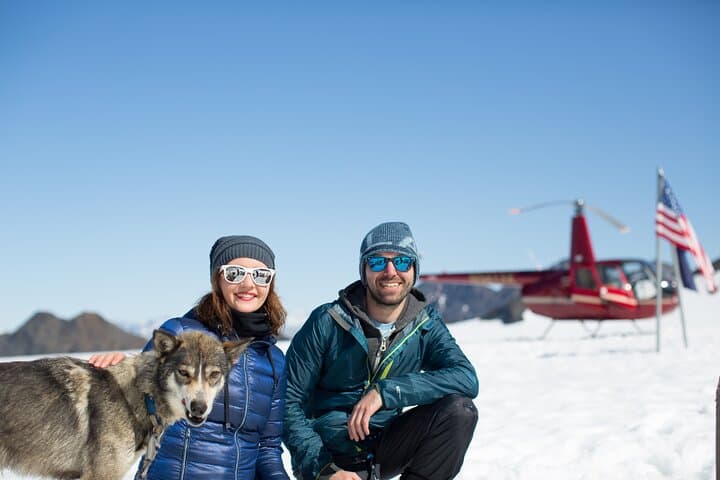
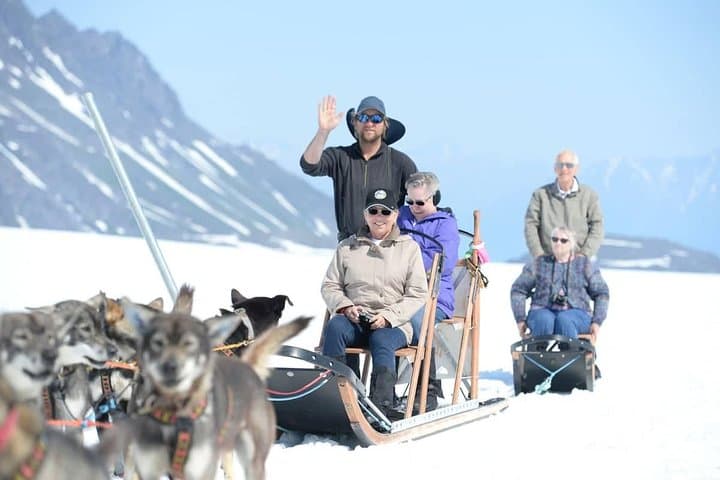
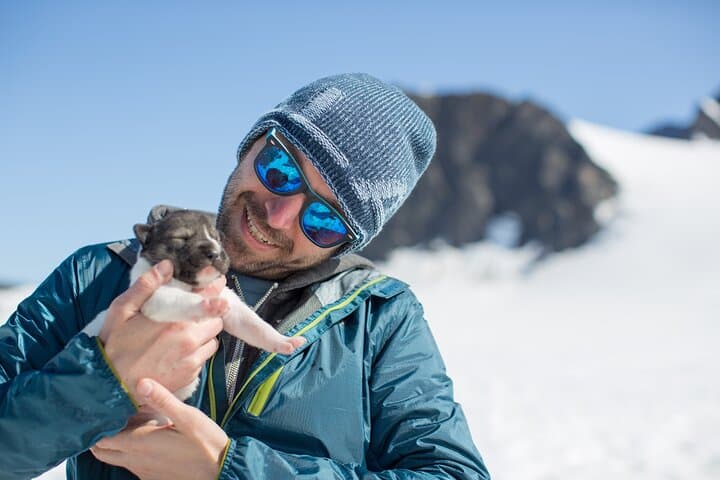
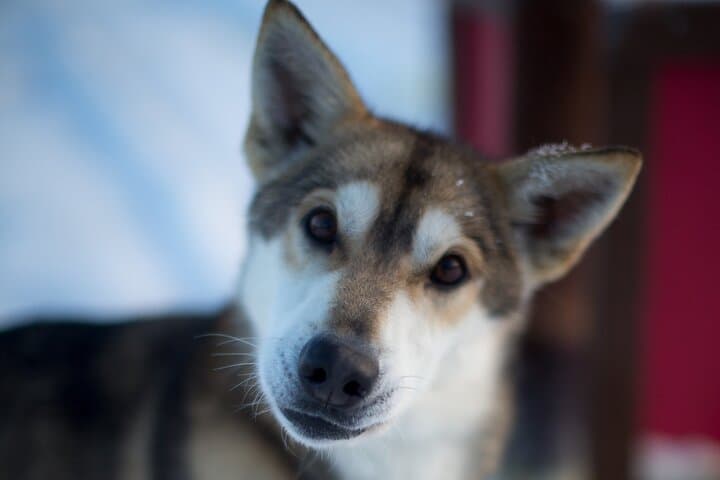
Sunlight slashes across a field of compressed blue ice as the chopper eases down—rotors stirring a wind that carries the scent of snow and diesel. You step onto a high glacier, where sled dogs bark and circle, eager and steady on a surface shaped by millennia of ice. For the next hour you’ll switch perspectives: pilot’s-eye flightseeing above serrated crevasses, then the low, thrilling rhythm of a dogsled team on real snow.
Sunlight slashes across a field of compressed blue ice as the chopper eases down—rotors stirring a wind that carries the scent of snow and diesel. You step onto a high glacier, where sled dogs bark and circle, eager and steady on a surface shaped by millennia of ice. For the next hour you’ll switch perspectives: pilot’s-eye flightseeing above serrated crevasses, then the low, thrilling rhythm of a dogsled team on real snow.
The Knik Glacier sits at the edge of Alaska’s Chugach Range, a landscape carved by repeated advances and retreats of ice that have shaped local river corridors and forests. Indigenous Athabaskan people and later prospectors used these valleys for travel and subsistence; today small seasonal dog camps continue a long Alaskan mushing tradition. Geologically, the glacier’s lower ice reveals dense blue melt pools and crevasse patterns that betray differential stress and meltwater erosion.
Practically, expect roughly two hours total: ~30 minutes flightseeing, one hour on the glacier (including a ~30-minute sled ride), plus glacier-side exploration at lower ice. Operator briefings cover safety, and staff provide waterproof overboots. Weather and weight limits govern aircraft load; cancellations are possible for safety.
Bring layers that trap warmth and shed wind, a camera with extra batteries, and a readiness to stand on runners or sit comfortably on the sled. Timing morning flights for clearer light is advisable, and leave drones, loose straps, and open flames behind. This trip mixes aerial perspective, hands-on mushing, and close glacier study—an active two-hour window into Alaska’s dynamic ice and its working-dog culture.