THE ADVENTURE COLLECTIVE® · Independent discovery and booking for outdoor travel

A short helicopter flight transforms Milford Sound into a gallery of vertical rock, plunging waterfalls and narrow passages. In 15–25 minutes you’ll circle Mitre Peak, glide over Bowen Falls and get a perspective of Fiordland few visitors ever see.
A short helicopter flight transforms Milford Sound into a gallery of vertical rock, plunging waterfalls and narrow passages. In 15–25 minutes you’ll circle Mitre Peak, glide over Bowen Falls and get a perspective of Fiordland few visitors ever see.
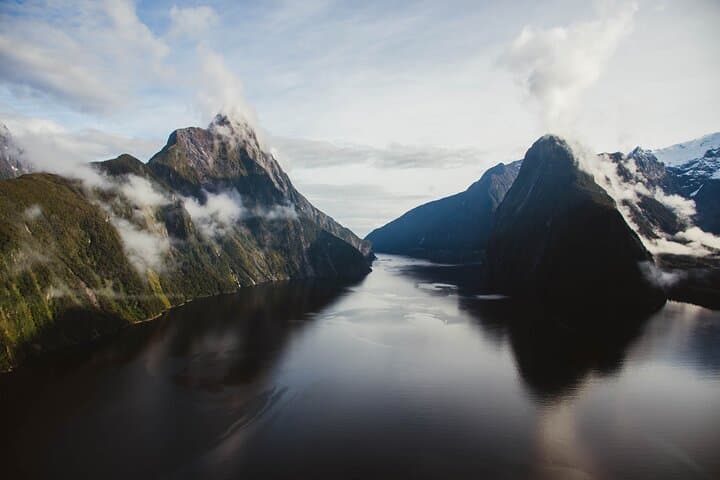
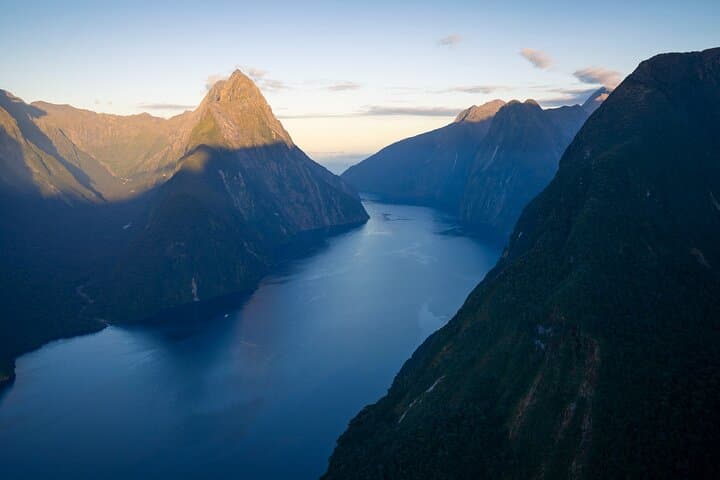
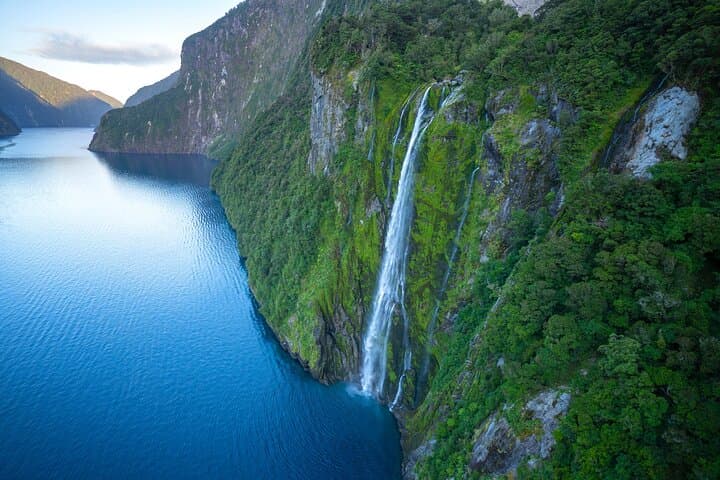
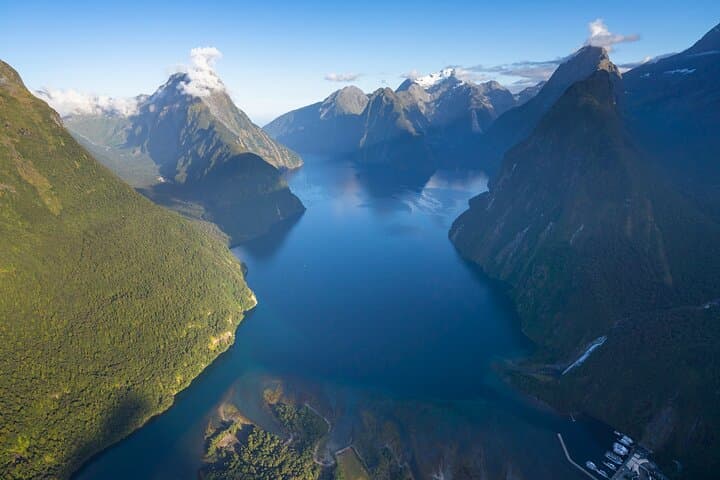
The helicopter lifts off from the small Milford airstrip and the world tightens into a cathedral of stone and water. Below, the fjord’s black water threads between vertical walls; Bowen Falls peels off the cliffs like white silk. The pilot banks and Mitre Peak fills the windscreen — a needle of rock rising 1,690 meters straight from the sea, its ridges cutting clean lines against the sky. The aircraft hums, headsets deliver live commentary, and for 15–25 minutes the soundscape is engine and breath and the occasional squawk of a seabird.
Verified experiences and guided adventures in the surrounding area.
Operated by Milford Helicopters · Milford Sound, Southland
The helicopter lifts off from the small Milford airstrip and the world tightens into a cathedral of stone and water. Below, the fjord’s black water threads between vertical walls; Bowen Falls peels off the cliffs like white silk. The pilot banks and Mitre Peak fills the windscreen — a needle of rock rising 1,690 meters straight from the sea, its ridges cutting clean lines against the sky. The aircraft hums, headsets deliver live commentary, and for 15–25 minutes the soundscape is engine and breath and the occasional squawk of a seabird.
Geology here reads like a slow-motion drama: Fiordland’s cliffs were chiselled by Pleistocene glaciers, leaving hanging valleys and plunging waterfalls that still carve the rock. Māori called the area Piopiotahi — a name tied to local creation stories — and European sealers and surveyors later mapped the fjords. Today Milford Sound sits inside Fiordland National Park and the larger Te Wahipounamu World Heritage Area, a protected landscape where weather can change with audacious speed and where the mountains still seem to have the final say.
From above you see relationships not visible from the water — how tributary valleys feed Bowen and other falls, how a single spur can split light and shadow across the face of Mitre Peak. Wildlife shows too: fur seals haul out on rocky skerries, dolphins arc in the fjord’s quieter bays, and on rare afternoons a crested penguin might be spotted working the shallows.
Practical realities are simple but important. Flights run roughly 15–25 minutes; a minimum of four passengers is usually required. Headsets are provided for live commentary; infants must sit on laps and passengers must disclose weight during booking for safe load balancing. The flight is suitable for most fitness levels, but motion-sickness medication is worth considering for anyone prone to airsickness. Dress in windproof layers and keep camera gear ready — a short telephoto (70–200mm equivalent) captures both close waterfalls and distant faces of the peak.
Weather dictates the day: pilots prioritise safety and visibility over schedule, and flights can be cancelled for poor conditions with at least 24 hours’ notice for a full refund. The airstrip is a short walk from the Milford Sound visitor area; many travelers base themselves in Te Anau and make the two-hour drive in for a day of fiord-side exploration. Respect local conservation rules: Fiordland’s ecosystems are fragile — stick to paths, minimise plastic use, and leave nothing behind. For twenty breath-stealing minutes you’ll see why these cliffs command respect — Mitre Peak doesn’t invite you, it challenges you to look closely.
easy.
15–25 minutes.
No special fitness required beyond the ability to walk short distances and board the helicopter
The scenic flight lasts approximately 15–25 minutes, depending on routing and weather conditions.
Yes — the operator usually requires at least four passengers for the flight to proceed; bookings for fewer people may be grouped.
Infants are allowed but must sit on an adult’s lap; disclose ages during booking and follow crew instructions.
Flights are cancelled if visibility or safety are compromised; cancel at least 24 hours before departure for a full refund under standard policy.
Yes — headsets with live commentary are provided so you can hear the guide and pilot during the flight.
Operators collect passenger weights at booking for load and balance calculations; accurate weights are required for safety.
Known to Māori as Piopiotahi, Milford Sound was later charted by European sealers and explorers; its cliffs and fiords were carved by glaciers over millions of years.
Part of Fiordland National Park and the Te Wahipounamu World Heritage Area, the region has strict biosecurity and visitor rules to protect fragile ecosystems—follow leave-no-trace principles.
Milford Helicopters operates guided outdoor trips and adventures with an emphasis on safety, stewardship, and memorable experiences.
The helicopter lifts off from the small Milford airstrip and the world tightens into a cathedral of stone and water. Below, the fjord’s black water threads between vertical walls; Bowen Falls peels off the cliffs like white silk. The pilot banks and Mitre Peak fills the windscreen — a needle of rock rising 1,690 meters straight from the sea, its ridges cutting clean lines against the sky. The aircraft hums, headsets deliver live commentary, and for 15–25 minutes the soundscape is engine and breath and the occasional squawk of a seabird.
The helicopter lifts off from the small Milford airstrip and the world tightens into a cathedral of stone and water. Below, the fjord’s black water threads between vertical walls; Bowen Falls peels off the cliffs like white silk. The pilot banks and Mitre Peak fills the windscreen — a needle of rock rising 1,690 meters straight from the sea, its ridges cutting clean lines against the sky. The aircraft hums, headsets deliver live commentary, and for 15–25 minutes the soundscape is engine and breath and the occasional squawk of a seabird.
Geology here reads like a slow-motion drama: Fiordland’s cliffs were chiselled by Pleistocene glaciers, leaving hanging valleys and plunging waterfalls that still carve the rock. Māori called the area Piopiotahi — a name tied to local creation stories — and European sealers and surveyors later mapped the fjords. Today Milford Sound sits inside Fiordland National Park and the larger Te Wahipounamu World Heritage Area, a protected landscape where weather can change with audacious speed and where the mountains still seem to have the final say.
From above you see relationships not visible from the water — how tributary valleys feed Bowen and other falls, how a single spur can split light and shadow across the face of Mitre Peak. Wildlife shows too: fur seals haul out on rocky skerries, dolphins arc in the fjord’s quieter bays, and on rare afternoons a crested penguin might be spotted working the shallows.
Practical realities are simple but important. Flights run roughly 15–25 minutes; a minimum of four passengers is usually required. Headsets are provided for live commentary; infants must sit on laps and passengers must disclose weight during booking for safe load balancing. The flight is suitable for most fitness levels, but motion-sickness medication is worth considering for anyone prone to airsickness. Dress in windproof layers and keep camera gear ready — a short telephoto (70–200mm equivalent) captures both close waterfalls and distant faces of the peak.
Weather dictates the day: pilots prioritise safety and visibility over schedule, and flights can be cancelled for poor conditions with at least 24 hours’ notice for a full refund. The airstrip is a short walk from the Milford Sound visitor area; many travelers base themselves in Te Anau and make the two-hour drive in for a day of fiord-side exploration. Respect local conservation rules: Fiordland’s ecosystems are fragile — stick to paths, minimise plastic use, and leave nothing behind. For twenty breath-stealing minutes you’ll see why these cliffs command respect — Mitre Peak doesn’t invite you, it challenges you to look closely.