THE ADVENTURE COLLECTIVE® · Independent discovery and booking for outdoor travel

A high-altitude helicopter flight from Kathmandu drops you at Kala Patthar for unmatched views of Everest, Lhotse and the Khumbu Icefall. Fast, dramatic, and logistically simple, this trip is a rare way to experience Everest’s skyline without a multi-day trek.
A high-altitude helicopter flight from Kathmandu drops you at Kala Patthar for unmatched views of Everest, Lhotse and the Khumbu Icefall. Fast, dramatic, and logistically simple, this trip is a rare way to experience Everest’s skyline without a multi-day trek.
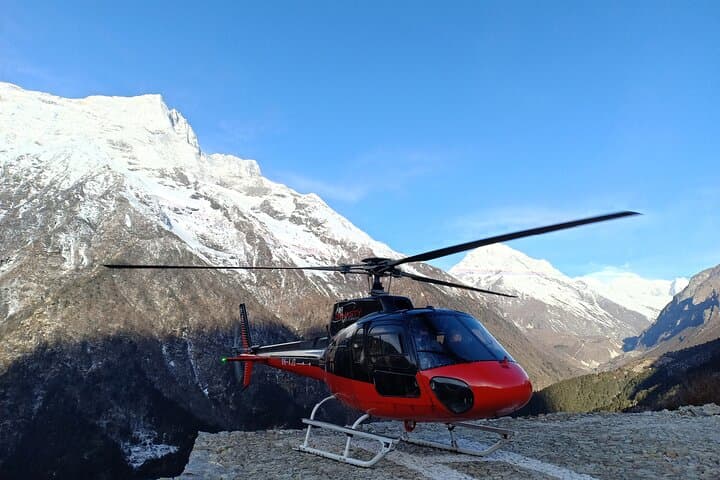
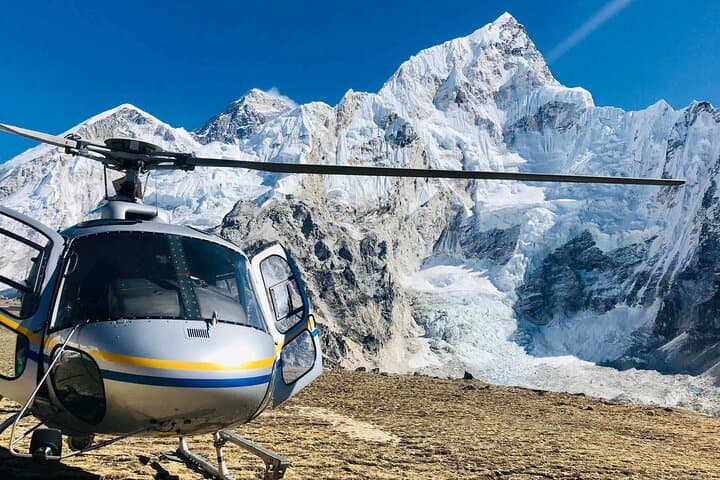
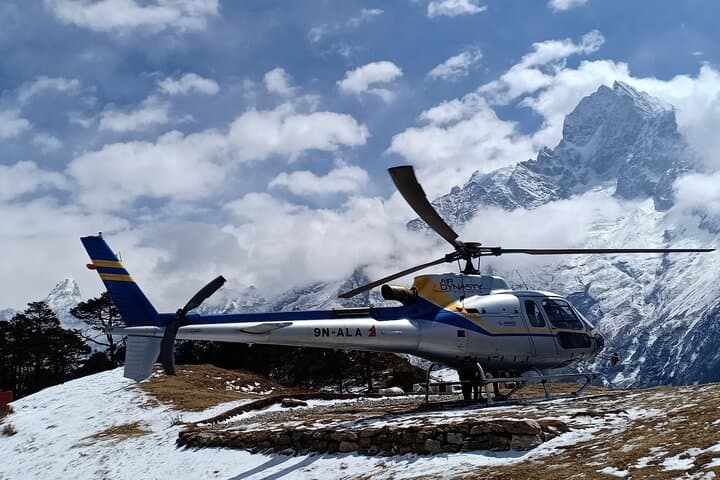
Rotors beat the thin air as Kathmandu slips beneath you and the range pushes up like an unfolded map. Within an hour the green valley gives way to jagged ice and rock; the helicopter circles to set you down near Kala Patthar, where wind tugs at prayer flags and Everest towers like a pale wall above the horizon.
Verified experiences and guided adventures in the surrounding area.
Operated by Everest Experience and Assistance · Gorak Shep, Province No. 1
Rotors beat the thin air as Kathmandu slips beneath you and the range pushes up like an unfolded map. Within an hour the green valley gives way to jagged ice and rock; the helicopter circles to set you down near Kala Patthar, where wind tugs at prayer flags and Everest towers like a pale wall above the horizon.
This flight threads the eastern Himalaya inside Sagarmatha National Park — created in the mid-1970s and a UNESCO World Heritage site soon after — a landscape heaved up by the Indian plate colliding with Eurasia. You’ll cross ridgelines that reveal geological layers of metamorphic rock and blue-tinged glaciers, and fly over Sherpa villages carved into steep slopes where yak caravans still move supplies.
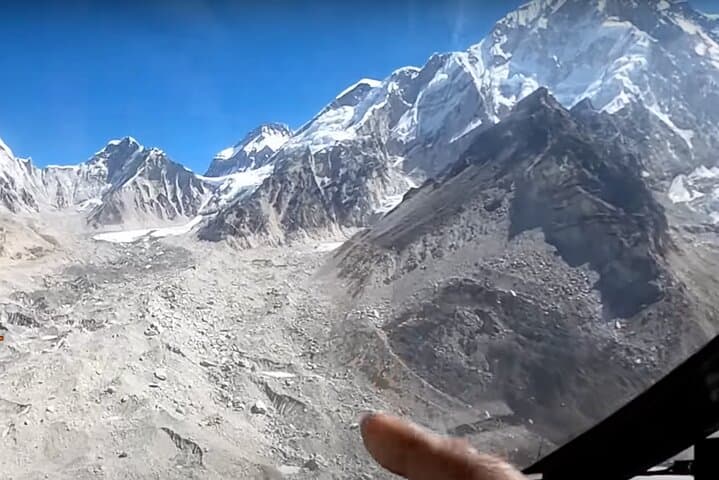
Culturally, the Khumbu is Sherpa country: mani stones and gompas punctuate treks, and breakfast at the Everest View Hotel offers a high-elevation taste of local hospitality. Expect sweeping sightings of Everest, Lhotse, Nuptse, Ama Dablam and Pumori; the Khumbu Icefall and Everest Base Camp appear as stitches on the ice.
Practically, this is a high-altitude experience in a short window: morning flights are common because winds rise after midday. Bring layered insulation, sunglasses and a fully charged camera; weight limits and brief on-ground time mean move deliberately. Though physical exertion is minimal, the elevation (Kala Patthar ~5,500 m) can affect anyone — sit, sip, and descend if you feel lightheaded. Follow crew briefings about safety and respect park rules: this fragile high-altitude environment requires small footprints and careful waste practices.
moderate.
3–4 hours.
Basic mobility and the ability to walk short distances at very high altitude; suitable for most people but be aware of altitude risks.
Total operating time is typically around 3–4 hours door-to-door, including flight time and the short landing period at Kala Patthar.
Flights generally land at or near Kala Patthar and sometimes at a high-altitude camp such as Pheriche for views; you’ll fly closely over Everest Base Camp but landings at EBC itself are rare.
Operators usually ask for passenger weights and may have limits for safety and balance; children are allowed but check with the provider for any minimum age policies.
Short landings are possible for non-acclimatized visitors, but altitude can affect anyone — discuss medical issues with the operator and consider acclimatization if you plan extended time on the ground.
Sagarmatha National Park was established in 1976 and recognized by UNESCO for its natural and cultural significance; the Khumbu has long been home to Sherpa communities who guided early Everest expeditions.
The high-altitude ecosystem is fragile: stick to designated zones, avoid single-use plastics, and follow operator rules to minimize impact from helicopter traffic and visitor waste.
Everest Experience and Assistance operates guided outdoor trips and adventures with an emphasis on safety, stewardship, and memorable experiences.
Rotors beat the thin air as Kathmandu slips beneath you and the range pushes up like an unfolded map. Within an hour the green valley gives way to jagged ice and rock; the helicopter circles to set you down near Kala Patthar, where wind tugs at prayer flags and Everest towers like a pale wall above the horizon.
Rotors beat the thin air as Kathmandu slips beneath you and the range pushes up like an unfolded map. Within an hour the green valley gives way to jagged ice and rock; the helicopter circles to set you down near Kala Patthar, where wind tugs at prayer flags and Everest towers like a pale wall above the horizon.
This flight threads the eastern Himalaya inside Sagarmatha National Park — created in the mid-1970s and a UNESCO World Heritage site soon after — a landscape heaved up by the Indian plate colliding with Eurasia. You’ll cross ridgelines that reveal geological layers of metamorphic rock and blue-tinged glaciers, and fly over Sherpa villages carved into steep slopes where yak caravans still move supplies.
Culturally, the Khumbu is Sherpa country: mani stones and gompas punctuate treks, and breakfast at the Everest View Hotel offers a high-elevation taste of local hospitality. Expect sweeping sightings of Everest, Lhotse, Nuptse, Ama Dablam and Pumori; the Khumbu Icefall and Everest Base Camp appear as stitches on the ice.
Practically, this is a high-altitude experience in a short window: morning flights are common because winds rise after midday. Bring layered insulation, sunglasses and a fully charged camera; weight limits and brief on-ground time mean move deliberately. Though physical exertion is minimal, the elevation (Kala Patthar ~5,500 m) can affect anyone — sit, sip, and descend if you feel lightheaded. Follow crew briefings about safety and respect park rules: this fragile high-altitude environment requires small footprints and careful waste practices.