THE ADVENTURE COLLECTIVE® · Independent discovery and booking for outdoor travel

A high-altitude helicopter circuit from Kathmandu that overflies Everest Base Camp and lands at Kala Patthar and Syangboche for short photo stops—perfect for travelers wanting close-up Himalayan views without trekking days. Expect strict weight limits and weather-dependent scheduling.
A high-altitude helicopter circuit from Kathmandu that overflies Everest Base Camp and lands at Kala Patthar and Syangboche for short photo stops—perfect for travelers wanting close-up Himalayan views without trekking days. Expect strict weight limits and weather-dependent scheduling.
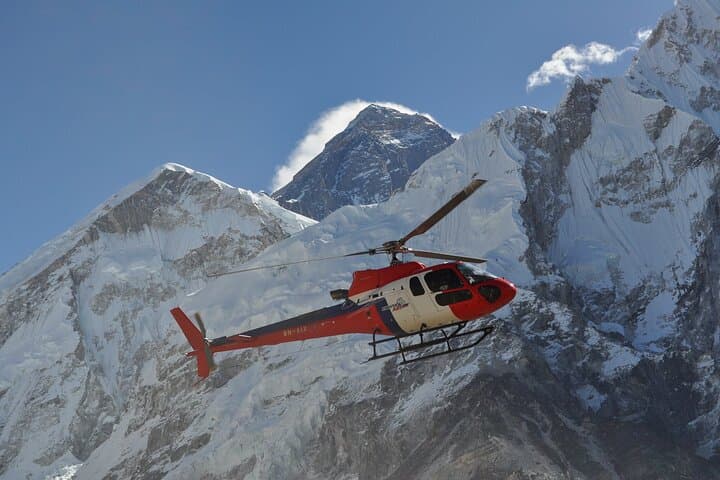
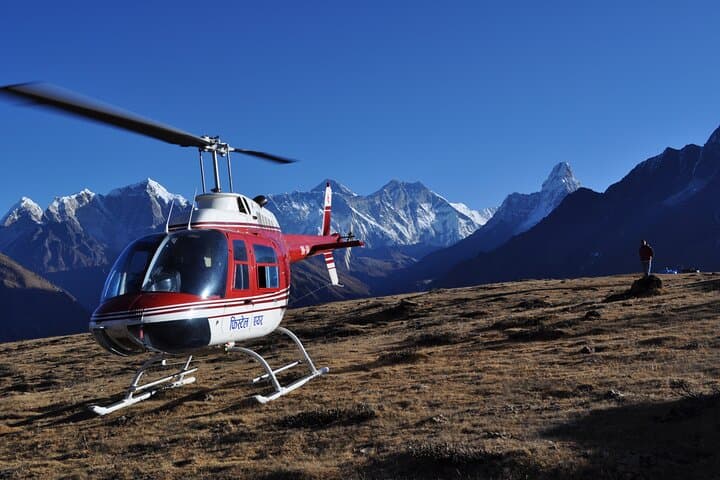
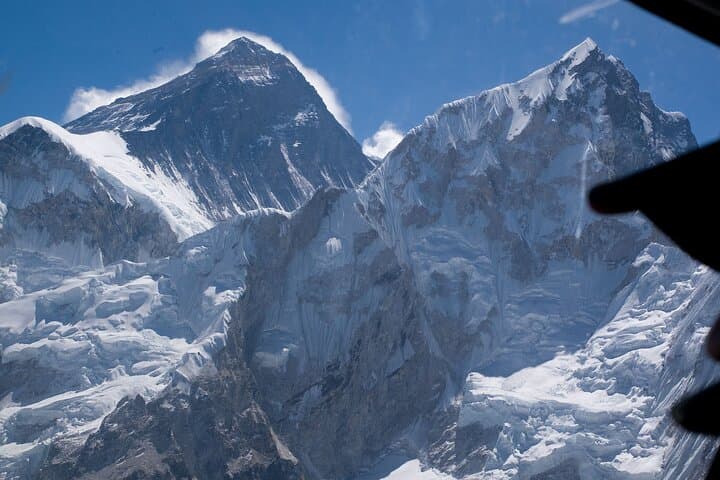
You lift off from Kathmandu’s domestic terminal in the pre-dawn hush and the city gives way to terraced hills, then to an ocean of jagged white. The helicopter climbs, turbines humming, and within an hour the Khumbu giants dominate the horizon: Everest (8,848 m), Lhotse, Ama Dablam—each face a study in ice and rock.
Verified experiences and guided adventures in the surrounding area.
Operated by Himalayan Mentor · Kathmandu, Bagmati Province
You lift off from Kathmandu’s domestic terminal in the pre-dawn hush and the city gives way to terraced hills, then to an ocean of jagged white. The helicopter climbs, turbines humming, and within an hour the Khumbu giants dominate the horizon: Everest (8,848 m), Lhotse, Ama Dablam—each face a study in ice and rock.
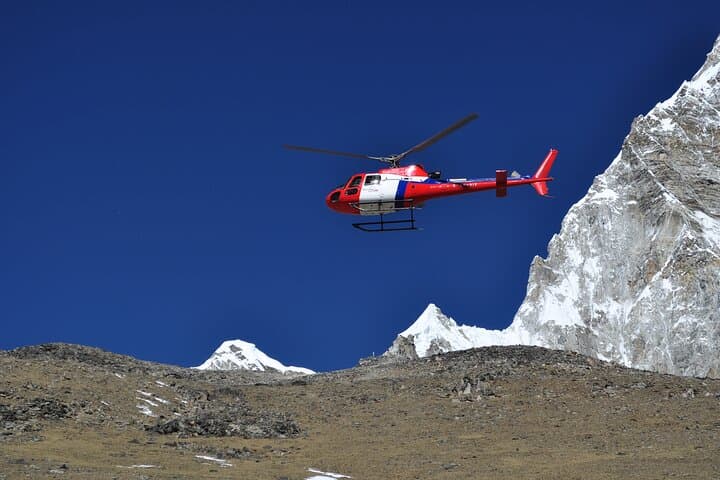
This flight follows the modern route that supports high-altitude tourism in the Khumbu: a fuel stop and group split at Lukla and Pheriche, an overflight of Everest Base Camp (5,364 m) and a landing at Kala Patthar (5,545 m) for photography. The region’s geology is raw—metamorphic bedrock thrust up by the India-Asia collision—and the human story is tightly tied to Sherpa mountaineering culture and the 1953 Hillary–Tenzing ascent that put the valley on the world map.
You’ll taste thin air and feel the sun’s intensity at altitude; the brief landings are logistical, not leisurely, so plan for sharp light and short photo windows. Local insight: Syangboche’s Everest View Hotel (3,870 m) offers a grounded panorama and an optional breakfast that stretches the legs before the return.
Practical guidance: bring layered insulation, UV protection, and a fully charged camera—expect 3.5–4 hours total and strict baggage/weight controls. Weather can cancel flights with little notice; operators prioritize safety and may split groups for altitude limits. If you have cardiovascular issues or severe motion sensitivity, consult a physician before booking.
easy.
3.5–4 hours.
No special fitness required, but you should be comfortable sitting for several hours and tolerating brief exposure to high altitude.
Flights typically overfly EBC (5,364 m) and make a short landing at Kala Patthar for photos; some itineraries include Syangboche/Everest View Hotel for a longer stop.
The total door-to-door time is about 3.5–4 hours, including transfers, fuel stops, and brief ground time at viewpoints.
Yes—operators limit passenger counts and enforce weight declarations for balance and safety; expect minimal hand luggage and possible restrictions on large bags.
Weather cancellations are common; reputable operators offer refunds or rescheduling when visibility or winds make flying unsafe.
The Khumbu valley’s modern climbing era accelerated after the 1953 Everest ascent; Lukla and Pheriche developed as logistical hubs for expeditions and high-altitude rescue operations.
High-altitude ecosystems are fragile—minimize waste, support licensed operators who follow local guidelines, and respect prayer flags and community lands.
Himalayan Mentor operates guided outdoor trips and adventures with an emphasis on safety, stewardship, and memorable experiences.
You lift off from Kathmandu’s domestic terminal in the pre-dawn hush and the city gives way to terraced hills, then to an ocean of jagged white. The helicopter climbs, turbines humming, and within an hour the Khumbu giants dominate the horizon: Everest (8,848 m), Lhotse, Ama Dablam—each face a study in ice and rock.
You lift off from Kathmandu’s domestic terminal in the pre-dawn hush and the city gives way to terraced hills, then to an ocean of jagged white. The helicopter climbs, turbines humming, and within an hour the Khumbu giants dominate the horizon: Everest (8,848 m), Lhotse, Ama Dablam—each face a study in ice and rock.
This flight follows the modern route that supports high-altitude tourism in the Khumbu: a fuel stop and group split at Lukla and Pheriche, an overflight of Everest Base Camp (5,364 m) and a landing at Kala Patthar (5,545 m) for photography. The region’s geology is raw—metamorphic bedrock thrust up by the India-Asia collision—and the human story is tightly tied to Sherpa mountaineering culture and the 1953 Hillary–Tenzing ascent that put the valley on the world map.
You’ll taste thin air and feel the sun’s intensity at altitude; the brief landings are logistical, not leisurely, so plan for sharp light and short photo windows. Local insight: Syangboche’s Everest View Hotel (3,870 m) offers a grounded panorama and an optional breakfast that stretches the legs before the return.
Practical guidance: bring layered insulation, UV protection, and a fully charged camera—expect 3.5–4 hours total and strict baggage/weight controls. Weather can cancel flights with little notice; operators prioritize safety and may split groups for altitude limits. If you have cardiovascular issues or severe motion sensitivity, consult a physician before booking.