THE ADVENTURE COLLECTIVE® · Independent discovery and booking for outdoor travel

Fly by helicopter from Cairns to an outer-reef pontoon for snorkeling, introductory scuba or helmet dives, and marine life encounters. This accessible day trip blends quick aerial transit with extended time on the reef, making it ideal for families and first-time divers.
Fly by helicopter from Cairns to an outer-reef pontoon for snorkeling, introductory scuba or helmet dives, and marine life encounters. This accessible day trip blends quick aerial transit with extended time on the reef, making it ideal for families and first-time divers.
You step from the helipad as rotors fade and salt-scented air takes over — white clouds hang low over the cobalt plain of the Coral Sea, and a floating pontoon bobs quietly at the edge of the outer reef. The helicopter's quick ascent means more time on the reef: snorkeling among branching corals, watching fish feed, or descending briefly on an introductory scuba or helmet dive.
Verified experiences and guided adventures in the surrounding area.
Operated by Travel Triangle Australia · Cairns, Queensland
You step from the helipad as rotors fade and salt-scented air takes over — white clouds hang low over the cobalt plain of the Coral Sea, and a floating pontoon bobs quietly at the edge of the outer reef. The helicopter's quick ascent means more time on the reef: snorkeling among branching corals, watching fish feed, or descending briefly on an introductory scuba or helmet dive.
Geology here is literal slow-motion: living coral structures building on a continental shelf, forming outer reefs that fringe Queensland. The area sits within the traditional country of the Gimuy Walubara Yidinji and Yirrganydji people; European charting began in the 1700s, but Indigenous connections to sea country remain central to local culture and stewardship.
On the pontoon you’ll find fresh-water rinse showers, changing rooms, shaded seating and a sundeck with lounges — plus a waterslide for families. Marine biologists and qualified dive staff lead briefings; glass-bottom and semi-submersible rides offer aquarium views without entering the water.
Practical guidance: the full operation is roughly 5–6 hours including transfers. Bring reef-safe sunscreen, a sunproof shirt, swimwear and a light towel. If you plan to dive or try helmet diving, disclose medical history — some conditions and pregnancy are restricted. Expect basic fitness requirements: comfortable swimming for short distances and the ability to climb ladders on and off the pontoon. Mornings often mean calmer seas and clearer water.
Conservation matters here — use approved sunscreens, follow reef etiquette, and listen to guides; the reef is regenerating but vulnerable to warming and local impacts. A helicopter drop-in makes this a compact, high-impact way to see one of the planet's most remarkable marine places.
moderate.
5–6 hours.
Moderate fitness: comfortable swimming 25–50m and the ability to climb ladders on and off pontoons
The advertised total experience is about 5–6 hours; the helicopter flight is fast, and roughly half the time is spent on the pontoon for activities and lunch.
Yes — the pontoon, underwater observatory, glass-bottom boat and semi-submersible allow non-swimmers to experience reef life without entering the water.
Introductory scuba and helmet diving require medical clearance and have weight/age limits; pregnant travelers and people with certain cardiovascular or spinal conditions are not advised to dive.
The tour notes wheelchair-accessible facilities and transport options, but check in advance about transfer specifics and any assistance required.
The reef sits on a platform formed over millennia; the coastline is traditional sea country of the Gimuy Walubara Yidinji and Yirrganydji peoples with long cultural ties to these waters.
The Great Barrier Reef is a World Heritage area facing bleaching and local pressures; use reef-safe products, heed guide instructions, and avoid touching coral to minimize impact.
Travel Triangle Australia operates guided outdoor trips and adventures with an emphasis on safety, stewardship, and memorable experiences.
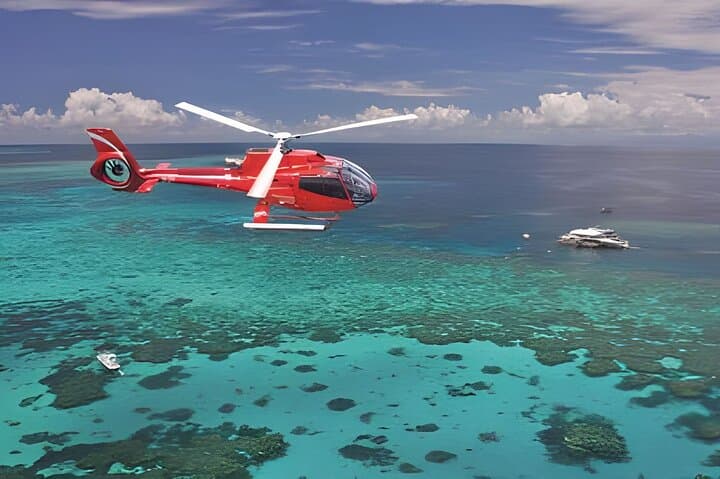


You step from the helipad as rotors fade and salt-scented air takes over — white clouds hang low over the cobalt plain of the Coral Sea, and a floating pontoon bobs quietly at the edge of the outer reef. The helicopter's quick ascent means more time on the reef: snorkeling among branching corals, watching fish feed, or descending briefly on an introductory scuba or helmet dive.
You step from the helipad as rotors fade and salt-scented air takes over — white clouds hang low over the cobalt plain of the Coral Sea, and a floating pontoon bobs quietly at the edge of the outer reef. The helicopter's quick ascent means more time on the reef: snorkeling among branching corals, watching fish feed, or descending briefly on an introductory scuba or helmet dive.
Geology here is literal slow-motion: living coral structures building on a continental shelf, forming outer reefs that fringe Queensland. The area sits within the traditional country of the Gimuy Walubara Yidinji and Yirrganydji people; European charting began in the 1700s, but Indigenous connections to sea country remain central to local culture and stewardship.
On the pontoon you’ll find fresh-water rinse showers, changing rooms, shaded seating and a sundeck with lounges — plus a waterslide for families. Marine biologists and qualified dive staff lead briefings; glass-bottom and semi-submersible rides offer aquarium views without entering the water.
Practical guidance: the full operation is roughly 5–6 hours including transfers. Bring reef-safe sunscreen, a sunproof shirt, swimwear and a light towel. If you plan to dive or try helmet diving, disclose medical history — some conditions and pregnancy are restricted. Expect basic fitness requirements: comfortable swimming for short distances and the ability to climb ladders on and off the pontoon. Mornings often mean calmer seas and clearer water.
Conservation matters here — use approved sunscreens, follow reef etiquette, and listen to guides; the reef is regenerating but vulnerable to warming and local impacts. A helicopter drop-in makes this a compact, high-impact way to see one of the planet's most remarkable marine places.