THE ADVENTURE COLLECTIVE® · Independent discovery and booking for outdoor travel

Soar from Kathmandu into the Himalayan dawn, land near Everest Base Camp for a mountain-side breakfast, then return with panoramic memories of the world’s highest peaks. This helicopter trip condenses a multi-day trek into a single, high-altitude flight—plan for early starts and variable weather.
Soar from Kathmandu into the Himalayan dawn, land near Everest Base Camp for a mountain-side breakfast, then return with panoramic memories of the world’s highest peaks. This helicopter trip condenses a multi-day trek into a single, high-altitude flight—plan for early starts and variable weather.
The helicopter lifts before sunrise, Kathmandu shrinking beneath a patchwork of lights as the Himalaya rearranges the horizon. Within an hour the air thins and peaks peer back—Nuptse, Lhotse and, finally, the serrated crown of Everest—each ridge taking on a sculpted clarity as the rotor’s thump steadies. You touch down at Syangboche or Lukla, step onto high-altitude stone, and the mountains feel like living machines: glaciers groaning, wind shaping cornices, and ridgelines daring you to look closer.
Verified experiences and guided adventures in the surrounding area.
Operated by Adventure Master Trek · Lukla, Province No. 1
The helicopter lifts before sunrise, Kathmandu shrinking beneath a patchwork of lights as the Himalaya rearranges the horizon. Within an hour the air thins and peaks peer back—Nuptse, Lhotse and, finally, the serrated crown of Everest—each ridge taking on a sculpted clarity as the rotor’s thump steadies. You touch down at Syangboche or Lukla, step onto high-altitude stone, and the mountains feel like living machines: glaciers groaning, wind shaping cornices, and ridgelines daring you to look closer.
This route traces the cultural and climbing history of the region. Sherpa villages dot the valleys below, their prayer flags marking trade routes used for centuries; the modern story of Everest dates to the 1953 Hillary–Tenzing ascent and the steady stream of climbers and trekkers that followed. Geologically, these peaks are young, uplifted by the India-Asia plate collision, their glaciers carving the valleys you fly over.
Practicalities matter at 5,000–5,500 m. Flights are typically 5–6 hours door-to-door from Kathmandu; expect early morning departures to catch stable weather. Operators often include oximeters, basic oxygen and airport transfers; weight limits and extra fees for travelers over ~100 kg are common. Dress in warm layers, bring sun protection and a camera with spare batteries—the cold drains them fast. Acclimatize in Kathmandu if possible; those with heart or respiratory issues should consult a physician. Weather is the final arbiter: flights can be canceled on short notice for safety.
This tour condenses days of trekking into a few unforgettable hours—high-altitude spectacle with a grounded checklist: hydration, layers, and respect for the fragile alpine environment.
moderate.
5–6 hours.
Moderate fitness: you should be comfortable walking short distances at elevation and handling stairs and uneven ground.
No — the helicopter tour requires no trekking experience; you should be able to walk short distances on uneven ground at high altitude.
High-altitude weather is changeable; early-morning departures reduce risk, but expect possible same-day cancellations for safety.
Short exposures can still cause symptoms; operators provide oximeters and basic oxygen but anyone with severe cardiopulmonary issues should consult a doctor first.
Many itineraries include a breakfast or light meal at Everest View Hotel or a picnic; confirm specifics with the operator and mention dietary needs when booking.
The Everest region has long been home to Sherpa communities and trade routes; modern climbing history was catapulted into global view after the 1953 first ascent by Edmund Hillary and Tenzing Norgay.
High-altitude environments are fragile—stick to landing areas, pack out waste, and support local businesses that follow sustainable practices and proper waste disposal.
Adventure Master Trek operates guided outdoor trips and adventures with an emphasis on safety, stewardship, and memorable experiences.
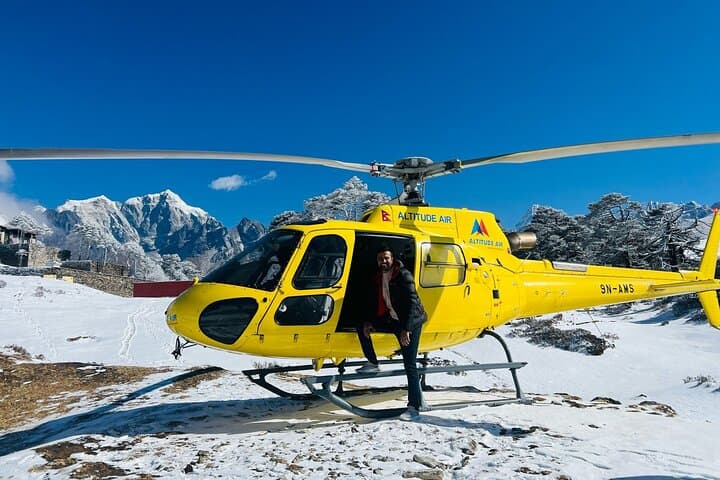
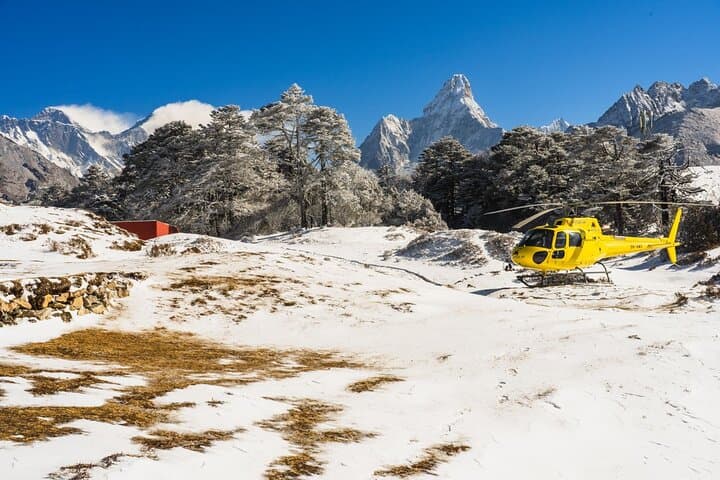
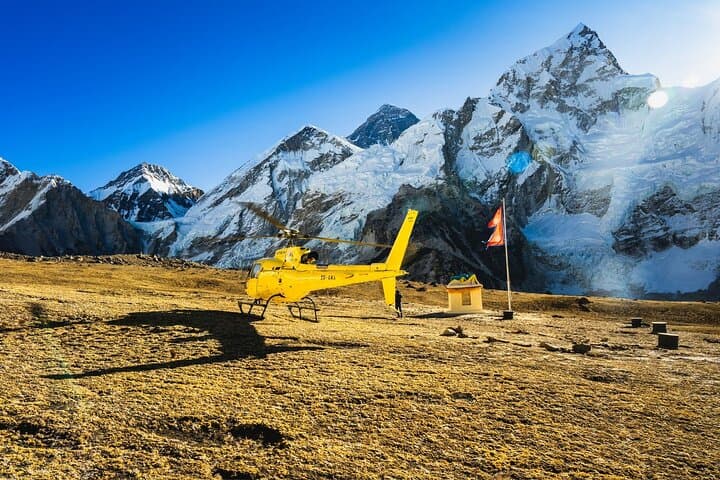
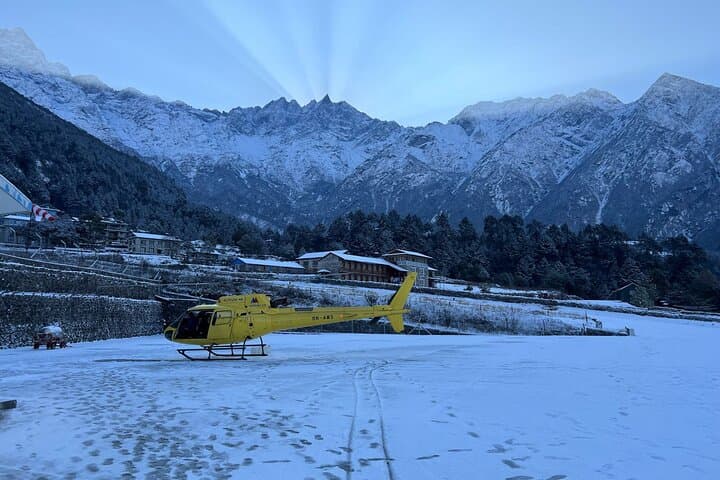
The helicopter lifts before sunrise, Kathmandu shrinking beneath a patchwork of lights as the Himalaya rearranges the horizon. Within an hour the air thins and peaks peer back—Nuptse, Lhotse and, finally, the serrated crown of Everest—each ridge taking on a sculpted clarity as the rotor’s thump steadies. You touch down at Syangboche or Lukla, step onto high-altitude stone, and the mountains feel like living machines: glaciers groaning, wind shaping cornices, and ridgelines daring you to look closer.
The helicopter lifts before sunrise, Kathmandu shrinking beneath a patchwork of lights as the Himalaya rearranges the horizon. Within an hour the air thins and peaks peer back—Nuptse, Lhotse and, finally, the serrated crown of Everest—each ridge taking on a sculpted clarity as the rotor’s thump steadies. You touch down at Syangboche or Lukla, step onto high-altitude stone, and the mountains feel like living machines: glaciers groaning, wind shaping cornices, and ridgelines daring you to look closer.
This route traces the cultural and climbing history of the region. Sherpa villages dot the valleys below, their prayer flags marking trade routes used for centuries; the modern story of Everest dates to the 1953 Hillary–Tenzing ascent and the steady stream of climbers and trekkers that followed. Geologically, these peaks are young, uplifted by the India-Asia plate collision, their glaciers carving the valleys you fly over.
Practicalities matter at 5,000–5,500 m. Flights are typically 5–6 hours door-to-door from Kathmandu; expect early morning departures to catch stable weather. Operators often include oximeters, basic oxygen and airport transfers; weight limits and extra fees for travelers over ~100 kg are common. Dress in warm layers, bring sun protection and a camera with spare batteries—the cold drains them fast. Acclimatize in Kathmandu if possible; those with heart or respiratory issues should consult a physician. Weather is the final arbiter: flights can be canceled on short notice for safety.
This tour condenses days of trekking into a few unforgettable hours—high-altitude spectacle with a grounded checklist: hydration, layers, and respect for the fragile alpine environment.