THE ADVENTURE COLLECTIVE® · Independent discovery and booking for outdoor travel

Fly by helicopter onto Te Moeka o Tuawe and spend hours walking among ice caves, crevasses and sculpted seracs. This guided heli-hike at Fox Glacier blends aerial access with hands-on glacier travel for an accessible alpine experience.
Fly by helicopter onto Te Moeka o Tuawe and spend hours walking among ice caves, crevasses and sculpted seracs. This guided heli-hike at Fox Glacier blends aerial access with hands-on glacier travel for an accessible alpine experience.
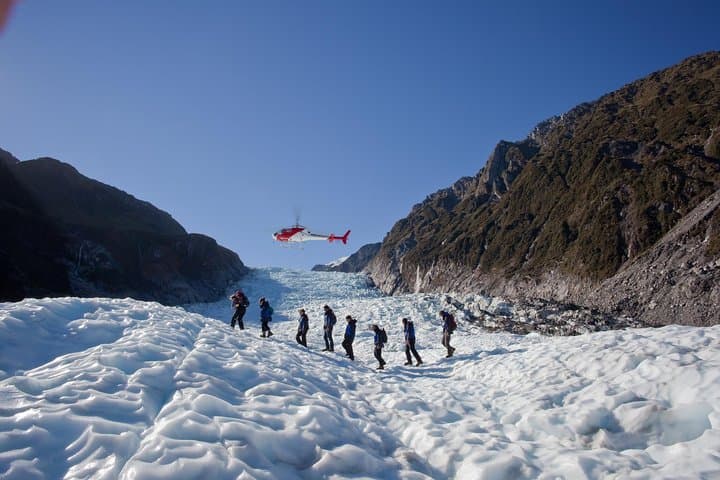
A low-angled helicopter drops you onto blue ice and the world contracts to the hiss of rotors and the click of crampons. Te Moeka o Tuawe/Fox Glacier pushes from the Southern Alps down through temperate rainforest to the valley floor; mornings here are a study in sharp light and moving ice.
Verified experiences and guided adventures in the surrounding area.
Operated by Fox Glacier Guiding - Glacier Tours & Adventures · Fox Glacier, West Coast
A low-angled helicopter drops you onto blue ice and the world contracts to the hiss of rotors and the click of crampons. Te Moeka o Tuawe/Fox Glacier pushes from the Southern Alps down through temperate rainforest to the valley floor; mornings here are a study in sharp light and moving ice.
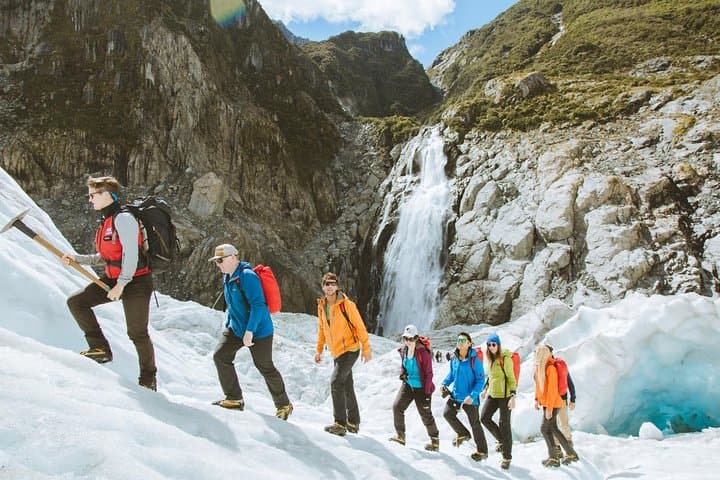
The glacier carries the long history of the West Coast: Māori guides named it Te Moeka o Tuawe, and European exploration in the 19th century turned alpine curiosity into international draw. Geologically, Fox Glacier is an outlet of the Southern Alps, shaped by snow accumulation at high elevations and summer melt that reveals caves, crevasses and seracs where glacial flow works fastest.
Culturally the region is small-town and service-oriented—Fox Glacier village and nearby Franz Josef cater to guided experiences, heli operations and conservation messaging from Westland Tai Poutini National Park authorities.
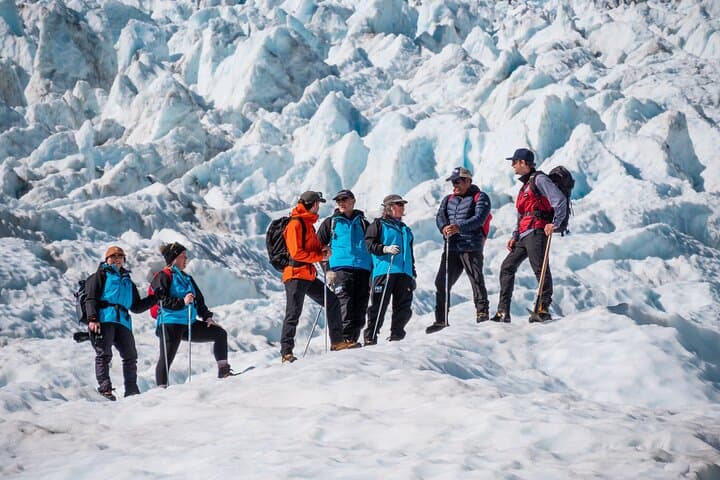
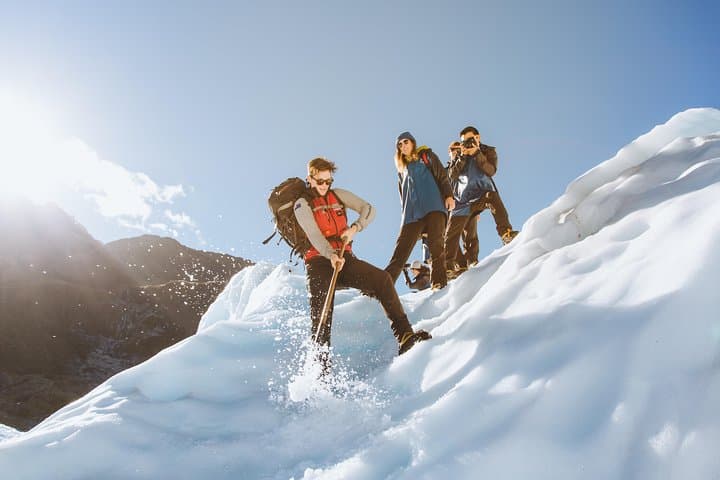
Practically, the heli-hike is a fly-in, fly-out guided walk: two helicopter transfers and up to three hours on the ice within a total tour window of roughly 3–4 hours. Guides fit participants with leather boots, crampons and poles, and teach basic ice-walking techniques; expect wet-weather layers, wind, and rapidly changing conditions. Minimum age is 9 and individual passenger weight limits apply; trips are weather dependent and subject to last-minute change.
Plan for sturdy base layers, sunglasses for glare, small daypack and a willingness to follow guide instruction. Hydrate, wear sun protection, and arrive flexible—the glacier rewards those who respect its pace and hazards.
moderate.
3–4 hours.
Suitable for most adults and older children in reasonable shape; expect uneven icy terrain and short steep sections so good balance and mobility help.
Two helicopter transfers, guide-led glacier walking, leather boots, crampons, walking poles and wet-weather overtrousers or jacket if required are included.
The operator makes weather calls close to departure; trips can be cancelled for safety and are refundable if cancelled more than 24 hours before scheduled time.
Minimum age is 9 years and individual passenger weight must be 116 kg or less for aircraft weight-and-balance and safety reasons.
No prior experience required—guides teach crampon technique and lead all glacier travel, though basic mobility and willingness to follow instruction are essential.
Māori used routes through the Southern Alps for travel and resource gathering; European explorers and guides developed glacier access in the late 19th and early 20th centuries.
Fox Glacier sits within Westland Tai Poutini National Park and operators emphasize Leave No Trace, restricted landing zones and minimal impact practices to protect fragile glacial and rainforest ecosystems.
Fox Glacier Guiding - Glacier Tours & Adventures operates guided outdoor trips and adventures with an emphasis on safety, stewardship, and memorable experiences.
A low-angled helicopter drops you onto blue ice and the world contracts to the hiss of rotors and the click of crampons. Te Moeka o Tuawe/Fox Glacier pushes from the Southern Alps down through temperate rainforest to the valley floor; mornings here are a study in sharp light and moving ice.
A low-angled helicopter drops you onto blue ice and the world contracts to the hiss of rotors and the click of crampons. Te Moeka o Tuawe/Fox Glacier pushes from the Southern Alps down through temperate rainforest to the valley floor; mornings here are a study in sharp light and moving ice.
The glacier carries the long history of the West Coast: Māori guides named it Te Moeka o Tuawe, and European exploration in the 19th century turned alpine curiosity into international draw. Geologically, Fox Glacier is an outlet of the Southern Alps, shaped by snow accumulation at high elevations and summer melt that reveals caves, crevasses and seracs where glacial flow works fastest.
Culturally the region is small-town and service-oriented—Fox Glacier village and nearby Franz Josef cater to guided experiences, heli operations and conservation messaging from Westland Tai Poutini National Park authorities.
Practically, the heli-hike is a fly-in, fly-out guided walk: two helicopter transfers and up to three hours on the ice within a total tour window of roughly 3–4 hours. Guides fit participants with leather boots, crampons and poles, and teach basic ice-walking techniques; expect wet-weather layers, wind, and rapidly changing conditions. Minimum age is 9 and individual passenger weight limits apply; trips are weather dependent and subject to last-minute change.
Plan for sturdy base layers, sunglasses for glare, small daypack and a willingness to follow guide instruction. Hydrate, wear sun protection, and arrive flexible—the glacier rewards those who respect its pace and hazards.