THE ADVENTURE COLLECTIVE® · Independent discovery and booking for outdoor travel

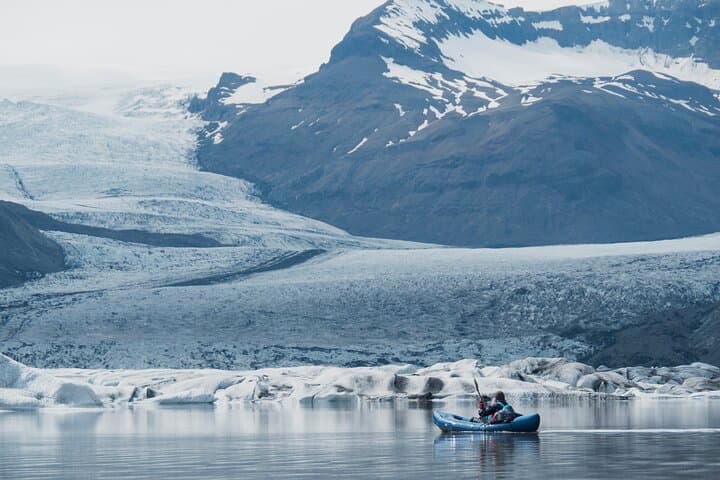
Paddle among ancient icebergs and hike to a viewpoint beneath Vatnajökull on this small-group packraft adventure. Combining 4x4 access, drysuits and a remote glacier lake, the trip emphasizes slow, low-impact exploration.
Paddle among ancient icebergs and hike to a viewpoint beneath Vatnajökull on this small-group packraft adventure. Combining 4x4 access, drysuits and a remote glacier lake, the trip emphasizes slow, low-impact exploration.
A cold wind lifts off the glacier and carries the smell of wet stone as you stand on the gravel car park near Hotel Smyrlabjörg. Inflatable packrafts sit inflated at your feet; across the grey water, blue-and-white bergs bob like slow-moving sculptures. The guide checks straps, hands you a drysuit, and for the next five to six hours you will trade the hum of the Ring Road for the hush of Heinabergslón.
Verified experiences and guided adventures in the surrounding area.
Operated by North Tides · Höfn, Austurland
A cold wind lifts off the glacier and carries the smell of wet stone as you stand on the gravel car park near Hotel Smyrlabjörg. Inflatable packrafts sit inflated at your feet; across the grey water, blue-and-white bergs bob like slow-moving sculptures. The guide checks straps, hands you a drysuit, and for the next five to six hours you will trade the hum of the Ring Road for the hush of Heinabergslón.
This lake forms where glacial melt pools beside the tongue of Heinabergsjökull, an outflow of Vatnajökull—the largest ice cap in Europe. The shoreline here is raw: moraine ridges, exposed bedrock and recent glacial deposits that reveal the glacier’s retreat over decades. Local farmers and fishing communities in nearby Höfn have long read the landscape for weather and ice; the region’s human history is short compared with the slow grinding of ice above.
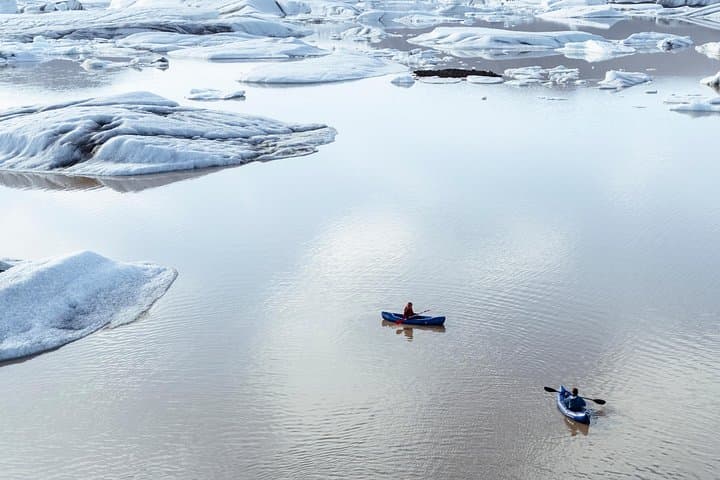
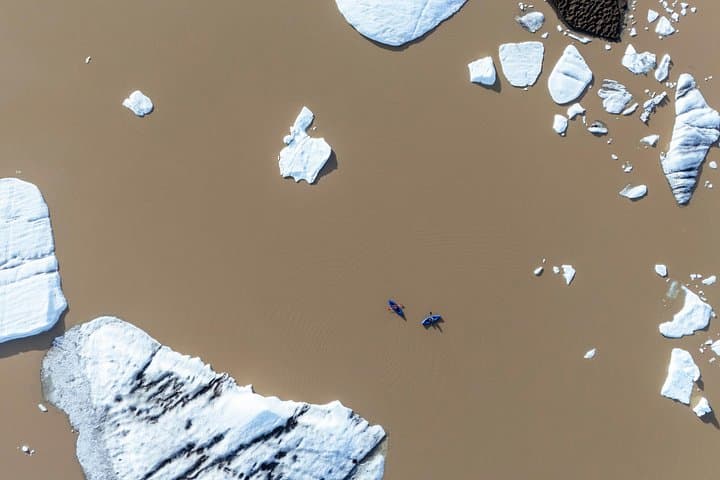
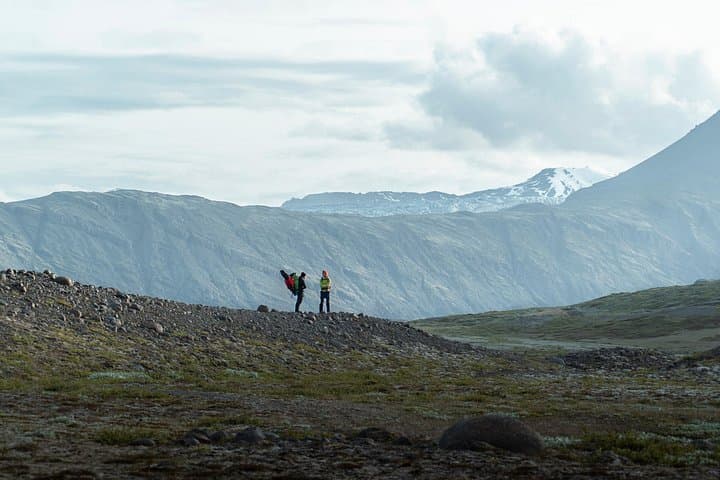
The tour blends water and land: a 20-minute 4x4 transfer from the meeting point, kit demo, then 1.5–2 hours of paddling among ancient icebergs in packrafts, followed by a hike to a remote viewpoint over the ice and back. Expect unstable footing where meltwater channels cross trails and sudden wind gusts on exposed ridges.
Practical edge: wear insulated, moisture-wicking base layers under the provided drysuit, bring sturdy ankle-support boots for the hike, and plan for changing weather—conditions can shift quickly. Aim for morning light for calmer water and better iceberg contrast. The route prioritizes slow travel and low group numbers, so you’ll have time to photograph, listen and move at a deliberate pace without crowds.
moderate.
5–6 hours.
Moderate fitness required: comfortable walking on uneven ground and sustained paddling for up to two hours.
You should be comfortable with continuous paddling for 1.5–2 hours and hiking over uneven ground for 1–2 hours; guides provide technique coaching but moderate cardiovascular fitness is required.
Organizers supply packrafts, paddles, drysuits, personal flotation devices and water shoes; bring your own base layers and hiking boots.
Guides plan routes to avoid unstable bergs and watch weather and calving activity closely; however, conditions can change and the trip may be altered or canceled for safety.
Meet at the lower car park of Hotel Smyrlabjörg, roughly halfway between Jökulsárlón and Höfn; the tour includes a short 4x4 transfer to the launch area.
Vatnajökull National Park was established in 2008 to protect large glacial landscapes and volcanic systems; Heinabergslón sits at the interface of recent glacial change and human settlement patterns.
Glacial corridors are sensitive—stick to durable surfaces, pack out all waste and follow guide instructions to minimize footprint around ice and fragile vegetation.
North Tides operates guided outdoor trips and adventures with an emphasis on safety, stewardship, and memorable experiences.
A cold wind lifts off the glacier and carries the smell of wet stone as you stand on the gravel car park near Hotel Smyrlabjörg. Inflatable packrafts sit inflated at your feet; across the grey water, blue-and-white bergs bob like slow-moving sculptures. The guide checks straps, hands you a drysuit, and for the next five to six hours you will trade the hum of the Ring Road for the hush of Heinabergslón.
A cold wind lifts off the glacier and carries the smell of wet stone as you stand on the gravel car park near Hotel Smyrlabjörg. Inflatable packrafts sit inflated at your feet; across the grey water, blue-and-white bergs bob like slow-moving sculptures. The guide checks straps, hands you a drysuit, and for the next five to six hours you will trade the hum of the Ring Road for the hush of Heinabergslón.
This lake forms where glacial melt pools beside the tongue of Heinabergsjökull, an outflow of Vatnajökull—the largest ice cap in Europe. The shoreline here is raw: moraine ridges, exposed bedrock and recent glacial deposits that reveal the glacier’s retreat over decades. Local farmers and fishing communities in nearby Höfn have long read the landscape for weather and ice; the region’s human history is short compared with the slow grinding of ice above.
The tour blends water and land: a 20-minute 4x4 transfer from the meeting point, kit demo, then 1.5–2 hours of paddling among ancient icebergs in packrafts, followed by a hike to a remote viewpoint over the ice and back. Expect unstable footing where meltwater channels cross trails and sudden wind gusts on exposed ridges.
Practical edge: wear insulated, moisture-wicking base layers under the provided drysuit, bring sturdy ankle-support boots for the hike, and plan for changing weather—conditions can shift quickly. Aim for morning light for calmer water and better iceberg contrast. The route prioritizes slow travel and low group numbers, so you’ll have time to photograph, listen and move at a deliberate pace without crowds.