THE ADVENTURE COLLECTIVE® · Independent discovery and booking for outdoor travel

Spend an afternoon sensing Harris Tweed at a working loom, exploring the sweeping sands of Garry Beach, and connecting with island history at Lews Castle. This compact four‑hour tour pairs tactile craft, raw coastal scenery, and local storytelling for a clear view of life in the Outer Hebrides.
Spend an afternoon sensing Harris Tweed at a working loom, exploring the sweeping sands of Garry Beach, and connecting with island history at Lews Castle. This compact four‑hour tour pairs tactile craft, raw coastal scenery, and local storytelling for a clear view of life in the Outer Hebrides.
The wind off the Minch carries peat smoke and cold salt; you step from a narrow lane into a loom shed where the rhythmic clack of shuttle and warp counts out a story older than any map.
Verified experiences and guided adventures in the surrounding area.
The wind off the Minch carries peat smoke and cold salt; you step from a narrow lane into a loom shed where the rhythmic clack of shuttle and warp counts out a story older than any map.
This four‑hour loop from Stornoway threads three different Hebridean experiences: a hands‑on Harris Tweed demonstration at the Vatisker loom shed, a shoreline walk across the wide sweep of Garry Beach, and a final connection with island history at Museum nan Eilean in Lews Castle.
Harris Tweed is protected by local law — only cloth hand‑woven in the Outer Hebrides and finished in the islands can wear the Orb mark — and the demonstration lays out raw fleece to finished yardage, a short episode of crofting economy and craft preserved through generations. Geology here is Lewisian gneiss: ancient, hard bedrock sculpted by glaciers into peaty ridges and blown sand. Cultural layers are Gaelic language, crofting tenure, and a seafaring past that shaped village rhythms.
Expect unpaved croft lanes, a short beach walk over sand and occasional peaty tussock, and the museum’s compact galleries that contextualize life on the islands. Weather shifts fast; bright sun can become a squall in an hour. Plan for wind, bring waterproofs, and leave room to linger at viewpoints where sea stacks appear like shipwrecked teeth.
Practical: the tour is approximately 4 hours with easy walking, minimal elevation, and short transfers by vehicle between stops. It’s ideal for travelers wanting tactile culture, accessible shoreline scenery, and a concise history lesson rolled into one afternoon.
easy.
4 hours.
Light fitness—comfortable walking for short stretches on sand and uneven croft paths; no sustained climbs.
The itinerary runs about four hours, including the loom demonstration, time at Garry Beach, and a visit to Museum nan Eilean at Lews Castle.
Yes—Garry Beach is a broad, flat expanse, but watch for wind and bring appropriate footwear for sand and occasional peaty patches.
Many local weavers offer samples, small items, or can advise on purchasing; availability varies so bring card or some cash.
Museum nan Eilean offers accessible routes within Lews Castle, though older buildings can have some constraints—contact the museum for specific mobility needs.
Harris Tweed’s legal protection dates to the early 20th century and ties directly to crofting communities; Lews Castle houses exhibits on Norse and Gaelic influences that shaped island life.
The machair and peatland habitats are fragile; stay on paths where indicated, avoid disturbing nesting birds, and pack out any litter to help protect these rare coastal ecosystems.
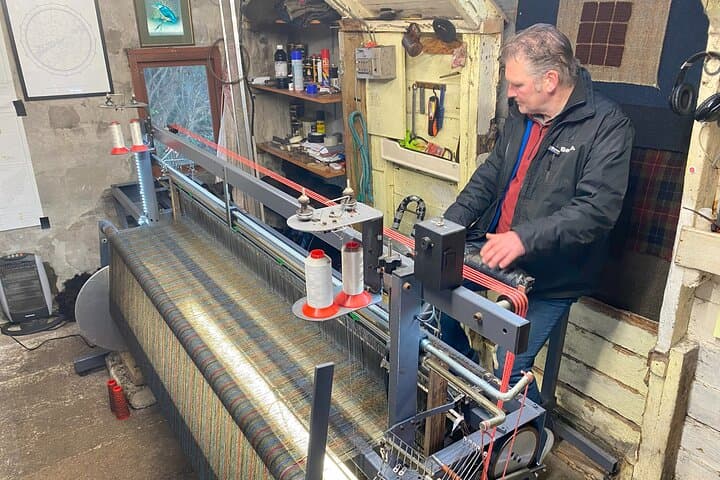
The wind off the Minch carries peat smoke and cold salt; you step from a narrow lane into a loom shed where the rhythmic clack of shuttle and warp counts out a story older than any map.
The wind off the Minch carries peat smoke and cold salt; you step from a narrow lane into a loom shed where the rhythmic clack of shuttle and warp counts out a story older than any map.
This four‑hour loop from Stornoway threads three different Hebridean experiences: a hands‑on Harris Tweed demonstration at the Vatisker loom shed, a shoreline walk across the wide sweep of Garry Beach, and a final connection with island history at Museum nan Eilean in Lews Castle.
Harris Tweed is protected by local law — only cloth hand‑woven in the Outer Hebrides and finished in the islands can wear the Orb mark — and the demonstration lays out raw fleece to finished yardage, a short episode of crofting economy and craft preserved through generations. Geology here is Lewisian gneiss: ancient, hard bedrock sculpted by glaciers into peaty ridges and blown sand. Cultural layers are Gaelic language, crofting tenure, and a seafaring past that shaped village rhythms.
Expect unpaved croft lanes, a short beach walk over sand and occasional peaty tussock, and the museum’s compact galleries that contextualize life on the islands. Weather shifts fast; bright sun can become a squall in an hour. Plan for wind, bring waterproofs, and leave room to linger at viewpoints where sea stacks appear like shipwrecked teeth.
Practical: the tour is approximately 4 hours with easy walking, minimal elevation, and short transfers by vehicle between stops. It’s ideal for travelers wanting tactile culture, accessible shoreline scenery, and a concise history lesson rolled into one afternoon.