THE ADVENTURE COLLECTIVE® · Independent discovery and booking for outdoor travel

Cross the plains from Bucharest to Tulcea, then ride a speedboat into the UNESCO-listed Danube Delta. Expect close bird encounters, narrow reed canals, and a full-day excursion that combines natural history with local river culture.
Cross the plains from Bucharest to Tulcea, then ride a speedboat into the UNESCO-listed Danube Delta. Expect close bird encounters, narrow reed canals, and a full-day excursion that combines natural history with local river culture.
You leave Bucharest before dawn and the plains unfurl—fields give way to braided waterways and the air grows cooler and reed-scented. By late morning the speedboat slips into channels where water takes the lead, pushing you under low willows and past islands of reeds. Pelicans lift like white flags; herons hold statuesque watch; the delta moves around you.
Verified experiences and guided adventures in the surrounding area.
You leave Bucharest before dawn and the plains unfurl—fields give way to braided waterways and the air grows cooler and reed-scented. By late morning the speedboat slips into channels where water takes the lead, pushing you under low willows and past islands of reeds. Pelicans lift like white flags; herons hold statuesque watch; the delta moves around you.
The Danube Delta is Europe’s second-largest river delta and a UNESCO World Heritage site formed by millennia of sediment from the Danube meeting the Black Sea. Its mosaic of lakes, marshes, and channels was shaped by floods and silt; local communities built lives around fishing, reed harvesting, and Orthodox riverfront villages with strong folklore traditions.
On a guided small-group run from Tulcea you’ll traverse main waterways and narrow canals, learning how seasonal floods rearrange channels and why the delta’s peat and reed beds matter for birdlife. The guide’s local knowledge points out breeding colonies and traditional fish-smoking huts along the shore.
Practical side: this is a full-day outing (about six hours including transfers). Wear quick-drying layers and a windproof jacket—motor-driven wakes bite on open water. Bring binoculars, sunscreen, and a waterproof case for your camera; mobile signal is intermittent, so enjoy the silence. Morning departures catch more bird activity and cooler temperatures; late spring and early autumn are prime for migration watching. The tour is rated accessible for most fitness levels, but expect brief, uneven dockings when boarding the speedboat. Hydrate, mind your footing on wet docks, and keep a respectful distance from nesting colonies—they collapse under disturbance. With a little preparation, the delta rewards with close wildlife sightings and the steady drama of a living wetland.
easy.
6 hours.
Suitable for most travelers in average health; requires short periods of standing and stepping on/off boats.
Expect about six hours total from hotel pickup in Tulcea, including a roughly four-hour speedboat tour on the water.
Sightings are common but not guaranteed—pelicans, herons, cormorants and other species are regular, especially during spring and autumn migrations.
The trip is classified easy but involves stepping on and off a speedboat and walking on uneven docks; contact the operator to discuss specific needs.
The tour includes a coffee and bottled water; restroom facilities are limited on boats—plan accordingly and use shore facilities before departure when possible.
The delta’s communities developed around fishing and reed thatching; settlements like Tulcea became trade and boatbuilding hubs as river routes shifted over centuries.
The Danube Delta is a protected biosphere with regulations on boat speeds and nesting-site disturbance; respect buffer zones and local rules to minimize impact.
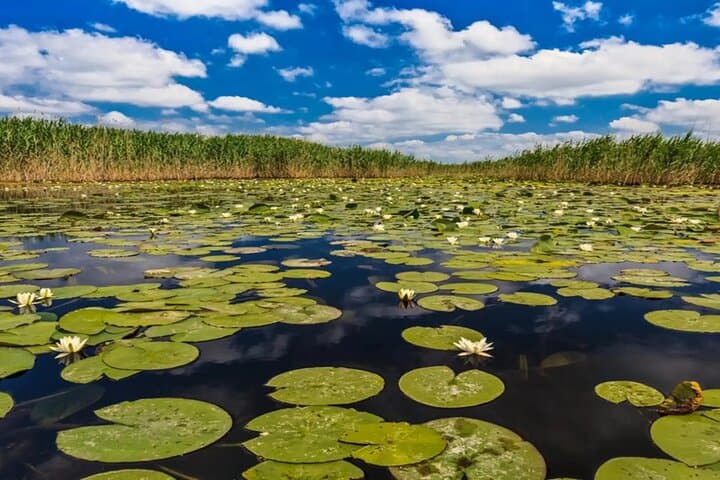


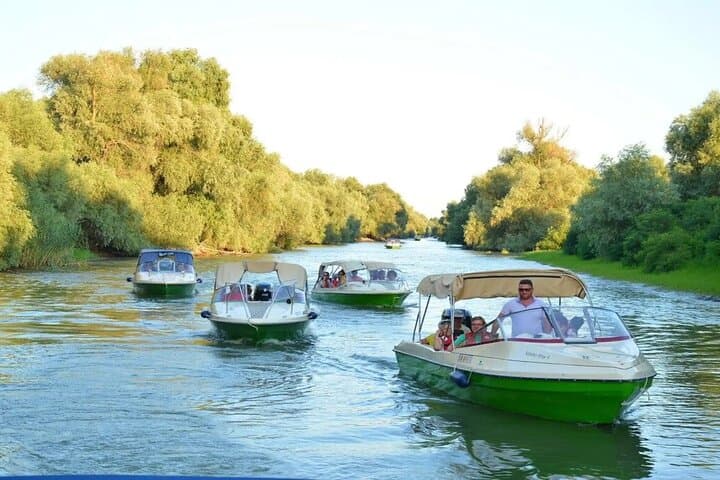
You leave Bucharest before dawn and the plains unfurl—fields give way to braided waterways and the air grows cooler and reed-scented. By late morning the speedboat slips into channels where water takes the lead, pushing you under low willows and past islands of reeds. Pelicans lift like white flags; herons hold statuesque watch; the delta moves around you.
You leave Bucharest before dawn and the plains unfurl—fields give way to braided waterways and the air grows cooler and reed-scented. By late morning the speedboat slips into channels where water takes the lead, pushing you under low willows and past islands of reeds. Pelicans lift like white flags; herons hold statuesque watch; the delta moves around you.
The Danube Delta is Europe’s second-largest river delta and a UNESCO World Heritage site formed by millennia of sediment from the Danube meeting the Black Sea. Its mosaic of lakes, marshes, and channels was shaped by floods and silt; local communities built lives around fishing, reed harvesting, and Orthodox riverfront villages with strong folklore traditions.
On a guided small-group run from Tulcea you’ll traverse main waterways and narrow canals, learning how seasonal floods rearrange channels and why the delta’s peat and reed beds matter for birdlife. The guide’s local knowledge points out breeding colonies and traditional fish-smoking huts along the shore.
Practical side: this is a full-day outing (about six hours including transfers). Wear quick-drying layers and a windproof jacket—motor-driven wakes bite on open water. Bring binoculars, sunscreen, and a waterproof case for your camera; mobile signal is intermittent, so enjoy the silence. Morning departures catch more bird activity and cooler temperatures; late spring and early autumn are prime for migration watching. The tour is rated accessible for most fitness levels, but expect brief, uneven dockings when boarding the speedboat. Hydrate, mind your footing on wet docks, and keep a respectful distance from nesting colonies—they collapse under disturbance. With a little preparation, the delta rewards with close wildlife sightings and the steady drama of a living wetland.