THE ADVENTURE COLLECTIVE® · Independent discovery and booking for outdoor travel

Learn to surf on South Maui with instructors from Hawaiian families who combine cultural context with practical coaching. Two-hour lessons at Kalama Park include land drills, gear, and generous time in the water—often with turtles in view.
Learn to surf on South Maui with instructors from Hawaiian families who combine cultural context with practical coaching. Two-hour lessons at Kalama Park include land drills, gear, and generous time in the water—often with turtles in view.
A warm trade wind lifts a ribbon of spray as you stand on the black Aloha Ocean Adventures truck at Kalama Park. The South Maui shoreline stretches east and west; the water slips toward sand, turtles slice through shallow reef, and Haleakala’s ridgeline watches from inland. Instructors from Hawaiian families call out rhythm and timing—clear, calm directions that turn a nervous first paddle into a clean pop-up.
Verified experiences and guided adventures in the surrounding area.
Operated by Aloha Ocean Adventures · Kihei, Hawaii
A warm trade wind lifts a ribbon of spray as you stand on the black Aloha Ocean Adventures truck at Kalama Park. The South Maui shoreline stretches east and west; the water slips toward sand, turtles slice through shallow reef, and Haleakala’s ridgeline watches from inland. Instructors from Hawaiian families call out rhythm and timing—clear, calm directions that turn a nervous first paddle into a clean pop-up.
Surfing on Maui is living history. Waves here were not a pastime but a practice of ali‘i (Hawaiian chiefs), and modern lessons often open with cultural context—etiquette in the lineup and respect for the ocean’s living reef. Geologically, Kihei’s shore sits on fringing reef and volcanic shoreline; expect shallow coral flats near takeoff and sandy breaks closer to the beach that make entry and exit straightforward for beginners.
Practical guidance: arrive in swimwear and a light cover, check-in at 1900 S Kihei Rd near Kalama Park, and expect two hours that mix land drills and water time. The school provides boards, rash guards, and booties, but bring reef-safe sunscreen, a water bottle, and a towel. Basic swimming ability and comfort in chest-deep water are required; instructors stage progressions so most participants stand on their first or second waves. Turtles and occasional dolphins are part of the lesson scenery—observe at a distance and follow instructor guidance.
Timing matters: morning sessions often have lighter winds and cleaner faces. If seas pick up, lessons pause or modify for safety. These sessions balance cultural roots with practical coaching—aimed at giving you a confident, safe introduction to Hawaiian surf culture.
easy.
2 hours.
Light to moderate—comfortable swimming and basic cardiovascular fitness required
No; lessons are designed for beginners with step-by-step land drills and in-water coaching—basic swimming comfort is required.
Two-hour lesson with boards, long-sleeve rash shirts, surf shoes, instruction, and optional photos or video available from instructors.
Not recommended for pregnant guests or those with serious back/heart conditions; children can participate depending on instructor assessment—bookings ask for age and health details.
Lessons may be canceled for safety; full refunds are available if you cancel at least 24 hours in advance, and operators will cancel for poor conditions.
Surfing originates in ancient Hawaiian culture where wave riding was a central practice of social and spiritual life—many local instructors trace lineage to that tradition.
Use reef-safe sunscreen, avoid standing on coral, and keep a respectful distance from marine animals to protect fragile reef ecosystems.
Aloha Ocean Adventures operates guided outdoor trips and adventures with an emphasis on safety, stewardship, and memorable experiences.
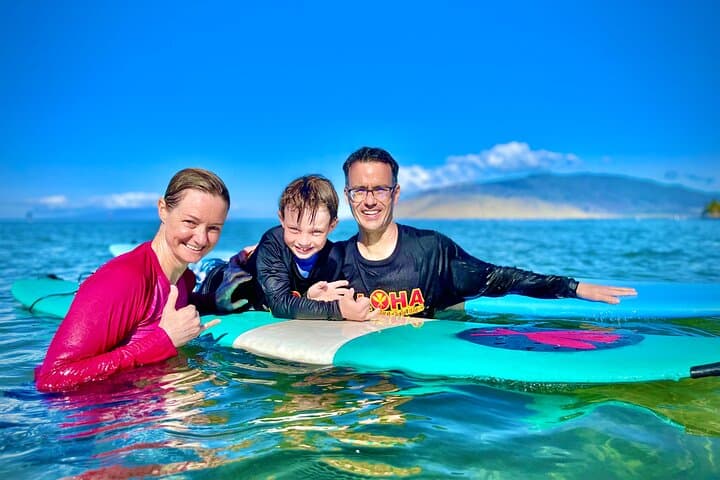
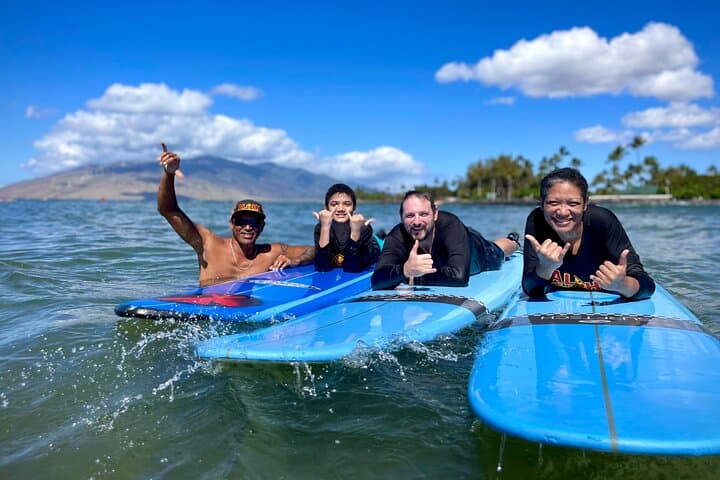
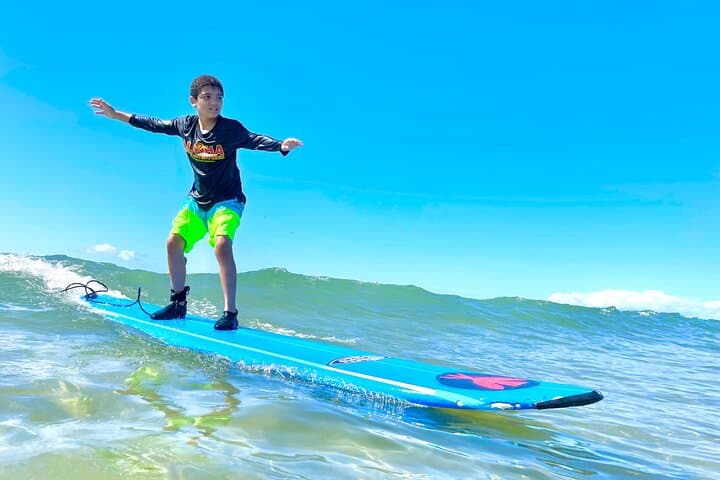
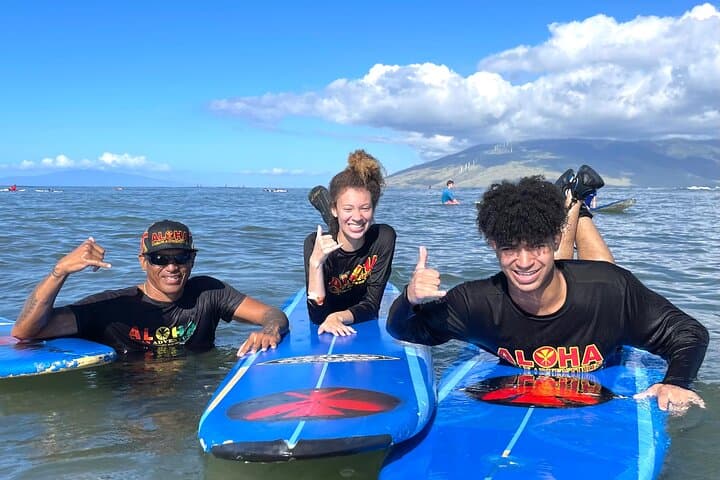
A warm trade wind lifts a ribbon of spray as you stand on the black Aloha Ocean Adventures truck at Kalama Park. The South Maui shoreline stretches east and west; the water slips toward sand, turtles slice through shallow reef, and Haleakala’s ridgeline watches from inland. Instructors from Hawaiian families call out rhythm and timing—clear, calm directions that turn a nervous first paddle into a clean pop-up.
A warm trade wind lifts a ribbon of spray as you stand on the black Aloha Ocean Adventures truck at Kalama Park. The South Maui shoreline stretches east and west; the water slips toward sand, turtles slice through shallow reef, and Haleakala’s ridgeline watches from inland. Instructors from Hawaiian families call out rhythm and timing—clear, calm directions that turn a nervous first paddle into a clean pop-up.
Surfing on Maui is living history. Waves here were not a pastime but a practice of ali‘i (Hawaiian chiefs), and modern lessons often open with cultural context—etiquette in the lineup and respect for the ocean’s living reef. Geologically, Kihei’s shore sits on fringing reef and volcanic shoreline; expect shallow coral flats near takeoff and sandy breaks closer to the beach that make entry and exit straightforward for beginners.
Practical guidance: arrive in swimwear and a light cover, check-in at 1900 S Kihei Rd near Kalama Park, and expect two hours that mix land drills and water time. The school provides boards, rash guards, and booties, but bring reef-safe sunscreen, a water bottle, and a towel. Basic swimming ability and comfort in chest-deep water are required; instructors stage progressions so most participants stand on their first or second waves. Turtles and occasional dolphins are part of the lesson scenery—observe at a distance and follow instructor guidance.
Timing matters: morning sessions often have lighter winds and cleaner faces. If seas pick up, lessons pause or modify for safety. These sessions balance cultural roots with practical coaching—aimed at giving you a confident, safe introduction to Hawaiian surf culture.