THE ADVENTURE COLLECTIVE® · Independent discovery and booking for outdoor travel

Leave Corralejo’s marina for a five-seat Hawaiian pirogue, paddle across Atlantic swells, and spend a slow day snorkelling and exploring the unspoiled Isla de Lobos. This tour pairs hands-on teamwork with local history and protected natural scenery.
Leave Corralejo’s marina for a five-seat Hawaiian pirogue, paddle across Atlantic swells, and spend a slow day snorkelling and exploring the unspoiled Isla de Lobos. This tour pairs hands-on teamwork with local history and protected natural scenery.
The ocean arrives with a sound: a steady, low breathing that pushes against the hull and asks you to join its rhythm. On the quay in Corralejo, the guide fits a life jacket and points to a long, narrow Hawaiian pirogue—five seats, a central ama for stability, bright against the Atlantic glare. By the time the canoe slips past the breakwater, the town’s hum has been left behind and the sea’s motion becomes the group’s metronome.
Verified experiences and guided adventures in the surrounding area.
Operated by MAEVA Kayak · Corralejo, Las Palmas
The ocean arrives with a sound: a steady, low breathing that pushes against the hull and asks you to join its rhythm. On the quay in Corralejo, the guide fits a life jacket and points to a long, narrow Hawaiian pirogue—five seats, a central ama for stability, bright against the Atlantic glare. By the time the canoe slips past the breakwater, the town’s hum has been left behind and the sea’s motion becomes the group’s metronome.
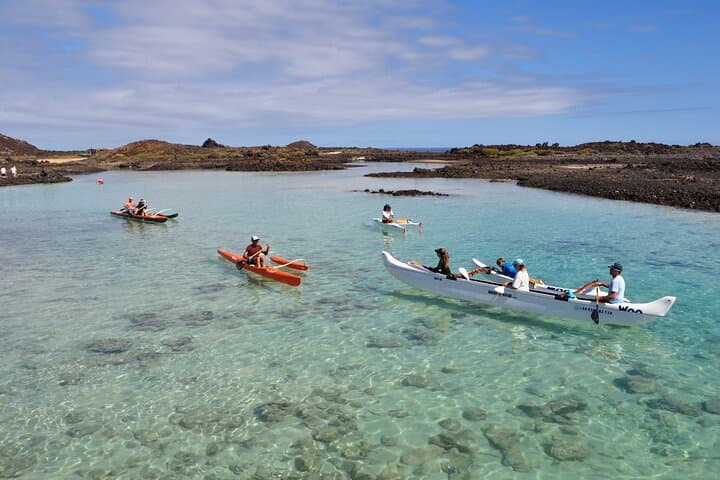
Isla de Lobos sits like a small secret off Fuerteventura’s northern tip—rocky ridges, a pale lagoon called La Concha, and a tiny cluster of stone houses at Puertito. The islet is volcanic in origin, an outcropping formed by coastal eruptions and sculpted by centuries of wind and salt. Visitors come not only for the clear, shallow snorkel coves but for the island’s lived-in absence: no roads, no shops, no electricity—only the slow pulse of tides and gulls.
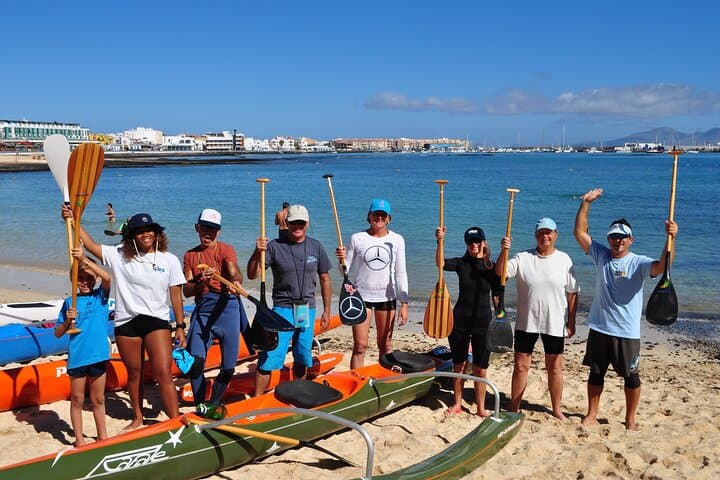
The experience is a cultural braid: guides teach Polynesian-style paddling technique while narrating Canarian fishing history and the island’s protected status. The Hawaiian canoe is practical—designed to share effort and to read waves—so even novices find propulsion in teamwork. Between strokes you’ll hear the guide point out seabird nesting sites and the rare, occasional sighting of monk seals hauled out on remote rocks.
Practical rhythm replaces poetic impulse when planning. The tour runs about five hours from pickup in Corralejo, with roughly an hour of transit paddling each way and a comfortable stop on Lobos for snorkeling, a picnic, and a short walk through the fishing hamlet. Weather matters: trade winds build seas quickly, and the route can be altered for safety. The provider supplies thermal clothing, dry bags, neoprene slippers, bottled water, and snorkel gear; participants should bring reef-safe sunscreen, a sun hat, and a compact dry change of clothes.
On the water, pacing is everything. The canoe asks for steady, synchronous strokes rather than sprinting; when the team finds that cadence, the ocean goes from opponent to partner, pushing and catching the boat in a way that feels almost conversational. The break on Lobos rewards patience—calm lagoons for safe snorkeling, and a tiny port where heritage stone houses remember a fishing way of life.
This trip suits travelers with moderate fitness who want an active, cultural sea day rather than a motorized cruise. It’s an intimate way to read the Canarian coast: geology, seabirds, small-scale human history, and a lesson in cooperative paddling that leaves both arms and perspective pleasantly tired.
moderate.
5 hours.
Moderate — able to paddle and sit for multiple one-hour shifts; basic core and upper-body stamina helpful
The canoe accepts riders from about 7 to 77 years old with moderate fitness; participants should be comfortable sitting and paddling intermittently.
Yes — snorkeling equipment is included, along with bottled water and a snack during the Lobos stop.
Total duration is roughly five hours with about one hour each way paddling and a 90–120 minute stop on Lobos for snorkeling and a picnic.
The operator may modify route or cancel for safety; if canceled at least 24 hours before departure you can get a full refund per the cancellation policy.
Facilities are minimal—there is no regular running water or public restrooms on most parts of the island, so plan accordingly.
No; guides teach Hawaiian canoe technique and steering. Teamwork is key, and the canoe’s ama provides excellent stability.
Isla de Lobos has been a fishing and stopover point for centuries; its volcanic origins shaped the shallow coves that make modern snorkelling so rewarding.
Lobos is part of a protected area with visitor limits and strict rules—respect paths, take all rubbish back to Corralejo, and use reef-safe products.
MAEVA Kayak operates guided outdoor trips and adventures with an emphasis on safety, stewardship, and memorable experiences.
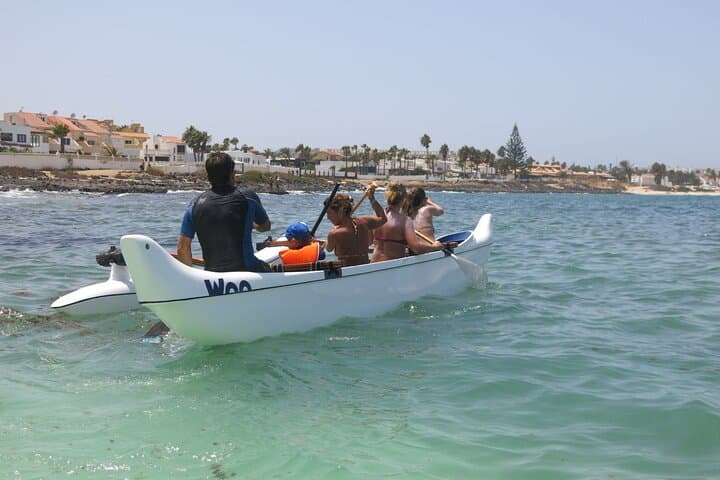
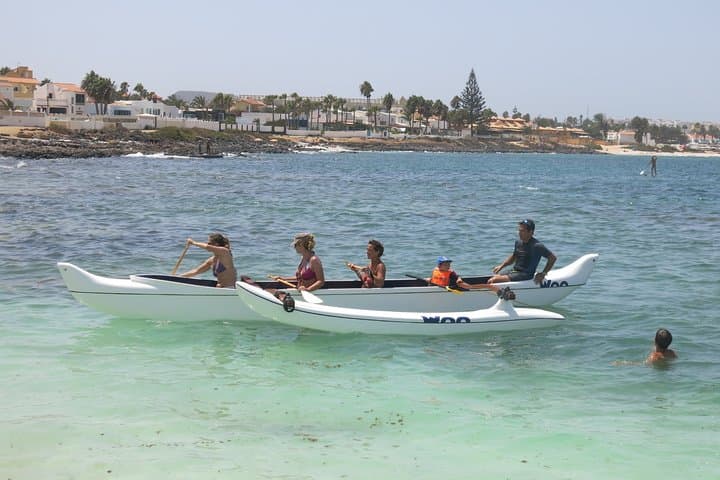
The ocean arrives with a sound: a steady, low breathing that pushes against the hull and asks you to join its rhythm. On the quay in Corralejo, the guide fits a life jacket and points to a long, narrow Hawaiian pirogue—five seats, a central ama for stability, bright against the Atlantic glare. By the time the canoe slips past the breakwater, the town’s hum has been left behind and the sea’s motion becomes the group’s metronome.
The ocean arrives with a sound: a steady, low breathing that pushes against the hull and asks you to join its rhythm. On the quay in Corralejo, the guide fits a life jacket and points to a long, narrow Hawaiian pirogue—five seats, a central ama for stability, bright against the Atlantic glare. By the time the canoe slips past the breakwater, the town’s hum has been left behind and the sea’s motion becomes the group’s metronome.
Isla de Lobos sits like a small secret off Fuerteventura’s northern tip—rocky ridges, a pale lagoon called La Concha, and a tiny cluster of stone houses at Puertito. The islet is volcanic in origin, an outcropping formed by coastal eruptions and sculpted by centuries of wind and salt. Visitors come not only for the clear, shallow snorkel coves but for the island’s lived-in absence: no roads, no shops, no electricity—only the slow pulse of tides and gulls.
The experience is a cultural braid: guides teach Polynesian-style paddling technique while narrating Canarian fishing history and the island’s protected status. The Hawaiian canoe is practical—designed to share effort and to read waves—so even novices find propulsion in teamwork. Between strokes you’ll hear the guide point out seabird nesting sites and the rare, occasional sighting of monk seals hauled out on remote rocks.
Practical rhythm replaces poetic impulse when planning. The tour runs about five hours from pickup in Corralejo, with roughly an hour of transit paddling each way and a comfortable stop on Lobos for snorkeling, a picnic, and a short walk through the fishing hamlet. Weather matters: trade winds build seas quickly, and the route can be altered for safety. The provider supplies thermal clothing, dry bags, neoprene slippers, bottled water, and snorkel gear; participants should bring reef-safe sunscreen, a sun hat, and a compact dry change of clothes.
On the water, pacing is everything. The canoe asks for steady, synchronous strokes rather than sprinting; when the team finds that cadence, the ocean goes from opponent to partner, pushing and catching the boat in a way that feels almost conversational. The break on Lobos rewards patience—calm lagoons for safe snorkeling, and a tiny port where heritage stone houses remember a fishing way of life.
This trip suits travelers with moderate fitness who want an active, cultural sea day rather than a motorized cruise. It’s an intimate way to read the Canarian coast: geology, seabirds, small-scale human history, and a lesson in cooperative paddling that leaves both arms and perspective pleasantly tired.