THE ADVENTURE COLLECTIVE® · Independent discovery and booking for outdoor travel

Take a 3‑hour Hawaiian canoe tour from Urca Beach and sail close to Sugarloaf’s cliffs, secret coves and photo-ready stops. This hands-on outing mixes speed, snorkeling stops, and an intimate look at Guanabara Bay’s shoreline.
Take a 3‑hour Hawaiian canoe tour from Urca Beach and sail close to Sugarloaf’s cliffs, secret coves and photo-ready stops. This hands-on outing mixes speed, snorkeling stops, and an intimate look at Guanabara Bay’s shoreline.
The hull slips off Urca Beach and the bay opens like a moving map — Sugarloaf’s granite flank watching as the canoe cuts across Guanabara Bay. Wind lifts the Hawaiian-style outrigger and the captain trims the sail; the boat surges, alternately silent under sail and helped along by a small motor to sniff into sea caves and tight coves.
Verified experiences and guided adventures in the surrounding area.
Operated by Rio Ocean Club · Rio de Janeiro, Rio de Janeiro
The hull slips off Urca Beach and the bay opens like a moving map — Sugarloaf’s granite flank watching as the canoe cuts across Guanabara Bay. Wind lifts the Hawaiian-style outrigger and the captain trims the sail; the boat surges, alternately silent under sail and helped along by a small motor to sniff into sea caves and tight coves.
This is less a sightseeing ferry than a hands-on coastal run. The route keeps close to the famous postcards — Pão de Açúcar and Morro da Urca — but also threads narrower channels that larger vessels avoid. Geologically the headlands here are granite and gneiss, shaped by ancient uplift and marine erosion, so expect sheer rock faces, small caves and pebble shoals where currents sculpt the shoreline. Culturally, the harbor has long been Rio’s gateway: colonial fortifications and the old fishing communities of Urca give the coastline a lived-in feel.
Practical guidance: tours run about 2.5 hours, launching from Urca Beach. Operators provide life jackets, bottled water, snacks and lifeguards; a motor assists for tight approaches and faster transit. Guests can help trim sails if interested, and there are planned stops for snorkeling and photos. Bring reef-safe sunscreen, a waterproof camera and shoes with good grip; if you’re prone to seasickness take medication beforehand. Expect close quarters when approaching caves and shallow coves — follow the crew’s directions.
Timing matters: morning and late-afternoon light are best for photos and calmer seas. The trip suits active travelers who want speed, sea time and a more intimate look at Rio’s shoreline than a standard cruise.
moderate.
2–3 hours.
Basic mobility and comfort on a small boat; able to board from sand or a low dock and handle short swims.
Basic swimming ability is recommended; life jackets are provided and there are lifeguards, but non‑swimmers should inform the crew and remain in safer areas of the boat.
Meet at Urca Beach where the captain will be on the sand; guests board from the beach or a low tender depending on conditions.
Children can join but infants under 3 are not recommended; the operator requires infants to sit on an adult’s lap and assesses mobility for younger children.
Trips are canceled for unsafe weather; the operator offers a full refund if you cancel at least 24 hours before departure and will cancel immediately in hazardous conditions.
Sugarloaf (Pão de Açúcar) and the Urca headland mark the entrance to Guanabara Bay; the area has strategic colonial forts and a long fishing history tied to Rio’s maritime trade.
Operators often emphasize no‑trace practices—avoid single‑use plastics, use reef‑safe sunscreen, and follow crew guidance to protect fragile rock and marine habitats.
Rio Ocean Club operates guided outdoor trips and adventures with an emphasis on safety, stewardship, and memorable experiences.
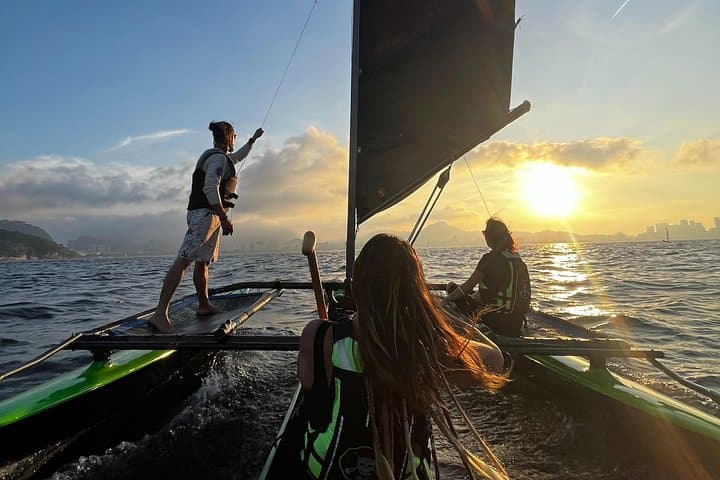
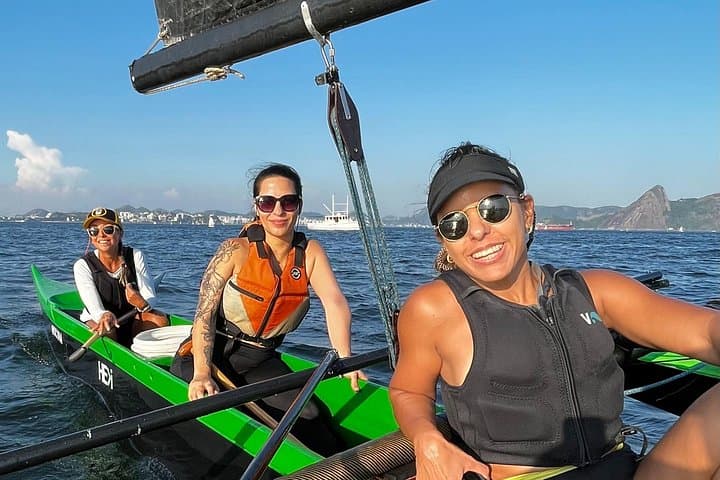
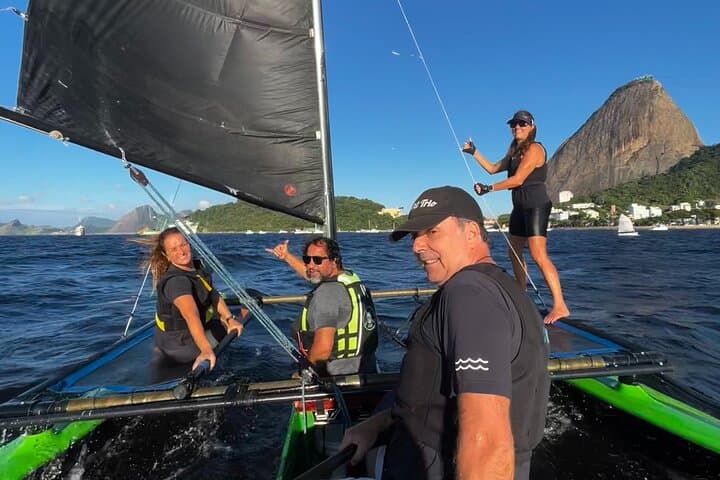
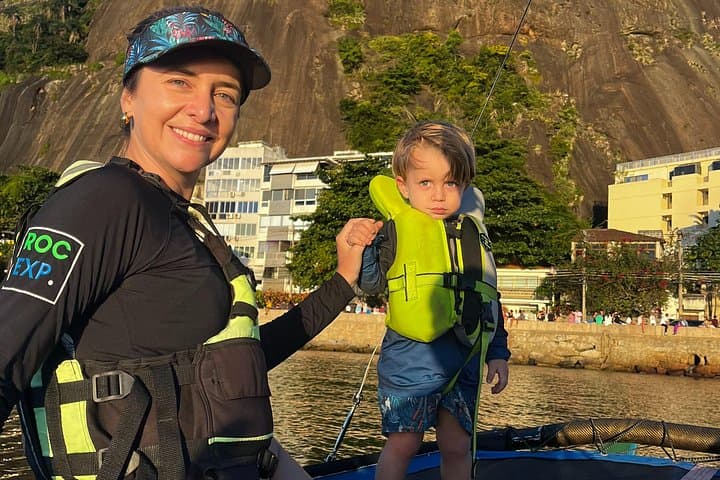
The hull slips off Urca Beach and the bay opens like a moving map — Sugarloaf’s granite flank watching as the canoe cuts across Guanabara Bay. Wind lifts the Hawaiian-style outrigger and the captain trims the sail; the boat surges, alternately silent under sail and helped along by a small motor to sniff into sea caves and tight coves.
The hull slips off Urca Beach and the bay opens like a moving map — Sugarloaf’s granite flank watching as the canoe cuts across Guanabara Bay. Wind lifts the Hawaiian-style outrigger and the captain trims the sail; the boat surges, alternately silent under sail and helped along by a small motor to sniff into sea caves and tight coves.
This is less a sightseeing ferry than a hands-on coastal run. The route keeps close to the famous postcards — Pão de Açúcar and Morro da Urca — but also threads narrower channels that larger vessels avoid. Geologically the headlands here are granite and gneiss, shaped by ancient uplift and marine erosion, so expect sheer rock faces, small caves and pebble shoals where currents sculpt the shoreline. Culturally, the harbor has long been Rio’s gateway: colonial fortifications and the old fishing communities of Urca give the coastline a lived-in feel.
Practical guidance: tours run about 2.5 hours, launching from Urca Beach. Operators provide life jackets, bottled water, snacks and lifeguards; a motor assists for tight approaches and faster transit. Guests can help trim sails if interested, and there are planned stops for snorkeling and photos. Bring reef-safe sunscreen, a waterproof camera and shoes with good grip; if you’re prone to seasickness take medication beforehand. Expect close quarters when approaching caves and shallow coves — follow the crew’s directions.
Timing matters: morning and late-afternoon light are best for photos and calmer seas. The trip suits active travelers who want speed, sea time and a more intimate look at Rio’s shoreline than a standard cruise.