THE ADVENTURE COLLECTIVE® · Independent discovery and booking for outdoor travel

Walk Salem at your own pace with an offline audio guide that navigates historic sites tied to the 1692 witch trials and local hauntings. Expect paved streets, short walks between stops, and a narrative that mixes court records, architecture, and local lore.
Walk Salem at your own pace with an offline audio guide that navigates historic sites tied to the 1692 witch trials and local hauntings. Expect paved streets, short walks between stops, and a narrative that mixes court records, architecture, and local lore.
A thin salt wind threads through Derby Square as the streetlamps pool their light on brick and cobblestone. On a self-guided walk through Salem, the town’s narrow alleys and Federal‑style facades become the stage for voices from 1692: courthouse records, cemetery stones, and a handful of old houses that still claim unsettled stories. The audio guide puts a steady, conversational narrator in your ear while you move at your own pace—pause at a plaque, circle a statue, or duck into a doorway where the guide points out a subtle detail.
Verified experiences and guided adventures in the surrounding area.
Operated by Shaka Guide Apps · Salem, Massachusetts
A thin salt wind threads through Derby Square as the streetlamps pool their light on brick and cobblestone. On a self-guided walk through Salem, the town’s narrow alleys and Federal‑style facades become the stage for voices from 1692: courthouse records, cemetery stones, and a handful of old houses that still claim unsettled stories. The audio guide puts a steady, conversational narrator in your ear while you move at your own pace—pause at a plaque, circle a statue, or duck into a doorway where the guide points out a subtle detail.
Salem’s story is both maritime and judicial. The Witch Trials are the most infamous chapter, but the town’s wealth came from shipping and skilled craftsmen like Samuel McIntire, whose architecture shapes Chestnut Street. The geology — glacially scoured coastal plain met by Essex County’s low bluffs — left a compact town that grew tight to its harbor and preserved narrow lanes and burial grounds, including the Old Burying Point Cemetery. Local culture now balances tourism, historic preservation, and an active arts scene; many stops reference recorded court testimony and period architecture rather than legend alone.
Practically, expect paved sidewalks, short hills, and about 1–2 miles of walking across downtown blocks; total time depends on how many sites and museum detours you choose (the audio runs 1–3 hours). Download the tour over Wi‑Fi, bring a charged phone and comfortable shoes, and be respectful in cemeteries and private courtyards. Visit during daylight if you prefer clearer plaques and safer navigation; evening walks offer atmosphere but require extra caution with traffic and dim streets. This tour works offline, so it’s a flexible way to learn Salem’s history on your own terms.
easy.
1–3 hours.
Light walking ability; suitable for most fitness levels with frequent stops
No — this is a self‑guided audio tour you download to your phone and start whenever you like; the audio runs offline once redeemed.
Plan on 1–3 hours of narration and roughly 1–2 miles of walking across downtown Salem, depending on detours into museums or extended stops.
Many downtown sidewalks and some sites are accessible, but cobblestones and historic steps can be barriers; check individual sites for accessibility details.
Yes, several stops reference museums like the Witch Trial exhibits; admission is separate, so check museum hours and tickets before detouring.
Salem’s Witch Trials of 1692 were a series of hearings and prosecutions rooted in local politics, Puritan belief systems, and social tensions; surviving court records and homes still anchor many interpretive stops.
Visitors are asked to stay on sidewalks, avoid touching fragile stonework, and support local preservation efforts by following posted rules and using established paths.
Shaka Guide Apps operates guided outdoor trips and adventures with an emphasis on safety, stewardship, and memorable experiences.

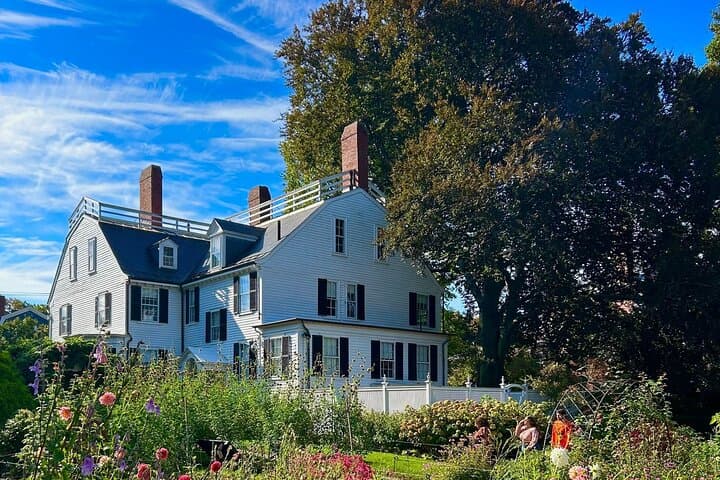


A thin salt wind threads through Derby Square as the streetlamps pool their light on brick and cobblestone. On a self-guided walk through Salem, the town’s narrow alleys and Federal‑style facades become the stage for voices from 1692: courthouse records, cemetery stones, and a handful of old houses that still claim unsettled stories. The audio guide puts a steady, conversational narrator in your ear while you move at your own pace—pause at a plaque, circle a statue, or duck into a doorway where the guide points out a subtle detail.
A thin salt wind threads through Derby Square as the streetlamps pool their light on brick and cobblestone. On a self-guided walk through Salem, the town’s narrow alleys and Federal‑style facades become the stage for voices from 1692: courthouse records, cemetery stones, and a handful of old houses that still claim unsettled stories. The audio guide puts a steady, conversational narrator in your ear while you move at your own pace—pause at a plaque, circle a statue, or duck into a doorway where the guide points out a subtle detail.
Salem’s story is both maritime and judicial. The Witch Trials are the most infamous chapter, but the town’s wealth came from shipping and skilled craftsmen like Samuel McIntire, whose architecture shapes Chestnut Street. The geology — glacially scoured coastal plain met by Essex County’s low bluffs — left a compact town that grew tight to its harbor and preserved narrow lanes and burial grounds, including the Old Burying Point Cemetery. Local culture now balances tourism, historic preservation, and an active arts scene; many stops reference recorded court testimony and period architecture rather than legend alone.
Practically, expect paved sidewalks, short hills, and about 1–2 miles of walking across downtown blocks; total time depends on how many sites and museum detours you choose (the audio runs 1–3 hours). Download the tour over Wi‑Fi, bring a charged phone and comfortable shoes, and be respectful in cemeteries and private courtyards. Visit during daylight if you prefer clearer plaques and safer navigation; evening walks offer atmosphere but require extra caution with traffic and dim streets. This tour works offline, so it’s a flexible way to learn Salem’s history on your own terms.