THE ADVENTURE COLLECTIVE® · Independent discovery and booking for outdoor travel

Walk Hilo’s moonlit bayfront on a two-hour haunted history tour that blends legends of Pele, post-tsunami lore, and the neon glow of a 1920s theater. It’s equal parts storytelling and street-level exploration—flat, easy walking with big atmosphere and deep local context.
Walk Hilo’s moonlit bayfront on a two-hour haunted history tour that blends legends of Pele, post-tsunami lore, and the neon glow of a 1920s theater. It’s equal parts storytelling and street-level exploration—flat, easy walking with big atmosphere and deep local context.
Mist hangs low where the Wailuku River exhales into Hilo Bay, and the shoreline feels awake in that way harbors do after dark—neon flickers, palms rustle, and the water tests the rocks with a soft, steady push. This is where the ghost walk begins, steps tracing the crescent of Hilo’s historic bayfront as stories rise with the trades. A guide sets the pace: two easy hours, a mile or so on flat sidewalks, and a circuit through places where memory is thick—old theaters, banyan roots, and stones that chose kings. The river watches, daring you to listen.
Verified experiences and guided adventures in the surrounding area.
Operated by American Ghost Walks - Hawaii · Hilo, Hawaii
Mist hangs low where the Wailuku River exhales into Hilo Bay, and the shoreline feels awake in that way harbors do after dark—neon flickers, palms rustle, and the water tests the rocks with a soft, steady push. This is where the ghost walk begins, steps tracing the crescent of Hilo’s historic bayfront as stories rise with the trades. A guide sets the pace: two easy hours, a mile or so on flat sidewalks, and a circuit through places where memory is thick—old theaters, banyan roots, and stones that chose kings. The river watches, daring you to listen.
Hilo has earned its moniker as the New Orleans of the Pacific, not for jazz but for the way history lingers. The Pacific Tsunami Museum marks the loss and resilience following the 1946 and 1960 waves that bulldozed downtown and reshaped lives; locals still talk about the sightings that surged in the aftermath and the Buddhist rites that followed. The Palace Theater, built in 1925, glows with marquee light and contemporary accounts—footsteps without feet, a whisper in the balcony. Under the canopy of banyans, the Merrie Monarch Festival stirs each spring, honoring King David Kalākaua and the endurance of hula; with it come tales of rivalries, curses, and ancestral attention.
On the library lawn sit the Naha and Pinao stones, megaliths ferried centuries ago from Kauaʻi. Tradition holds that Kamehameha turned one to prove a destiny to unify the islands; prophecy lives in the pores of those ancient blocks. Around Hilo, deities still get the last word: Pele, the force behind volcanoes, has been glimpsed along roads and in red glow; moʻo guardians like Mo‘oinanea defend ponds and pools with reptilian patience. You don’t have to believe to feel the city’s cadence—it’s enough to walk it.
The route is straightforward and suitable for all abilities, including wheelchairs and strollers. Expect humid air, passing showers, and slick curbs. Guides share both legend and context, emphasizing respect: look, listen, and leave places as you found them. Bring water, a light layer, and curiosity. Photos are welcome, but flash can feel like shouting at the night; let the scene speak in blue hour and street glow.
Logistics are simple: meet near the historical marker by 2 Kamehameha Avenue where the river meets the bay. From there, the walk threads a compact grid of murals, temples, and shoreline. When the tour ends, Hilo’s small eateries and late-night malasada windows are close at hand. The bay keeps breathing, the river keeps talking, and you walk away with a map that’s part literal, part felt—Hilo’s past walking alongside your present.
easy.
2 hours.
Comfortable walking 1–1.5 miles at a relaxed pace in warm, humid conditions with brief showers.
Expect about 1–1.5 miles over two hours on flat sidewalks with frequent stops for stories and photos.
Yes—content focuses on history and legends rather than jump scares. Parents can gauge younger children’s comfort with nighttime settings.
Hilo showers are common; tours generally run rain or shine, and ponchos are available. Heavy weather may postpone for safety.
Yes, curb cuts and wide sidewalks make it accessible for wheelchairs and strollers.
Photography is welcome; please avoid flash in sensitive cultural areas and be mindful of other guests and traffic.
Public restrooms are limited after dark; use facilities before the tour or ask your guide about mid-route options.
Hilo’s downtown was rebuilt after the 1946 and 1960 tsunamis; the Merrie Monarch Festival honors King David Kalākaua’s role in reviving hula and Hawaiian arts.
Stay on sidewalks and respect cultural sites—do not disturb stones or leave offerings. Pack out trash and keep lights low around wildlife.
American Ghost Walks - Hawaii operates guided outdoor trips and adventures with an emphasis on safety, stewardship, and memorable experiences.
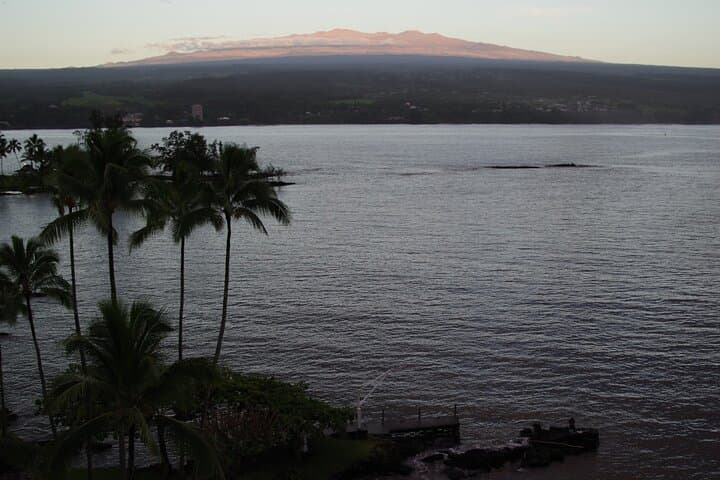
Mist hangs low where the Wailuku River exhales into Hilo Bay, and the shoreline feels awake in that way harbors do after dark—neon flickers, palms rustle, and the water tests the rocks with a soft, steady push. This is where the ghost walk begins, steps tracing the crescent of Hilo’s historic bayfront as stories rise with the trades. A guide sets the pace: two easy hours, a mile or so on flat sidewalks, and a circuit through places where memory is thick—old theaters, banyan roots, and stones that chose kings. The river watches, daring you to listen.
Mist hangs low where the Wailuku River exhales into Hilo Bay, and the shoreline feels awake in that way harbors do after dark—neon flickers, palms rustle, and the water tests the rocks with a soft, steady push. This is where the ghost walk begins, steps tracing the crescent of Hilo’s historic bayfront as stories rise with the trades. A guide sets the pace: two easy hours, a mile or so on flat sidewalks, and a circuit through places where memory is thick—old theaters, banyan roots, and stones that chose kings. The river watches, daring you to listen.
Hilo has earned its moniker as the New Orleans of the Pacific, not for jazz but for the way history lingers. The Pacific Tsunami Museum marks the loss and resilience following the 1946 and 1960 waves that bulldozed downtown and reshaped lives; locals still talk about the sightings that surged in the aftermath and the Buddhist rites that followed. The Palace Theater, built in 1925, glows with marquee light and contemporary accounts—footsteps without feet, a whisper in the balcony. Under the canopy of banyans, the Merrie Monarch Festival stirs each spring, honoring King David Kalākaua and the endurance of hula; with it come tales of rivalries, curses, and ancestral attention.
On the library lawn sit the Naha and Pinao stones, megaliths ferried centuries ago from Kauaʻi. Tradition holds that Kamehameha turned one to prove a destiny to unify the islands; prophecy lives in the pores of those ancient blocks. Around Hilo, deities still get the last word: Pele, the force behind volcanoes, has been glimpsed along roads and in red glow; moʻo guardians like Mo‘oinanea defend ponds and pools with reptilian patience. You don’t have to believe to feel the city’s cadence—it’s enough to walk it.
The route is straightforward and suitable for all abilities, including wheelchairs and strollers. Expect humid air, passing showers, and slick curbs. Guides share both legend and context, emphasizing respect: look, listen, and leave places as you found them. Bring water, a light layer, and curiosity. Photos are welcome, but flash can feel like shouting at the night; let the scene speak in blue hour and street glow.
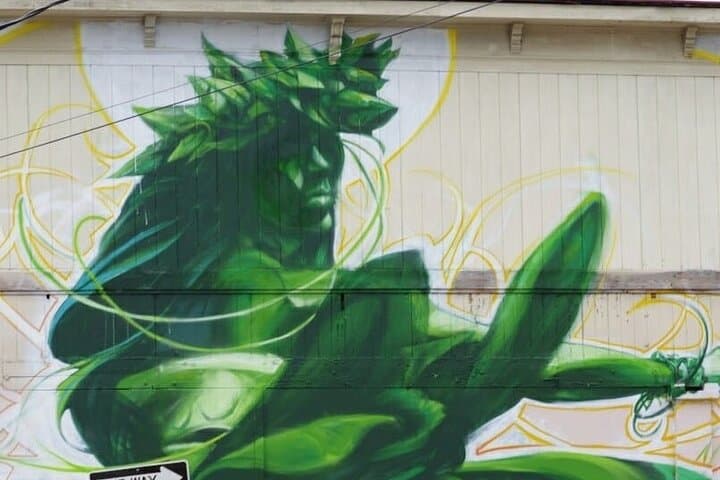
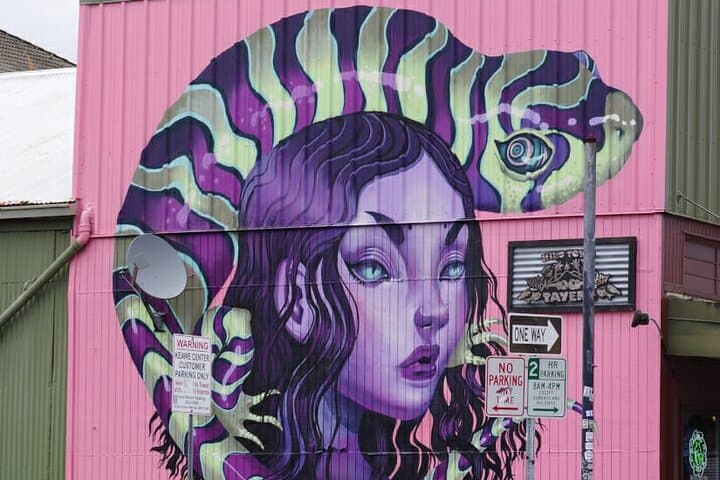
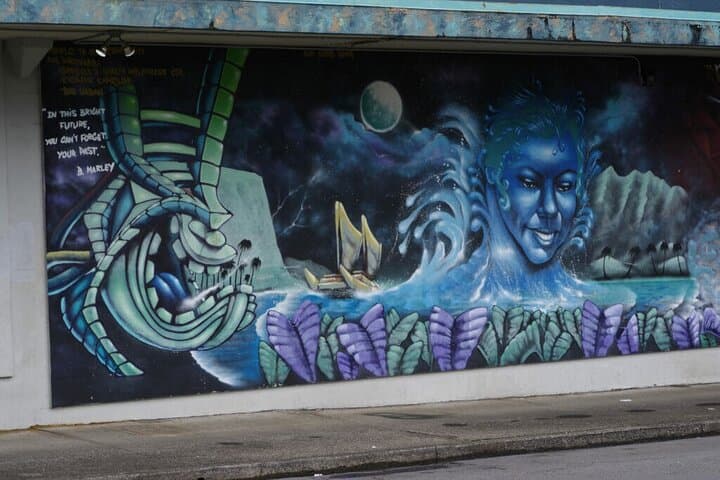
Logistics are simple: meet near the historical marker by 2 Kamehameha Avenue where the river meets the bay. From there, the walk threads a compact grid of murals, temples, and shoreline. When the tour ends, Hilo’s small eateries and late-night malasada windows are close at hand. The bay keeps breathing, the river keeps talking, and you walk away with a map that’s part literal, part felt—Hilo’s past walking alongside your present.