THE ADVENTURE COLLECTIVE® · Independent discovery and booking for outdoor travel

Glide through downtown Chicago by Segway and trace the city’s darker chapters — from the Iroquois Theatre tragedy to the Chicago Outfit’s bloody legacy. This compact, two-hour tour pairs easy riding with hard history.
Glide through downtown Chicago by Segway and trace the city’s darker chapters — from the Iroquois Theatre tragedy to the Chicago Outfit’s bloody legacy. This compact, two-hour tour pairs easy riding with hard history.
You roll out of the shadow of Millennium Park onto the wide sweep of Monroe Street, Segway humming underfoot, as the city’s stone facades lean in with stories. Streetlights and theater marquees throw pools of light across the pavement; your guide threads history and rumor into a steady cadence that keeps the past feeling immediate rather than theatrical.
Verified experiences and guided adventures in the surrounding area.
Operated by Absolutely Chicago Segway Tours · Chicago, Illinois
You roll out of the shadow of Millennium Park onto the wide sweep of Monroe Street, Segway humming underfoot, as the city’s stone facades lean in with stories. Streetlights and theater marquees throw pools of light across the pavement; your guide threads history and rumor into a steady cadence that keeps the past feeling immediate rather than theatrical.
This two-hour route intersects hard events and hidden corners: the 1903 Iroquois Theatre fire that reshaped building codes, the retail mausoleum of Marshall Field’s where staff and shoppers reported strange sightings, and the streets once controlled by the Chicago Outfit — locations of speakeasies, assassinations, and the subterranean infrastructure of a city that reinvented itself through vice and law.
Geology is secondary here; this is an architectural landscape of limestone, brick, and steel, where facades record waves of economic boom. Culturally the tour reads the city like a palimpsest — immigrant neighborhoods, labor struggles, and organized crime are all legible on block after block.
Practical guide: rides begin with a safety orientation and helmet fit; expect 10–15 minutes of standing training before heading out. Routes are mostly flat, on sidewalks and riverfront promenades, with frequent stops for stories and photo ops. Dress in layers, wear closed-toe shoes, and arrive 15 minutes early with the online waiver completed. Tours operate in most weather; operators reserve the right to refuse impaired riders. For curious travelers this is a fast, accessible way to layer history onto Chicago’s downtown grid while keeping your feet—and your perspective—moving.
easy.
2 hours.
Minimal aerobic fitness required; participants should be able to stand and balance for up to two hours and walk short distances.
No — tours begin with a safety video and one-on-one orientation so first-timers can learn to balance and operate the Segway.
Yes — minimum age is 12; minimum weight around 100 lb and maximum recommended weight approximately 260 lb (operator policies vary).
Tours operate in most weather; ponchos are provided for rain. Operators may modify or cancel tours for severe weather for safety reasons.
Yes — small personal bags are allowed and operators may provide a bag for belongings; keep packs compact to avoid balance issues.
The tour threads together incidents from Chicago’s rapid growth: the Iroquois Theatre fire (1903) influenced national fire-safety codes, while the Chicago Outfit shaped organized crime and civic politics through the 20th century.
This is an urban experience—respect historic markers and private property, stay on sidewalks and designated paths, and minimize noise at memorial sites to preserve the experience for others.
Absolutely Chicago Segway Tours operates guided outdoor trips and adventures with an emphasis on safety, stewardship, and memorable experiences.


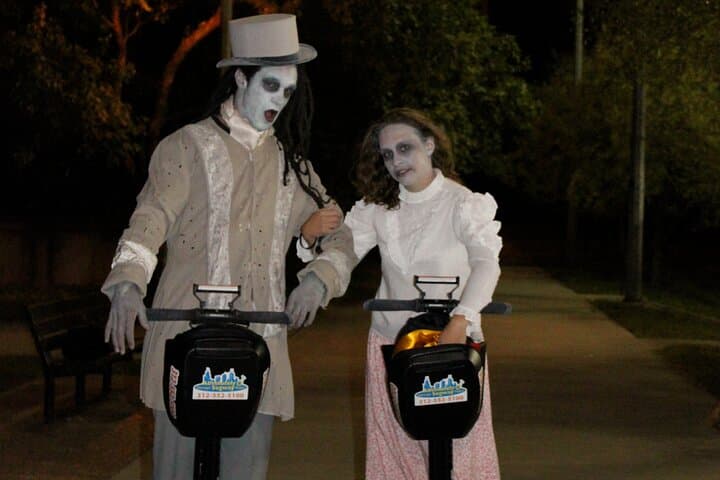
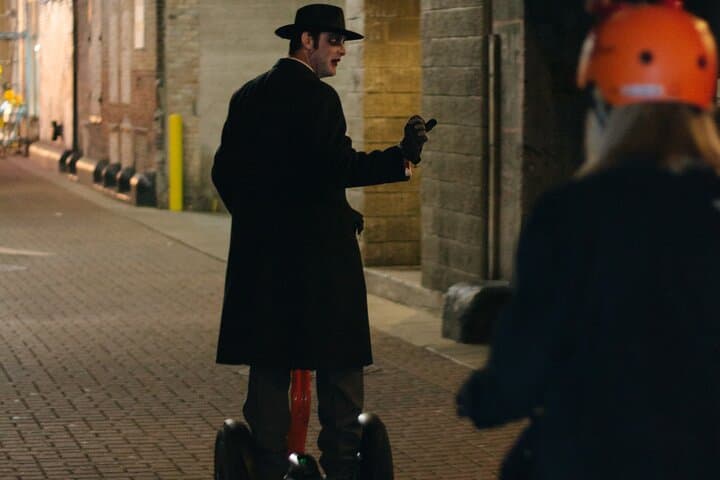
You roll out of the shadow of Millennium Park onto the wide sweep of Monroe Street, Segway humming underfoot, as the city’s stone facades lean in with stories. Streetlights and theater marquees throw pools of light across the pavement; your guide threads history and rumor into a steady cadence that keeps the past feeling immediate rather than theatrical.
You roll out of the shadow of Millennium Park onto the wide sweep of Monroe Street, Segway humming underfoot, as the city’s stone facades lean in with stories. Streetlights and theater marquees throw pools of light across the pavement; your guide threads history and rumor into a steady cadence that keeps the past feeling immediate rather than theatrical.
This two-hour route intersects hard events and hidden corners: the 1903 Iroquois Theatre fire that reshaped building codes, the retail mausoleum of Marshall Field’s where staff and shoppers reported strange sightings, and the streets once controlled by the Chicago Outfit — locations of speakeasies, assassinations, and the subterranean infrastructure of a city that reinvented itself through vice and law.
Geology is secondary here; this is an architectural landscape of limestone, brick, and steel, where facades record waves of economic boom. Culturally the tour reads the city like a palimpsest — immigrant neighborhoods, labor struggles, and organized crime are all legible on block after block.
Practical guide: rides begin with a safety orientation and helmet fit; expect 10–15 minutes of standing training before heading out. Routes are mostly flat, on sidewalks and riverfront promenades, with frequent stops for stories and photo ops. Dress in layers, wear closed-toe shoes, and arrive 15 minutes early with the online waiver completed. Tours operate in most weather; operators reserve the right to refuse impaired riders. For curious travelers this is a fast, accessible way to layer history onto Chicago’s downtown grid while keeping your feet—and your perspective—moving.