THE ADVENTURE COLLECTIVE® · Independent discovery and booking for outdoor travel

Paddle a calm reservoir carved into the Hajar foothills at Hatta Dam. This accessible 3–4 hour single-kayak experience pairs easy strokes with mountain views and a calm, bird-filled lake.
Paddle a calm reservoir carved into the Hajar foothills at Hatta Dam. This accessible 3–4 hour single-kayak experience pairs easy strokes with mountain views and a calm, bird-filled lake.
Morning light slices across the Hatta Dam and the lake answers with a flat, glassy surface that invites a single kayak to glide away from shore. Paddle strokes write a slow line between folded granite ridges; the mountains seem to lean in, watching each passing boat. This is not a coastal sea—it’s a high-desert reservoir carved into the lower Hajar range, where wind and rock still set the pace.
Verified experiences and guided adventures in the surrounding area.
Operated by Sougat Travel & Tourism LLC · Hatta, Dubai
Morning light slices across the Hatta Dam and the lake answers with a flat, glassy surface that invites a single kayak to glide away from shore. Paddle strokes write a slow line between folded granite ridges; the mountains seem to lean in, watching each passing boat. This is not a coastal sea—it’s a high-desert reservoir carved into the lower Hajar range, where wind and rock still set the pace.
Hatta’s human story runs alongside its geology. The dam created a lake that transformed a seasonal wadi into a stable water body; nearby mud-brick villages and a restored Heritage Village recall a farming and trade life that predates the emirate’s oil era. The Hajar Mountains are ophiolite—ancient oceanic crust thrust up and folded—and the cliffs around the lake are raw, exposed rock that channels afternoon wind and shapes local currents.
On the water you’ll meet the slow rhythms of the place: waterbirds quartering the surface, the occasional fisherman on the shore, and the quiet of a valley that still feels removed from Dubai’s towers. Local guides tend to point out old irrigation terraces and explain how mountain runoff feeds the dam in winter and spring.
Practical guide: trips run about 3–4 hours; expect 4–8 km of paddling depending on route and wind. Life jacket and basic briefing are standard—bring sun protection, a refillable water bottle, and shoes that can get wet. Start early to avoid midday heat, watch changing winds in the afternoon, and respect wildlife by keeping distance from nesting birds. The access is straightforward; this is an accessible paddle that rewards steady strokes with mountain views the whole way.
easy.
3–4 hours.
Suitable for most fitness levels; basic paddling endurance for several kilometers helps.
No—this is marketed as suitable for all fitness levels; guides provide a safety briefing and basic paddling instruction.
Yes, operators typically supply PFDs and mandatory safety gear as part of the booking.
The activity runs about 3–4 hours, including setup, briefing, and on-water time; exact duration may vary by booking.
Many operators include pickup or drop-off options—confirm at booking for specific pickup points and timing.
Hatta has long been a mountain farming and trade locality; the dam transformed seasonal wadis into a permanent lake that supports recreation and local agriculture.
Stick to marked launch points, pack out all waste, and avoid disturbing reed beds—shoreline habitats are sensitive and water levels fluctuate seasonally.
Sougat Travel & Tourism LLC operates guided outdoor trips and adventures with an emphasis on safety, stewardship, and memorable experiences.
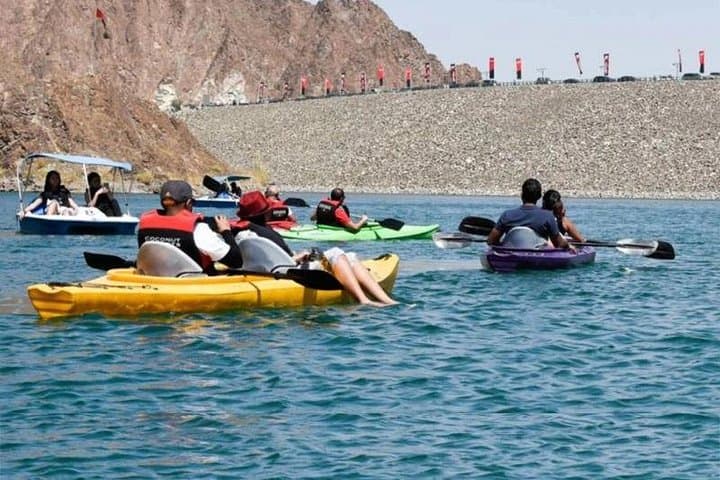
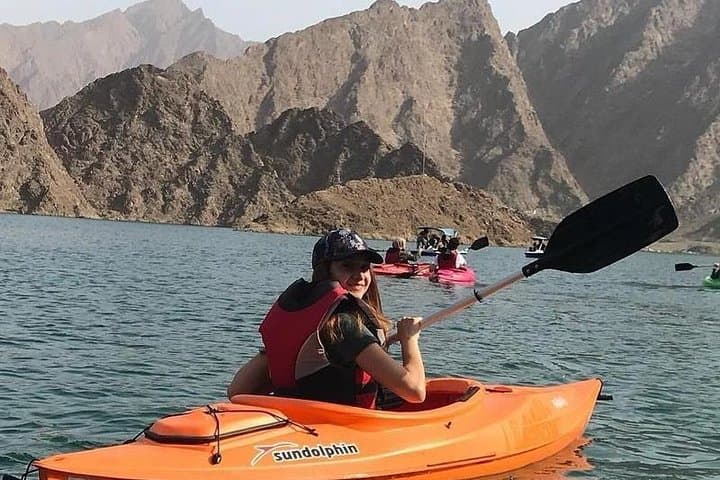

Morning light slices across the Hatta Dam and the lake answers with a flat, glassy surface that invites a single kayak to glide away from shore. Paddle strokes write a slow line between folded granite ridges; the mountains seem to lean in, watching each passing boat. This is not a coastal sea—it’s a high-desert reservoir carved into the lower Hajar range, where wind and rock still set the pace.
Morning light slices across the Hatta Dam and the lake answers with a flat, glassy surface that invites a single kayak to glide away from shore. Paddle strokes write a slow line between folded granite ridges; the mountains seem to lean in, watching each passing boat. This is not a coastal sea—it’s a high-desert reservoir carved into the lower Hajar range, where wind and rock still set the pace.
Hatta’s human story runs alongside its geology. The dam created a lake that transformed a seasonal wadi into a stable water body; nearby mud-brick villages and a restored Heritage Village recall a farming and trade life that predates the emirate’s oil era. The Hajar Mountains are ophiolite—ancient oceanic crust thrust up and folded—and the cliffs around the lake are raw, exposed rock that channels afternoon wind and shapes local currents.
On the water you’ll meet the slow rhythms of the place: waterbirds quartering the surface, the occasional fisherman on the shore, and the quiet of a valley that still feels removed from Dubai’s towers. Local guides tend to point out old irrigation terraces and explain how mountain runoff feeds the dam in winter and spring.
Practical guide: trips run about 3–4 hours; expect 4–8 km of paddling depending on route and wind. Life jacket and basic briefing are standard—bring sun protection, a refillable water bottle, and shoes that can get wet. Start early to avoid midday heat, watch changing winds in the afternoon, and respect wildlife by keeping distance from nesting birds. The access is straightforward; this is an accessible paddle that rewards steady strokes with mountain views the whole way.