THE ADVENTURE COLLECTIVE® · Independent discovery and booking for outdoor travel

Skip the queues and step inside Hassan II Mosque with a licensed guide. This guided visit covers architecture, history, and access logistics for a 60–120 minute cultural walk through one of Morocco’s most striking modern monuments.
Skip the queues and step inside Hassan II Mosque with a licensed guide. This guided visit covers architecture, history, and access logistics for a 60–120 minute cultural walk through one of Morocco’s most striking modern monuments.
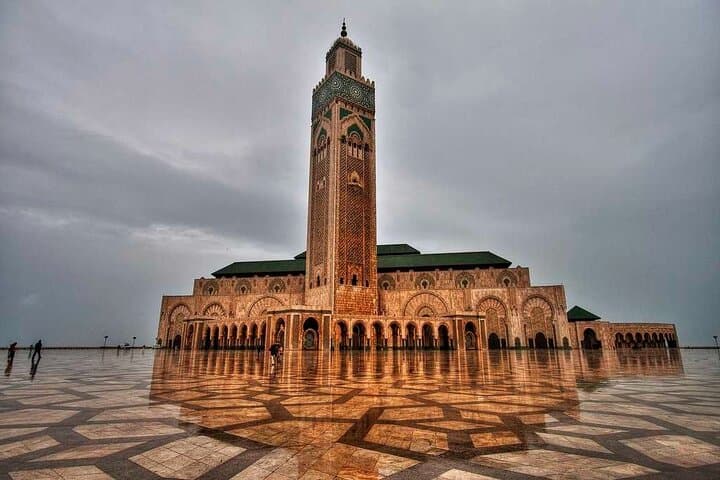
You step onto the wide esplanade; the Atlantic presses against the mosque’s base and a single minaret reaches skyward, glass and tile throwing back sunlight. The air carries briny gusts and the measured calls to prayer drifting from a distance—this is Hassan II Mosque, one of the world’s largest religious sites and a modern landmark of Casablanca.
Verified experiences and guided adventures in the surrounding area.
Operated by SHUTTLE LAYOVER AND TOURS · Casablanca, Casablanca-Settat
You step onto the wide esplanade; the Atlantic presses against the mosque’s base and a single minaret reaches skyward, glass and tile throwing back sunlight. The air carries briny gusts and the measured calls to prayer drifting from a distance—this is Hassan II Mosque, one of the world’s largest religious sites and a modern landmark of Casablanca.
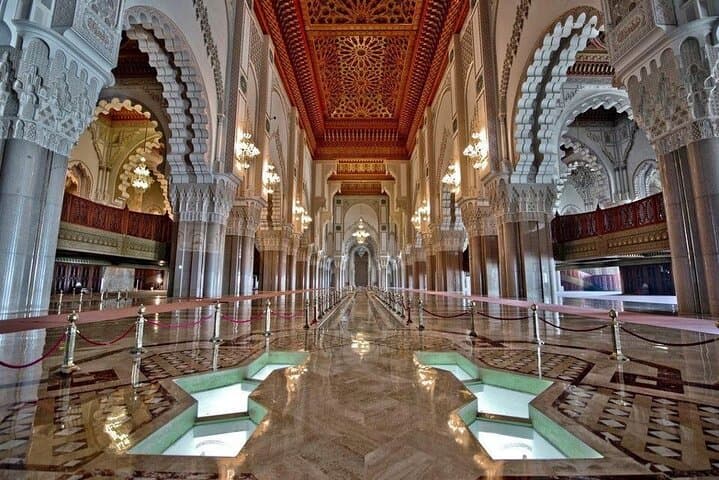
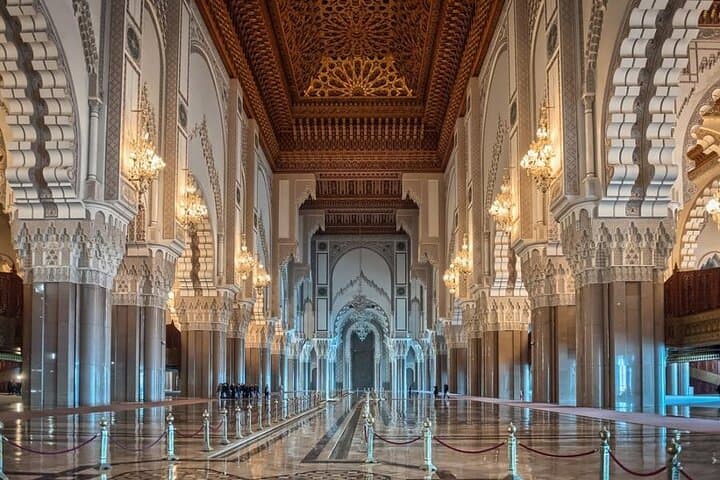
Completed in 1993 and designed by architect Michel Pinseau, the mosque sits partly over the ocean and uses traditional Moroccan craftsmanship—zellij tile, carved cedar, and marble—applied at monumental scale. Its minaret is the tallest in Morocco, and the prayer hall’s retractable roof and ocean-facing placement speak to engineering choices made to both honor faith and face the sea.
Beyond architecture, the site reflects post-colonial Morocco’s investment in national identity and tourism; guided visits are one of the rare ways non-Muslims can access the interior. Locals will point out the Habous Quarter and the Corniche as complementary stops for culture and coastal scenery.
Practical guidance: tours run roughly 60–120 minutes, include skip-the-line admission and an official multilingual guide, and require modest dress—shoulders and knees covered. Check tour times against prayer schedules, especially on Fridays. Mobile tickets streamline entry; arrive 10–15 minutes early for security screening. The mosque is wheelchair accessible, but some areas have steps. Bring a water bottle and a camera (no tripods during busy times). Morning and late-afternoon light are best for photography and cooler temperatures. Respect worshippers and signage; stay on marked routes to protect the building and the experience for others.
easy.
1–2 hours.
Suitable for most fitness levels; involves standing and walking on flat, often stone surfaces for up to two hours.
Yes; guided tours provide access to the interior for non-Muslim visitors outside of prayer times—check the tour schedule before booking.
The mosque and tour are wheelchair accessible, though some areas may have steps; confirm specific access needs when booking.
Visits last about 60–120 minutes and include skip-the-line admission and a local official guide who explains architecture and history.
Photography is generally allowed but be respectful of worshippers and follow guide instructions; avoid tripods and flash in crowded areas.
Commissioned by King Hassan II and completed in 1993, the mosque was built using traditional Moroccan artisanship alongside modern engineering, including a retractable roof and a minaret visible across Casablanca.
The site requires ongoing maintenance due to coastal exposure; visitors help by following marked routes, not touching delicate surfaces, and disposing of waste responsibly.
SHUTTLE LAYOVER AND TOURS operates guided outdoor trips and adventures with an emphasis on safety, stewardship, and memorable experiences.

You step onto the wide esplanade; the Atlantic presses against the mosque’s base and a single minaret reaches skyward, glass and tile throwing back sunlight. The air carries briny gusts and the measured calls to prayer drifting from a distance—this is Hassan II Mosque, one of the world’s largest religious sites and a modern landmark of Casablanca.
You step onto the wide esplanade; the Atlantic presses against the mosque’s base and a single minaret reaches skyward, glass and tile throwing back sunlight. The air carries briny gusts and the measured calls to prayer drifting from a distance—this is Hassan II Mosque, one of the world’s largest religious sites and a modern landmark of Casablanca.
Completed in 1993 and designed by architect Michel Pinseau, the mosque sits partly over the ocean and uses traditional Moroccan craftsmanship—zellij tile, carved cedar, and marble—applied at monumental scale. Its minaret is the tallest in Morocco, and the prayer hall’s retractable roof and ocean-facing placement speak to engineering choices made to both honor faith and face the sea.
Beyond architecture, the site reflects post-colonial Morocco’s investment in national identity and tourism; guided visits are one of the rare ways non-Muslims can access the interior. Locals will point out the Habous Quarter and the Corniche as complementary stops for culture and coastal scenery.
Practical guidance: tours run roughly 60–120 minutes, include skip-the-line admission and an official multilingual guide, and require modest dress—shoulders and knees covered. Check tour times against prayer schedules, especially on Fridays. Mobile tickets streamline entry; arrive 10–15 minutes early for security screening. The mosque is wheelchair accessible, but some areas have steps. Bring a water bottle and a camera (no tripods during busy times). Morning and late-afternoon light are best for photography and cooler temperatures. Respect worshippers and signage; stay on marked routes to protect the building and the experience for others.