THE ADVENTURE COLLECTIVE® · Independent discovery and booking for outdoor travel

Walk through Harvard Yard with a current student and hear campus stories, architectural highlights, and practical local tips. This 75‑minute route covers about a mile and ends in the student‑run Harvard Shop.
Walk through Harvard Yard with a current student and hear campus stories, architectural highlights, and practical local tips. This 75‑minute route covers about a mile and ends in the student‑run Harvard Shop.
You step out of the Harvard Square Red Line station and the brick paths pull you toward a rectangular green—Harvard Yard—where elms lean in and academic life hums at street level.
Verified experiences and guided adventures in the surrounding area.
Operated by Trademark Tours · Cambridge, Massachusetts
You step out of the Harvard Square Red Line station and the brick paths pull you toward a rectangular green—Harvard Yard—where elms lean in and academic life hums at street level.
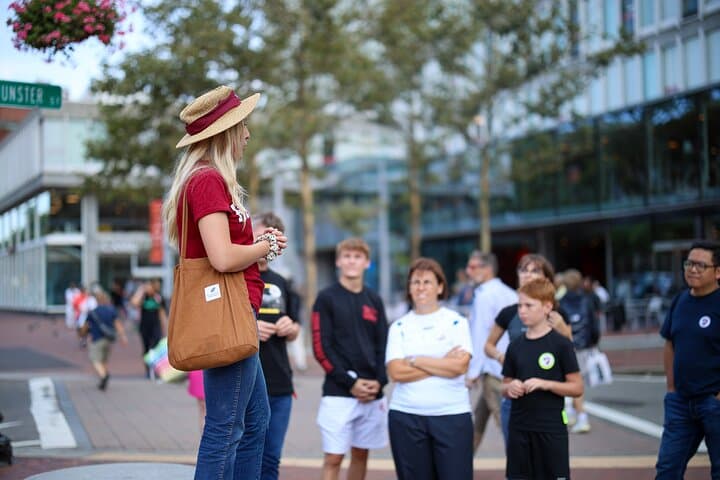
A student guide leads a compact group past cobbled walkways, through iron gates, and along façades carved with Victorian detail. The tour stitches together stories: the college's 1636 founding amid colonial Massachusetts, the Gothic Revival of Memorial Hall, and the quieter social history of student life across centuries.
Geology here is subtle—brick and Cambridge clay rather than dramatic bedrock—yet the campus sits above a glacially scoured plain that shaped local drainage and the Charles River corridor a short walk away. Museums and lecture halls reflect waves of cultural influence: art from Europe in the Harvard Art Museums, scientific legacy in the Science Center, and memorial architecture echoing post‑Civil War civic pride.
Practical guidance: the route covers about one mile over mostly flat, paved surfaces with short stairways near buildings. Expect 70–75 minutes of walking with frequent stops for stories and photos—John Harvard’s statue and Widener Library among them. Public transit drops you at the meeting point; parking is limited.
Bring comfortable shoes, a light layer for coastal New England breezes, and a charged phone for photos. If you want quieter moments, arrive early to watch students and faculty move between classes. The tour is intentionally accessible and paced for mixed groups, making it a concise, informative way to read Harvard's architecture and culture on foot.
easy.
1–1.5 hours.
Suitable for most fitness levels; expect standing and short walks for around 70 minutes.
The guided walking tour lasts approximately 70–75 minutes and covers about one mile of campus.
Meet outside the Harvard Square Red Line subway station next to The Harvard Shop; guides usually wear straw hats.
The route is largely accessible and the operator can accommodate mobility needs—contact them ahead of time to confirm arrangements.
Interior access is limited; most stops are exterior views and oral history, though guides point out notable entrances and recommend museum visits separately.
Harvard College was founded in 1636 and is the oldest institution of higher education in the United States, its buildings reflecting centuries of architectural change and academic growth.
Treat the campus like public green space—dispose of waste properly, avoid trampling planted areas, and respect wildlife by not feeding animals.
Trademark Tours operates guided outdoor trips and adventures with an emphasis on safety, stewardship, and memorable experiences.



You step out of the Harvard Square Red Line station and the brick paths pull you toward a rectangular green—Harvard Yard—where elms lean in and academic life hums at street level.
You step out of the Harvard Square Red Line station and the brick paths pull you toward a rectangular green—Harvard Yard—where elms lean in and academic life hums at street level.
A student guide leads a compact group past cobbled walkways, through iron gates, and along façades carved with Victorian detail. The tour stitches together stories: the college's 1636 founding amid colonial Massachusetts, the Gothic Revival of Memorial Hall, and the quieter social history of student life across centuries.
Geology here is subtle—brick and Cambridge clay rather than dramatic bedrock—yet the campus sits above a glacially scoured plain that shaped local drainage and the Charles River corridor a short walk away. Museums and lecture halls reflect waves of cultural influence: art from Europe in the Harvard Art Museums, scientific legacy in the Science Center, and memorial architecture echoing post‑Civil War civic pride.
Practical guidance: the route covers about one mile over mostly flat, paved surfaces with short stairways near buildings. Expect 70–75 minutes of walking with frequent stops for stories and photos—John Harvard’s statue and Widener Library among them. Public transit drops you at the meeting point; parking is limited.
Bring comfortable shoes, a light layer for coastal New England breezes, and a charged phone for photos. If you want quieter moments, arrive early to watch students and faculty move between classes. The tour is intentionally accessible and paced for mixed groups, making it a concise, informative way to read Harvard's architecture and culture on foot.