THE ADVENTURE COLLECTIVE® · Independent discovery and booking for outdoor travel

Ride a Harley around St. Maarten for a full-day circuit of coastal views, airport thrills at Maho Beach, and stops at Creole eateries. This guided 4–6 hour tour combines riding time with scenic breaks and local flavor.
Ride a Harley around St. Maarten for a full-day circuit of coastal views, airport thrills at Maho Beach, and stops at Creole eateries. This guided 4–6 hour tour combines riding time with scenic breaks and local flavor.
The V-twin growl arrives before the coastline comes into view — wind pressing salt and engine heat against your forearms as a line of Harley-Davidson motorcycles threads a ribbon of pavement above turquoise coves.
Verified experiences and guided adventures in the surrounding area.
The V-twin growl arrives before the coastline comes into view — wind pressing salt and engine heat against your forearms as a line of Harley-Davidson motorcycles threads a ribbon of pavement above turquoise coves.
Riders cross the island's short spine, where volcanic ridges give way to coral-sanded beaches and the French and Dutch halves trade languages and flavors. St. Maarten's roads follow old colonial tracks once used for mule carts and coastal trade; today they reveal seaside villages, Creole kitchens, and plane-spotters gathered at Maho Beach to watch jets skim the runway.
Geologically, the island is a compact volcanic remnant fringed by limestone and coral; expect cliffside viewpoints, short climbs to ridge roads, and sudden descents into sheltered bays. Culturally, the ride moves through markets and waterfront cafés where seafood and local rum punches are staple stops.
Practically, the guided 4–6 hour tour covers the island’s main coastal arcs and interior viewpoints — roughly a full island circuit with frequent short stops for photos, iguana encounters, and a Creole lunch. Riders should be comfortable handling a large cruiser for several hours and ready for narrow, occasionally steep roads and local traffic patterns. Helmet and jacket are provided on many tours, but bring closed-toe shoes, sun protection, a light wind layer, and a small hydration pack. Check weather and hurricane-season advisories before booking; mornings are cooler and deliver the best light for photos. Follow your guide’s pace, signal clearly, and fuel up when prompted — gas stations are regular but sometimes spaced between coastal stretches. Expect memorable beaches, bright market life, and the steady companionship of ocean wind pushing you forward.
moderate.
4–6 hours.
Should be comfortable riding a heavy cruiser for several continuous hours and able to mount/dismount frequently at stops.
Yes—most providers require a valid motorcycle license; check operator rules for age and licensing before booking.
Many tours allow pillion riders but require prior notice and may limit passenger bookings; confirm at reservation time.
Operators often supply helmets and basic gear, but bringing your own helmet and protective footwear is recommended for fit and comfort.
Tours typically reschedule or cancel for heavy rain or tropical-storm conditions; smaller showers may not cancel, so ask about the operator’s weather policy.
St. Maarten is split between French and Dutch control; its roads trace colonial-era routes that once linked plantations and harbors, shaping today’s mixed linguistic and culinary culture.
Riders are urged to respect beach nesting areas and avoid disturbing coastal vegetation; support local businesses and use designated parking to reduce erosion and habitat damage.
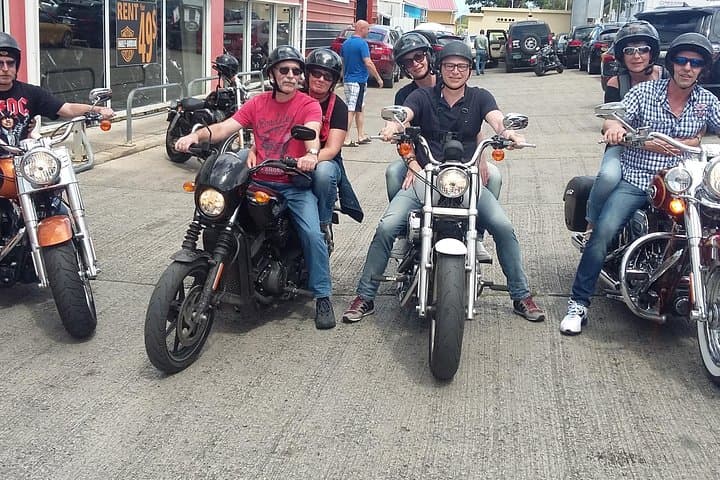
The V-twin growl arrives before the coastline comes into view — wind pressing salt and engine heat against your forearms as a line of Harley-Davidson motorcycles threads a ribbon of pavement above turquoise coves.
The V-twin growl arrives before the coastline comes into view — wind pressing salt and engine heat against your forearms as a line of Harley-Davidson motorcycles threads a ribbon of pavement above turquoise coves.
Riders cross the island's short spine, where volcanic ridges give way to coral-sanded beaches and the French and Dutch halves trade languages and flavors. St. Maarten's roads follow old colonial tracks once used for mule carts and coastal trade; today they reveal seaside villages, Creole kitchens, and plane-spotters gathered at Maho Beach to watch jets skim the runway.
Geologically, the island is a compact volcanic remnant fringed by limestone and coral; expect cliffside viewpoints, short climbs to ridge roads, and sudden descents into sheltered bays. Culturally, the ride moves through markets and waterfront cafés where seafood and local rum punches are staple stops.
Practically, the guided 4–6 hour tour covers the island’s main coastal arcs and interior viewpoints — roughly a full island circuit with frequent short stops for photos, iguana encounters, and a Creole lunch. Riders should be comfortable handling a large cruiser for several hours and ready for narrow, occasionally steep roads and local traffic patterns. Helmet and jacket are provided on many tours, but bring closed-toe shoes, sun protection, a light wind layer, and a small hydration pack. Check weather and hurricane-season advisories before booking; mornings are cooler and deliver the best light for photos. Follow your guide’s pace, signal clearly, and fuel up when prompted — gas stations are regular but sometimes spaced between coastal stretches. Expect memorable beaches, bright market life, and the steady companionship of ocean wind pushing you forward.