THE ADVENTURE COLLECTIVE® · Independent discovery and booking for outdoor travel

Walk Harlem’s avenues where civil-rights strategy, Black Power organizing and the Black Arts Movement unfolded. A born-and-raised guide uses archival video, music and neighborhood stops to bring 1960s–70s history into present-day streets.
Walk Harlem’s avenues where civil-rights strategy, Black Power organizing and the Black Arts Movement unfolded. A born-and-raised guide uses archival video, music and neighborhood stops to bring 1960s–70s history into present-day streets.
You step off an uptown subway and the street exhales history — brick facades, painted murals, and the low hum of storefronts where meetings once started movements. The guide, born and raised in Harlem, begins with a pocket projector and a clipped clip from the 1960s; footage and place fold together as you walk.
Verified experiences and guided adventures in the surrounding area.
Operated by Harlem Heritage Tours · New York, New York
You step off an uptown subway and the street exhales history — brick facades, painted murals, and the low hum of storefronts where meetings once started movements. The guide, born and raised in Harlem, begins with a pocket projector and a clipped clip from the 1960s; footage and place fold together as you walk.
The route threads past the Apollo Theater, brownstone residences tied to the Black Power era, and congregations that organized voter drives and protests. Geologically, you’re on Manhattan’s bedrock — Manhattan schist underfoot — which shaped the island’s street grid and the elevated pulse of neighborhoods. Architecturally and culturally, Harlem in the 1960s–70s was a laboratory for the Black Arts Movement: theaters, churches, and community centers that produced music, prose, and political strategy.
Expect stops at theaters and church lobbies where guides cue archival video and oral histories. The narrative highlights leaders, local activists, and the artists who amplified community power. Beyond the politics, there’s everyday life: small cafes, murals that argue with the sidewalk, and a river that dares you to trace its industrial past toward regeneration.
Practical notes: the two-hour walk is mostly flat city sidewalks with brief stepped entries into lobbies; it’s wheelchair- and stroller-accessible with restroom access at the cultural center and luggage storage available. Bring a charged phone for the multimedia, wear comfortable shoes, and plan transit time — uptown express trains put you there quickly. Arrive hungry: options for Harlem cuisine and art venues remain open after the tour, so build time for a longer afternoon.
easy.
2 hours.
Suitable for most fitness levels; requires standing and walking for up to two hours on city sidewalks.
Meeting location is near the Harlem Heritage Tourism and Cultural Center; guides often carry visible signage and use portable AV equipment—arrive 10 minutes early to check in.
Yes — sidewalks and several lobby spaces are accessible, and the operator notes wheelchair access and stroller-friendly routes with restroom availability.
Photography is welcome at street stops and theater lobbies where permitted; archival video shown by the guide is for group viewing and should not be re-broadcast without permission.
Full refunds are available if you cancel at least 24 hours before the scheduled departure time; check your booking confirmation for specifics.
Harlem was a focal point for Black cultural and political power in the 1960s–70s, where churches, theaters, and grassroots groups organized civil-rights campaigns and fueled the Black Arts Movement.
Respect murals and private property, support local businesses along the route, and minimize waste—trash and graffiti removal are ongoing community concerns.
Harlem Heritage Tours operates guided outdoor trips and adventures with an emphasis on safety, stewardship, and memorable experiences.


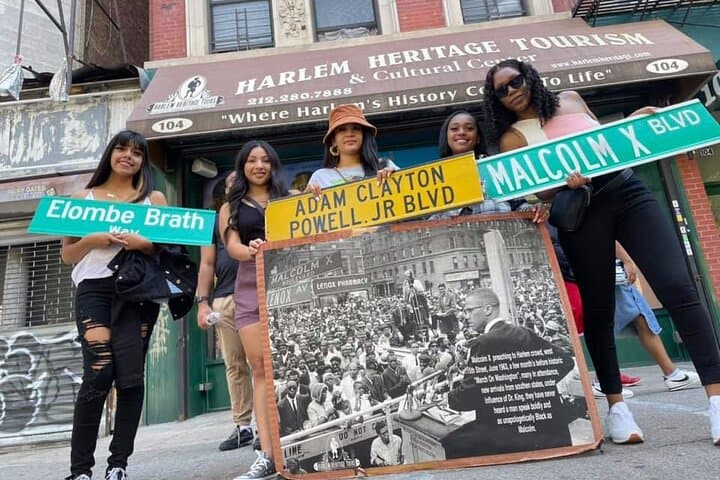
You step off an uptown subway and the street exhales history — brick facades, painted murals, and the low hum of storefronts where meetings once started movements. The guide, born and raised in Harlem, begins with a pocket projector and a clipped clip from the 1960s; footage and place fold together as you walk.
You step off an uptown subway and the street exhales history — brick facades, painted murals, and the low hum of storefronts where meetings once started movements. The guide, born and raised in Harlem, begins with a pocket projector and a clipped clip from the 1960s; footage and place fold together as you walk.
The route threads past the Apollo Theater, brownstone residences tied to the Black Power era, and congregations that organized voter drives and protests. Geologically, you’re on Manhattan’s bedrock — Manhattan schist underfoot — which shaped the island’s street grid and the elevated pulse of neighborhoods. Architecturally and culturally, Harlem in the 1960s–70s was a laboratory for the Black Arts Movement: theaters, churches, and community centers that produced music, prose, and political strategy.
Expect stops at theaters and church lobbies where guides cue archival video and oral histories. The narrative highlights leaders, local activists, and the artists who amplified community power. Beyond the politics, there’s everyday life: small cafes, murals that argue with the sidewalk, and a river that dares you to trace its industrial past toward regeneration.
Practical notes: the two-hour walk is mostly flat city sidewalks with brief stepped entries into lobbies; it’s wheelchair- and stroller-accessible with restroom access at the cultural center and luggage storage available. Bring a charged phone for the multimedia, wear comfortable shoes, and plan transit time — uptown express trains put you there quickly. Arrive hungry: options for Harlem cuisine and art venues remain open after the tour, so build time for a longer afternoon.