THE ADVENTURE COLLECTIVE® · Independent discovery and booking for outdoor travel

Spend a long day driving from Delhi to witness the Ganga’s rituals, cross Rishikesh’s famous hanging bridges, and attend the evening Ganga Aarti at Haridwar. This private tour combines cultural landmarks like Har Ki Pauri, Lakshman Jhula, Ram Jhula, and the Beatles Ashram with door-to-door transport.
Spend a long day driving from Delhi to witness the Ganga’s rituals, cross Rishikesh’s famous hanging bridges, and attend the evening Ganga Aarti at Haridwar. This private tour combines cultural landmarks like Har Ki Pauri, Lakshman Jhula, Ram Jhula, and the Beatles Ashram with door-to-door transport.
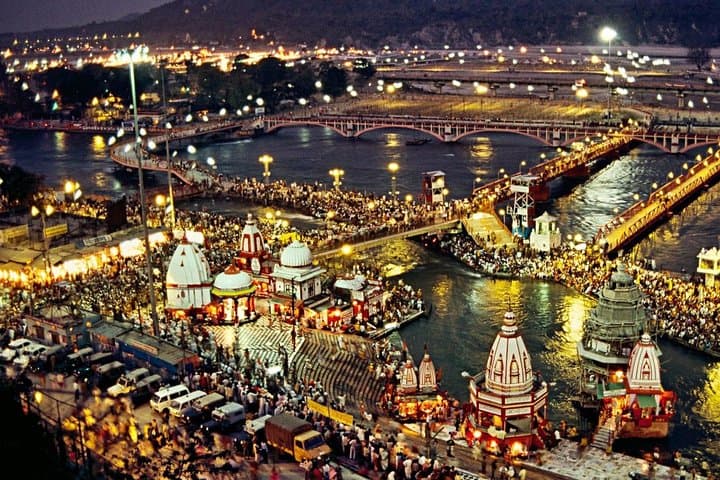
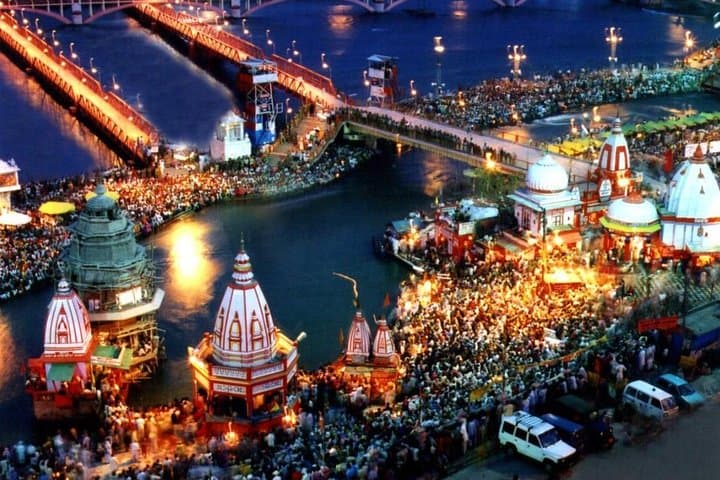
Before dawn you leave Delhi, the highway unspools and the plains open toward the lower Himalaya. By midmorning the river appears—fast, decisive—pushing through towns that have grown up on its banks for centuries. At Har Ki Pauri the Ganga feels alive: stone steps descend to the water, priests move with practiced choreography, and the crowd pulses with expectation.
Verified experiences and guided adventures in the surrounding area.
Operated by Sunrise Taj Mahal Tour · Rishikesh, Uttarakhand
Before dawn you leave Delhi, the highway unspools and the plains open toward the lower Himalaya. By midmorning the river appears—fast, decisive—pushing through towns that have grown up on its banks for centuries. At Har Ki Pauri the Ganga feels alive: stone steps descend to the water, priests move with practiced choreography, and the crowd pulses with expectation.
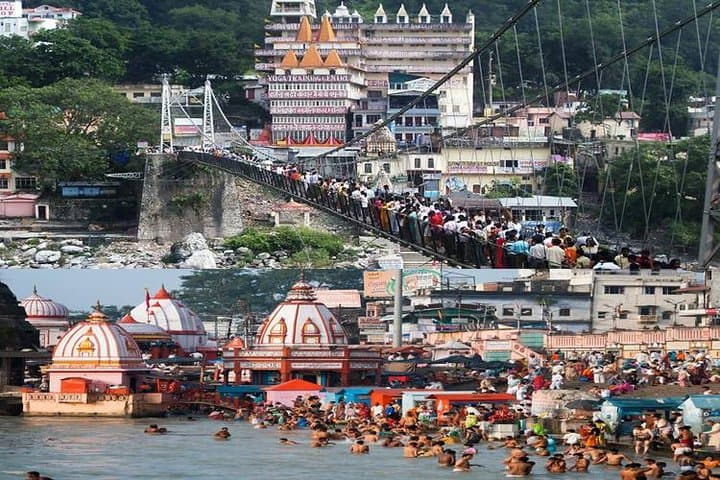
The route stitches together two complementary spiritual landscapes. Haridwar is where, according to tradition, the Ganga first meets the plains; its ghats and the Brahma Kund—said to hold Vishnu’s footprint—anchor centuries of ritual. Rishikesh sits upstream: a mix of suspension bridges (Lakshman Jhula at ~450 ft long and ~70 ft above the river, Ram Jhula nearby), yoga centers, and the now-iconic Beatles Ashram in an overgrown ashram complex. Geologically this stretch marks the transition from Himalayan foothills to Gangetic plain; river action continues to shape temples and ghats.
Expect a full, intense day—roughly 16–18 hours on the road with about five hours’ drive each way from Delhi. The highlights are short stops for exploration, a riverside walk, and the evening Ganga Aarti at Haridwar where priests light lamps in a clockwise ritual. Practicalities matter: modest dress is required at temple sites, shoes removed before entering, and a moderate amount of walking on uneven stone surfaces.
Bring water, conservative clothing, and patience—timing can shift with traffic and rituals. The day is less about a single summit and more about movement: across bridges, along ghats, and into a rhythm older than the city lights you left behind.
easy.
16–18 hours.
Suitable for most fitness levels; requires walking on uneven stone steps and standing during rituals.
Yes—private round-trip transportation from New Delhi hotels or the airport is included in the tour price.
Shoulders and knees should be covered; footwear must be removed before entering temple complexes—socks are permitted.
The tour schedules the evening Aarti, but timing can shift with local events; your guide will aim to arrive with time to view the ritual.
Meals are not listed as included; plan to bring snacks or purchase food at stops in Haridwar or Rishikesh.
Har Ki Pauri is traditionally regarded as the spot where the Ganga first touches the plains; Rishikesh developed as a spiritual and yoga center in the 19th–20th centuries.
The Ganga faces pollution challenges; visitors should avoid single-use plastics, respect ritual offerings, and follow local guidance to reduce impact.
Sunrise Taj Mahal Tour operates guided outdoor trips and adventures with an emphasis on safety, stewardship, and memorable experiences.

Before dawn you leave Delhi, the highway unspools and the plains open toward the lower Himalaya. By midmorning the river appears—fast, decisive—pushing through towns that have grown up on its banks for centuries. At Har Ki Pauri the Ganga feels alive: stone steps descend to the water, priests move with practiced choreography, and the crowd pulses with expectation.
Before dawn you leave Delhi, the highway unspools and the plains open toward the lower Himalaya. By midmorning the river appears—fast, decisive—pushing through towns that have grown up on its banks for centuries. At Har Ki Pauri the Ganga feels alive: stone steps descend to the water, priests move with practiced choreography, and the crowd pulses with expectation.
The route stitches together two complementary spiritual landscapes. Haridwar is where, according to tradition, the Ganga first meets the plains; its ghats and the Brahma Kund—said to hold Vishnu’s footprint—anchor centuries of ritual. Rishikesh sits upstream: a mix of suspension bridges (Lakshman Jhula at ~450 ft long and ~70 ft above the river, Ram Jhula nearby), yoga centers, and the now-iconic Beatles Ashram in an overgrown ashram complex. Geologically this stretch marks the transition from Himalayan foothills to Gangetic plain; river action continues to shape temples and ghats.
Expect a full, intense day—roughly 16–18 hours on the road with about five hours’ drive each way from Delhi. The highlights are short stops for exploration, a riverside walk, and the evening Ganga Aarti at Haridwar where priests light lamps in a clockwise ritual. Practicalities matter: modest dress is required at temple sites, shoes removed before entering, and a moderate amount of walking on uneven stone surfaces.
Bring water, conservative clothing, and patience—timing can shift with traffic and rituals. The day is less about a single summit and more about movement: across bridges, along ghats, and into a rhythm older than the city lights you left behind.