THE ADVENTURE COLLECTIVE® · Independent discovery and booking for outdoor travel

Drive north from Delhi for a full day along the Ganges, moving from Haridwar’s sacred ghats to Rishikesh’s suspension bridges and ashrams. Expect long drives, ritual aarti at dusk, and compact towns rich in spiritual history.
Drive north from Delhi for a full day along the Ganges, moving from Haridwar’s sacred ghats to Rishikesh’s suspension bridges and ashrams. Expect long drives, ritual aarti at dusk, and compact towns rich in spiritual history.
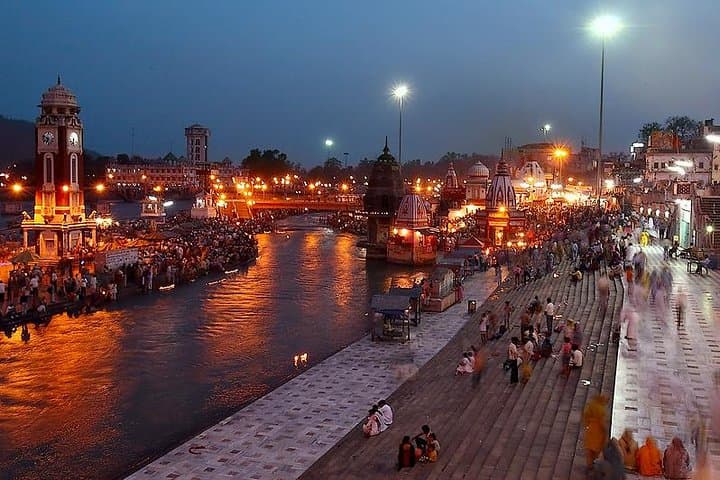
The road opens like a slow reveal: mile after mile of north-bound plains give way to the first foothills of the Himalaya, and the River Ganges begins to edge into view. By mid-morning you step onto the stone steps of Har-ki-Pauri in Haridwar, where the river moves with a quiet insistence and pilgrims perform ritual baths beneath the sky.
Verified experiences and guided adventures in the surrounding area.
Operated by SITA World Tours · Rishikesh, Uttarakhand
The road opens like a slow reveal: mile after mile of north-bound plains give way to the first foothills of the Himalaya, and the River Ganges begins to edge into view. By mid-morning you step onto the stone steps of Har-ki-Pauri in Haridwar, where the river moves with a quiet insistence and pilgrims perform ritual baths beneath the sky.
Haridwar and Rishikesh sit at the meeting point of geography and belief. Haridwar is one of Hinduism's oldest pilgrimage towns — a gateway where the Ganges leaves the hills — while Rishikesh, a small riverside town of ashrams and suspension bridges, became a global countercultural landmark after visits by musicians and seekers in the 1960s and 70s. Geologically the region marks the plains’ rise toward the Lesser Himalaya, with river terraces, alluvial deposits, and steep banks cut into sandstone and conglomerate.
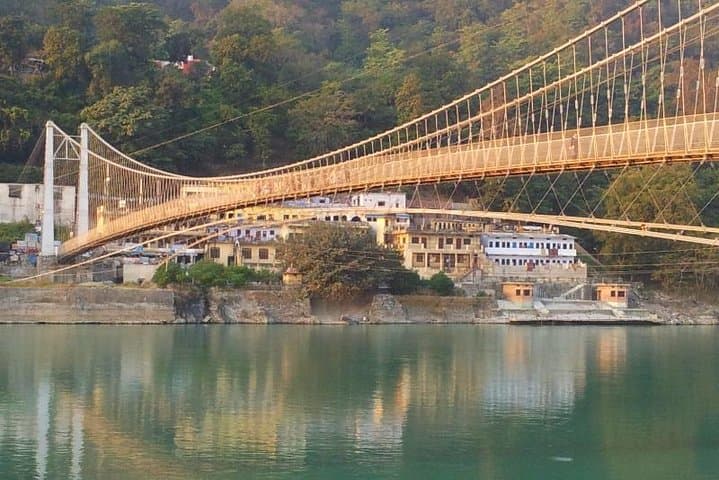
Culturally the day pivots between public ritual and quieter meditation: watch priests perform the evening aarti in Haridwar, stroll past Laxman Jhula and Ram Jhula in Rishikesh, and pass the compact clusters of ashrams where yoga and bhajan sessions happen throughout the day.
Practical guidance: expect a long round trip (about 170 miles/≈273 km each way from Delhi and roughly six hours’ drive one way), so start early and plan for a 14-hour day. Wear modest, quick-drying clothing that covers shoulders and knees; bring sturdy shoes for steps and slippery ghats, sunscreen, and a refillable water bottle. Cash is useful for small offerings and local eateries. If you seek a quieter experience, arrive at Haridwar for late afternoon and stay through the aarti when the river ceremony is most atmospheric.
moderate.
14 hours.
Travelers should be in fair physical condition to handle long vehicle time and short walks on uneven surfaces and steps
Expect about six hours each way (roughly 170 miles/≈273 km one-way), making this a full 12–14 hour day depending on traffic and stops.
The itinerary includes time in Haridwar for the evening aarti on the banks of the Ganges; seating is public and can be crowded—arrive early for a good view.
Lunch is at your own expense in Rishikesh; the tour provides bottled water and transport but not restaurant meals.
Not recommended for pregnant travelers or those with serious spinal or cardiovascular conditions due to long travel time and periods of standing on uneven surfaces.
Haridwar has been a recorded pilgrimage center for millennia and marks the point where the Ganges emerges from the mountains onto the plains; Rishikesh grew as a spiritual center and yoga hub in the 20th century.
The Ganges faces pollution and water management challenges; support local efforts by using refillable bottles, avoiding single-use plastics, and following signage around sensitive ghats.
SITA World Tours operates guided outdoor trips and adventures with an emphasis on safety, stewardship, and memorable experiences.

The road opens like a slow reveal: mile after mile of north-bound plains give way to the first foothills of the Himalaya, and the River Ganges begins to edge into view. By mid-morning you step onto the stone steps of Har-ki-Pauri in Haridwar, where the river moves with a quiet insistence and pilgrims perform ritual baths beneath the sky.
The road opens like a slow reveal: mile after mile of north-bound plains give way to the first foothills of the Himalaya, and the River Ganges begins to edge into view. By mid-morning you step onto the stone steps of Har-ki-Pauri in Haridwar, where the river moves with a quiet insistence and pilgrims perform ritual baths beneath the sky.
Haridwar and Rishikesh sit at the meeting point of geography and belief. Haridwar is one of Hinduism's oldest pilgrimage towns — a gateway where the Ganges leaves the hills — while Rishikesh, a small riverside town of ashrams and suspension bridges, became a global countercultural landmark after visits by musicians and seekers in the 1960s and 70s. Geologically the region marks the plains’ rise toward the Lesser Himalaya, with river terraces, alluvial deposits, and steep banks cut into sandstone and conglomerate.
Culturally the day pivots between public ritual and quieter meditation: watch priests perform the evening aarti in Haridwar, stroll past Laxman Jhula and Ram Jhula in Rishikesh, and pass the compact clusters of ashrams where yoga and bhajan sessions happen throughout the day.
Practical guidance: expect a long round trip (about 170 miles/≈273 km each way from Delhi and roughly six hours’ drive one way), so start early and plan for a 14-hour day. Wear modest, quick-drying clothing that covers shoulders and knees; bring sturdy shoes for steps and slippery ghats, sunscreen, and a refillable water bottle. Cash is useful for small offerings and local eateries. If you seek a quieter experience, arrive at Haridwar for late afternoon and stay through the aarti when the river ceremony is most atmospheric.