THE ADVENTURE COLLECTIVE® · Independent discovery and booking for outdoor travel

Ride four of Switzerland’s signature panoramic expresses in a single, hard-core day trip from Zurich. This high-mileage rail loop packs lakeside old towns, alpine passes and two historic tunnels into one transit-heavy, unforgettable experience.
Ride four of Switzerland’s signature panoramic expresses in a single, hard-core day trip from Zurich. This high-mileage rail loop packs lakeside old towns, alpine passes and two historic tunnels into one transit-heavy, unforgettable experience.
The day begins before dawn on a platform in Zurich, where the city exhales commuters and the first panoramic windows fog with breath. You board for St. Gallen and, as the train slips east, orchards and folded hills lean into the glass like spectators. Each leg reads like a chapter that flips without you having to move: the Voralpen-Express through gentle uplands; the cog-driven climb over Brünig Pass; the plush sweep of the GoldenPass across Gstaad pastures; the narrow-gauge Centovalli carving through chestnut woods toward Locarno.
Verified experiences and guided adventures in the surrounding area.
Operated by Swiss D Tours · Zurich, Canton of Zurich
The day begins before dawn on a platform in Zurich, where the city exhales commuters and the first panoramic windows fog with breath. You board for St. Gallen and, as the train slips east, orchards and folded hills lean into the glass like spectators. Each leg reads like a chapter that flips without you having to move: the Voralpen-Express through gentle uplands; the cog-driven climb over Brünig Pass; the plush sweep of the GoldenPass across Gstaad pastures; the narrow-gauge Centovalli carving through chestnut woods toward Locarno.
This route stitches together more than views — it traces engineering milestones. The Simplon Tunnel and the Gotthard Base Tunnel mark eras of Alpine ambition, while centuries-old market towns reveal trade routes carved through geology of granite and limestone. Language and food change as quickly as the scenery; German-speaking Lucerne gives way to French-flavored Montreux and then to Ticino’s Italian cadence.
Expect a full-tilt travel day: nearly 900 kilometres, long window hours, and brief on-foot stretches in postcard towns. Rails here are efficient and frequently connect—you’ll spend most of the day seated but alert, camera ready. Practical levers: pre-book seats on panoramic cars where available, carry a compact daypack with layers, and plan restroom and meal breaks around scheduled stops. Hydrate between stations and stow larger luggage in designated racks; trains are strict about space.
For enthusiasts this is kinetic storytelling—terrain daring you to notice the small things: a waterfall that appears like punctuation, a vineyard clinging where the map says it should not. It’s travel condensed into movement, where the country’s history and engineering ride shotgun.
moderate.
14–17 hours.
Moderate stamina recommended — long periods sitting with short walks at stops; able to handle a full, tiring day.
The operator arranges tickets but you can opt out if you already hold a Swiss Travel Pass; check at booking to avoid duplicate fares.
Most panoramic and regional expresses have restrooms; dining options vary—pack snacks and drink to be safe.
Many stations and trains on the route are wheelchair accessible, but confirm specific boarding assistance and carriage access when booking.
Storage is available in dedicated racks and luggage areas on trains, but space is limited—travel light for convenience.
The route links historic trade corridors and showcases milestones like the Simplon Tunnel (1906) and the Gotthard Base Tunnel (2016), which reshaped trans-Alpine travel.
Swiss rail travel is among the lowest-carbon ways to cross the Alps; stick to marked platforms, dispose of waste on trains or in stations, and respect quiet-zone rules to minimize impact.
Swiss D Tours operates guided outdoor trips and adventures with an emphasis on safety, stewardship, and memorable experiences.
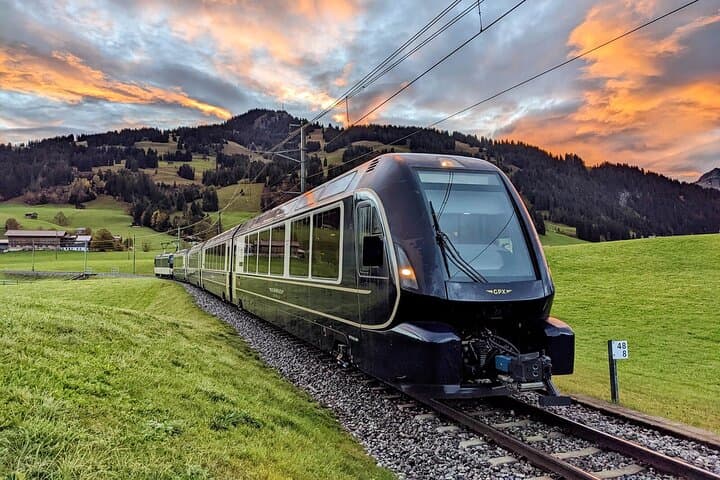
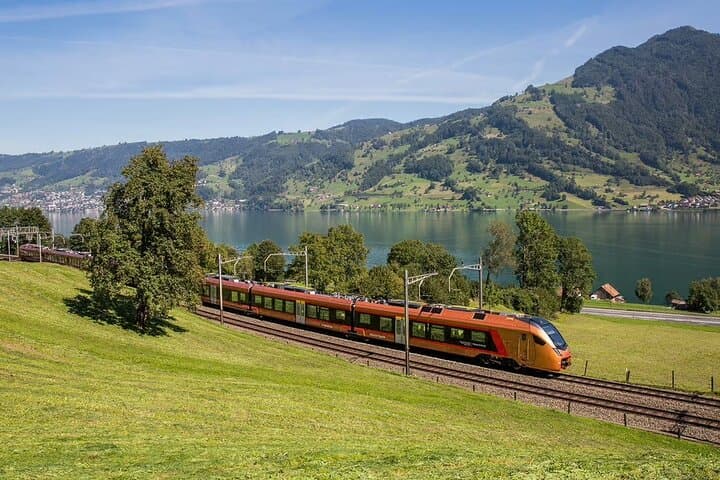
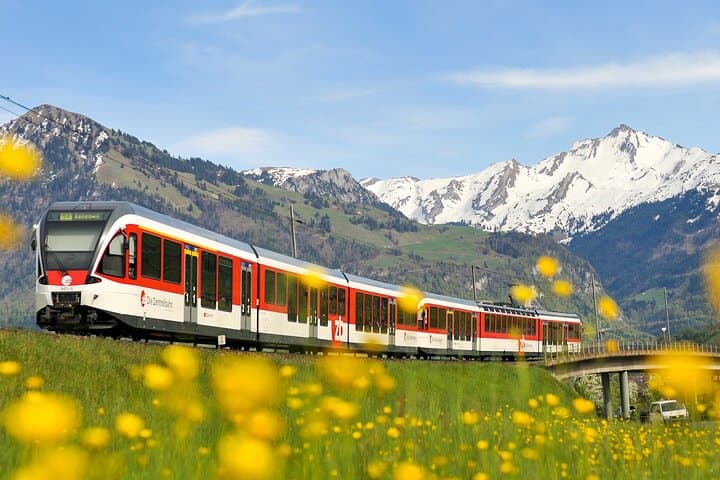
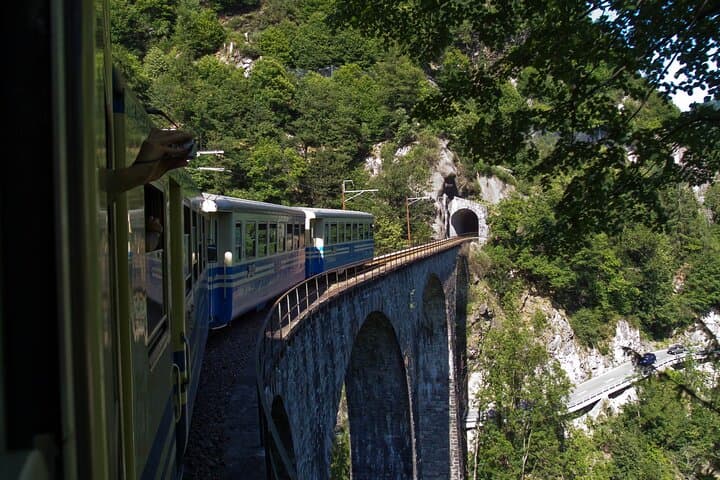
The day begins before dawn on a platform in Zurich, where the city exhales commuters and the first panoramic windows fog with breath. You board for St. Gallen and, as the train slips east, orchards and folded hills lean into the glass like spectators. Each leg reads like a chapter that flips without you having to move: the Voralpen-Express through gentle uplands; the cog-driven climb over Brünig Pass; the plush sweep of the GoldenPass across Gstaad pastures; the narrow-gauge Centovalli carving through chestnut woods toward Locarno.
The day begins before dawn on a platform in Zurich, where the city exhales commuters and the first panoramic windows fog with breath. You board for St. Gallen and, as the train slips east, orchards and folded hills lean into the glass like spectators. Each leg reads like a chapter that flips without you having to move: the Voralpen-Express through gentle uplands; the cog-driven climb over Brünig Pass; the plush sweep of the GoldenPass across Gstaad pastures; the narrow-gauge Centovalli carving through chestnut woods toward Locarno.
This route stitches together more than views — it traces engineering milestones. The Simplon Tunnel and the Gotthard Base Tunnel mark eras of Alpine ambition, while centuries-old market towns reveal trade routes carved through geology of granite and limestone. Language and food change as quickly as the scenery; German-speaking Lucerne gives way to French-flavored Montreux and then to Ticino’s Italian cadence.
Expect a full-tilt travel day: nearly 900 kilometres, long window hours, and brief on-foot stretches in postcard towns. Rails here are efficient and frequently connect—you’ll spend most of the day seated but alert, camera ready. Practical levers: pre-book seats on panoramic cars where available, carry a compact daypack with layers, and plan restroom and meal breaks around scheduled stops. Hydrate between stations and stow larger luggage in designated racks; trains are strict about space.
For enthusiasts this is kinetic storytelling—terrain daring you to notice the small things: a waterfall that appears like punctuation, a vineyard clinging where the map says it should not. It’s travel condensed into movement, where the country’s history and engineering ride shotgun.