THE ADVENTURE COLLECTIVE® · Independent discovery and booking for outdoor travel

Move from Harbin’s summer heat into a precisely chilled indoor world of ice art. This four-hour private tour visits a large indoor ice park open March–December, with sculpted rooms, tunnels, and colored ice displays.
Move from Harbin’s summer heat into a precisely chilled indoor world of ice art. This four-hour private tour visits a large indoor ice park open March–December, with sculpted rooms, tunnels, and colored ice displays.
You step from a humid Harbin summer street into an interior kept at bone-cold precision: -10°C to -15°C. Light glints off carved blocks the size of small rooms; an engineered hush softens footsteps. Inside the 6,000 m² complex, sculptures and tunnels hold color and form the way a glacier holds time — patient and precise.
Verified experiences and guided adventures in the surrounding area.
Operated by Private Tour Guide · Harbin, Heilongjiang
You step from a humid Harbin summer street into an interior kept at bone-cold precision: -10°C to -15°C. Light glints off carved blocks the size of small rooms; an engineered hush softens footsteps. Inside the 6,000 m² complex, sculptures and tunnels hold color and form the way a glacier holds time — patient and precise.
The indoor Ice and Snow World is a modern descendant of Harbin’s century-old ice tradition, born where Russian and Chinese influences met along the Songhua River. Rather than natural river ice, this attraction uses manufactured blocks and advanced inflation-mold construction so sculptors can build stable, large-scale scenes year-round from March through December. The site highlights modern techniques and environmentally conscious materials while preserving Harbin’s seasonal ritual of light and cold.
Culturally, visitors find a mix: Chinese festival sensibilities, commercial showmanship, and the city’s pragmatic embrace of winter spectacle. Geologically there’s no permafrost here — the chill is mechanical — but the visual language borrows from frozen rivers, arctic ridges and classical pagodas carved in ice.
Practical guidance: tours run about four hours and often include hotel pickup. Bring insulated layers (the park provides coats in many cases), protect electronics from the cold, and set extra time to acclimate. Children must be accompanied by adults and a passport is required for redemption. Book a morning slot to avoid crowds and give yourself time afterward to warm up over hot tea on Central Street. Respect barriers: sculptures are fragile and contact can cause irreversible damage.
easy.
4 hours.
Moderate — mostly standing and walking on flat, chilled surfaces; some tolerance for cold required
The indoor park operates from March through the end of December; it is typically closed during the coldest winter months.
The venue often provides park coats, but visitors should still wear thermal layers and gloves for extended comfort.
Yes — a current valid passport is required on the day of travel for ticket redemption and pickup.
Yes; still photography is generally allowed but avoid flash on delicate colored sculptures and respect any restricted areas.
Harbin’s ice culture grew in the early 20th century under Russian influence; modern indoor parks extend that tradition year-round using manufactured ice and modern construction methods.
The attraction emphasizes engineered cooling and eco-friendly materials to reduce waste; visitors should avoid touching sculptures and follow onsite rules to limit repairs and energy use.
Private Tour Guide operates guided outdoor trips and adventures with an emphasis on safety, stewardship, and memorable experiences.

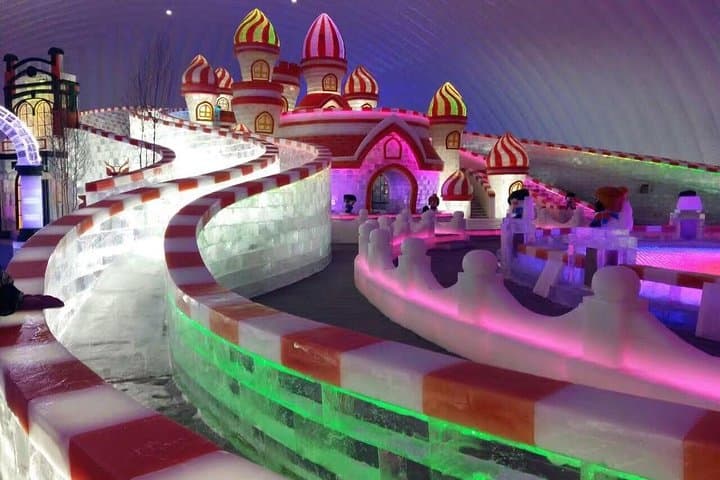


You step from a humid Harbin summer street into an interior kept at bone-cold precision: -10°C to -15°C. Light glints off carved blocks the size of small rooms; an engineered hush softens footsteps. Inside the 6,000 m² complex, sculptures and tunnels hold color and form the way a glacier holds time — patient and precise.
You step from a humid Harbin summer street into an interior kept at bone-cold precision: -10°C to -15°C. Light glints off carved blocks the size of small rooms; an engineered hush softens footsteps. Inside the 6,000 m² complex, sculptures and tunnels hold color and form the way a glacier holds time — patient and precise.
The indoor Ice and Snow World is a modern descendant of Harbin’s century-old ice tradition, born where Russian and Chinese influences met along the Songhua River. Rather than natural river ice, this attraction uses manufactured blocks and advanced inflation-mold construction so sculptors can build stable, large-scale scenes year-round from March through December. The site highlights modern techniques and environmentally conscious materials while preserving Harbin’s seasonal ritual of light and cold.
Culturally, visitors find a mix: Chinese festival sensibilities, commercial showmanship, and the city’s pragmatic embrace of winter spectacle. Geologically there’s no permafrost here — the chill is mechanical — but the visual language borrows from frozen rivers, arctic ridges and classical pagodas carved in ice.
Practical guidance: tours run about four hours and often include hotel pickup. Bring insulated layers (the park provides coats in many cases), protect electronics from the cold, and set extra time to acclimate. Children must be accompanied by adults and a passport is required for redemption. Book a morning slot to avoid crowds and give yourself time afterward to warm up over hot tea on Central Street. Respect barriers: sculptures are fragile and contact can cause irreversible damage.