THE ADVENTURE COLLECTIVE® · Independent discovery and booking for outdoor travel

Walk through living tea gardens from Ella to Lipton’s Seat, passing Dambethenna’s terraces and meeting tea pickers along the way. Early starts, misty ridges and a final Ceylon tea tasting make this a compact, culturally rich highland hike.
Walk through living tea gardens from Ella to Lipton’s Seat, passing Dambethenna’s terraces and meeting tea pickers along the way. Early starts, misty ridges and a final Ceylon tea tasting make this a compact, culturally rich highland hike.
Morning light in the highlands cuts across serrated ridgelines as the van from Ella drops you at a narrow lane between emerald tea bushes. Cool air bites at your cheeks and the plantation paths unfurl ahead—rows of clipped bushes, palms leaning like watchful companions, and occasional stone cottages where pickers gather before dawn.
Verified experiences and guided adventures in the surrounding area.
Operated by Ceylon Travel Dream · Haputale, Uva Province
Morning light in the highlands cuts across serrated ridgelines as the van from Ella drops you at a narrow lane between emerald tea bushes. Cool air bites at your cheeks and the plantation paths unfurl ahead—rows of clipped bushes, palms leaning like watchful companions, and occasional stone cottages where pickers gather before dawn.
This walk threads history and geology: these slopes were shaped by ancient uplift and cooled volcanic soils that make Ceylon tea world-famous. The Dambethenna estate and the route toward Lipton’s Seat recall the island’s colonial tea boom—British planters carving terraces into steep terrain and naming viewpoints after company men.
Expect 5–8 km of walking on packed-earth trails and uneven stone steps, with roughly 300–500 m of cumulative ascent if you push up to the ridge. Terrain alternates between smooth estate roads and narrow footpaths that can be slippery when wet; watch for switchbacks and loose rock. Along the way, guides point out plucking standards, rolling withers at factories, and cultural rhythms: women in bright saris balancing baskets on their hips and the soft cadence of Sinhala and Tamil conversations.
Practical edge: schedule the walk for early morning to catch clear views and cooler temperatures, bring layered clothing and a waterproof shell for sudden showers, and carry 1–2 liters of water. The tour ends with a tasting of Pure Ceylon tea—an immediate reminder of why these hills were changed forever.
This is a moderate, sensory-rich hike that mixes light scrambling with cultural stops; ideal for hikers comfortable on uneven ground and curious about tea country life.
moderate.
4–6 hours.
Moderate fitness recommended—comfortable walking for several hours with some sustained uphill sections
The guided experience lasts about 4–6 hours total including transport; actual walking distance on plantation trails is typically 5–8 km with intermittent stops.
Visitors with moderate fitness can handle the trail, but it includes uneven ground and short steep sections—those with mobility issues should take care.
Yes—most tours finish with a tea tasting and opportunity to purchase pure Ceylon tea directly from estate shops.
The tour provides an English-speaking guide; local guides may also share insights in Sinhala or Tamil depending on staffing.
These hills were transformed in the 19th century when British planters established tea estates after coffee blight; the terraces and factories date from that era and shaped local communities.
Support small estate shops and follow path etiquette to avoid trampling new growth; tea country faces soil erosion risks, so stick to marked routes and avoid littering.
Ceylon Travel Dream operates guided outdoor trips and adventures with an emphasis on safety, stewardship, and memorable experiences.


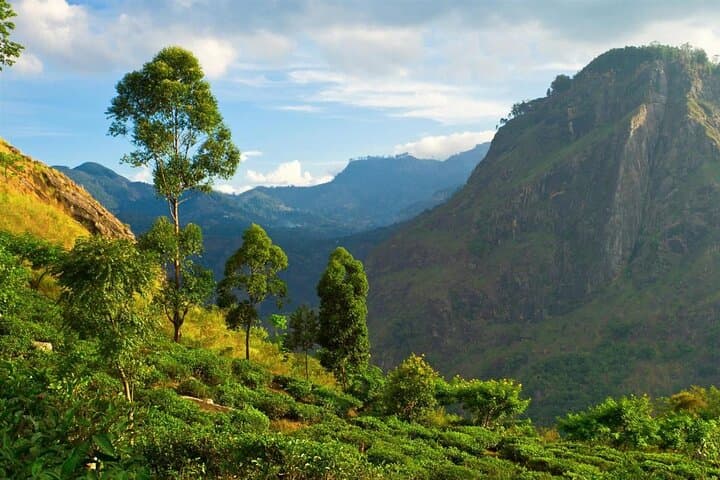

Morning light in the highlands cuts across serrated ridgelines as the van from Ella drops you at a narrow lane between emerald tea bushes. Cool air bites at your cheeks and the plantation paths unfurl ahead—rows of clipped bushes, palms leaning like watchful companions, and occasional stone cottages where pickers gather before dawn.
Morning light in the highlands cuts across serrated ridgelines as the van from Ella drops you at a narrow lane between emerald tea bushes. Cool air bites at your cheeks and the plantation paths unfurl ahead—rows of clipped bushes, palms leaning like watchful companions, and occasional stone cottages where pickers gather before dawn.
This walk threads history and geology: these slopes were shaped by ancient uplift and cooled volcanic soils that make Ceylon tea world-famous. The Dambethenna estate and the route toward Lipton’s Seat recall the island’s colonial tea boom—British planters carving terraces into steep terrain and naming viewpoints after company men.
Expect 5–8 km of walking on packed-earth trails and uneven stone steps, with roughly 300–500 m of cumulative ascent if you push up to the ridge. Terrain alternates between smooth estate roads and narrow footpaths that can be slippery when wet; watch for switchbacks and loose rock. Along the way, guides point out plucking standards, rolling withers at factories, and cultural rhythms: women in bright saris balancing baskets on their hips and the soft cadence of Sinhala and Tamil conversations.
Practical edge: schedule the walk for early morning to catch clear views and cooler temperatures, bring layered clothing and a waterproof shell for sudden showers, and carry 1–2 liters of water. The tour ends with a tasting of Pure Ceylon tea—an immediate reminder of why these hills were changed forever.
This is a moderate, sensory-rich hike that mixes light scrambling with cultural stops; ideal for hikers comfortable on uneven ground and curious about tea country life.