THE ADVENTURE COLLECTIVE® · Independent discovery and booking for outdoor travel

Cycle 40–45 km from Kandy through the Hantana tea terraces, visit the Ceylon Tea Museum and a planter village, taste local snacks, and ride sections of gravel that reveal colonial-era landscapes. A morning tour with a guide and tuk‑tuk support ideal for riders with moderate fitness.
Cycle 40–45 km from Kandy through the Hantana tea terraces, visit the Ceylon Tea Museum and a planter village, taste local snacks, and ride sections of gravel that reveal colonial-era landscapes. A morning tour with a guide and tuk‑tuk support ideal for riders with moderate fitness.
You push off from Kandy before the air warms, tires whispering over gravel as the Hantana slopes open up around you.
Verified experiences and guided adventures in the surrounding area.
Operated by Overa Tours · Kandy, Central Province
You push off from Kandy before the air warms, tires whispering over gravel as the Hantana slopes open up around you.
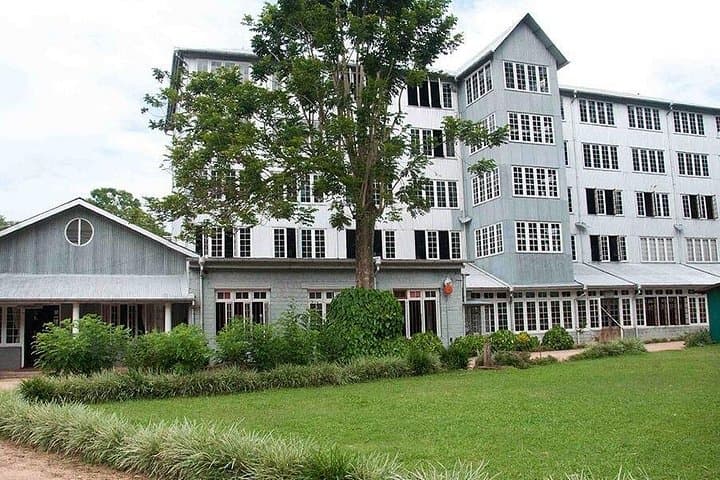
The ride begins at the Ceylon Tea Museum, where rusted rollers and wooden conveyers—machines older than a century—stand like proof of the island’s colonial tea era. Pedaling uphill, the plantation rows lean toward the light, the leaves almost nudging your handlebars as you pass. Views of the Hantana mountain range frame the valley; mist will sometimes creep down the ridges and dare you to speed up.
This landscape is largely the product of British-era agricultural engineering: terraced slopes, stone walls, and bungalow clusters that housed planters and their workers. Geologically, the Hantana range is a low, eroded massif of Precambrian rock that creates the steep, well‑drained soils tea prefers. Cultural moments punctuate the ride—tea pickers moving in quick, practiced motions, a planter’s wife offering Wade and hot tea, and, if timing aligns, a temple blessing led by a Hindu priest.
Practicalities: the full loop is about 40–45 km on mixed gravel and minor paved roads, rated medium‑hard; guides provide mountain bikes, helmets, and a support tuk‑tuk for incidents. Expect 3–4 hours total including stops. Bring layered clothing for morning chill and sun protection for the exposed plantation sections. Sturdy flat‑soled shoes and confidence riding on loose gravel are musts. Water and snacks matter—sections between villages can be uninterrupted. Finish back in Kandy by midday with a clearer sense of how tea shaped both landscape and livelihoods here.
moderate.
3–4 hours.
Suitable for riders with a moderate cardio base who can handle sustained climbs and 40–45 km distance.
You should have a moderate fitness level—able to ride 40–45 km with sustained climbs and control your bike on gravel; the guide and support tuk‑tuk help if needed.
Yes; the tour includes entrance fees to the Ceylon Tea Museum and a brief stop there at the start.
Yes; the itinerary includes a visit to a planter village where you may meet residents, taste traditional snacks (Wade), and observe daily life.
The operator may cancel or reschedule for heavy rain; light rain can make gravel slippery, and a support vehicle is available for safety.
The Hantana area was converted to tea in the 19th century under British planters; many bungalows and processing machines in the museum date from that era.
Tea cultivation shapes the local ecology—ride respectfully, avoid littering, and support local businesses that follow sustainable harvesting and waste practices.
Overa Tours operates guided outdoor trips and adventures with an emphasis on safety, stewardship, and memorable experiences.


You push off from Kandy before the air warms, tires whispering over gravel as the Hantana slopes open up around you.
You push off from Kandy before the air warms, tires whispering over gravel as the Hantana slopes open up around you.
The ride begins at the Ceylon Tea Museum, where rusted rollers and wooden conveyers—machines older than a century—stand like proof of the island’s colonial tea era. Pedaling uphill, the plantation rows lean toward the light, the leaves almost nudging your handlebars as you pass. Views of the Hantana mountain range frame the valley; mist will sometimes creep down the ridges and dare you to speed up.
This landscape is largely the product of British-era agricultural engineering: terraced slopes, stone walls, and bungalow clusters that housed planters and their workers. Geologically, the Hantana range is a low, eroded massif of Precambrian rock that creates the steep, well‑drained soils tea prefers. Cultural moments punctuate the ride—tea pickers moving in quick, practiced motions, a planter’s wife offering Wade and hot tea, and, if timing aligns, a temple blessing led by a Hindu priest.
Practicalities: the full loop is about 40–45 km on mixed gravel and minor paved roads, rated medium‑hard; guides provide mountain bikes, helmets, and a support tuk‑tuk for incidents. Expect 3–4 hours total including stops. Bring layered clothing for morning chill and sun protection for the exposed plantation sections. Sturdy flat‑soled shoes and confidence riding on loose gravel are musts. Water and snacks matter—sections between villages can be uninterrupted. Finish back in Kandy by midday with a clearer sense of how tea shaped both landscape and livelihoods here.