THE ADVENTURE COLLECTIVE® · Independent discovery and booking for outdoor travel

Ride a vintage Jeep through Hanoi’s contrasting layers — French colonial boulevards, lakeside villages and hidden alleys — on a four-hour cultural tour that mixes short walks with local stops. Perfect for travelers who want an immersive city orientation with practical logistics and authentic encounters.
Ride a vintage Jeep through Hanoi’s contrasting layers — French colonial boulevards, lakeside villages and hidden alleys — on a four-hour cultural tour that mixes short walks with local stops. Perfect for travelers who want an immersive city orientation with practical logistics and authentic encounters.
Morning light slips between colonial facades as a boxy vintage Jeep idles on a narrow Hanoi lane — engines hum, street vendors call, and the city’s layers begin to unspool. This half-day cultural run threads French-built boulevards, lakeside villages and tight alleys, offering the kind of close-up urban travel that feels less like sightseeing and more like an orientation to how the city moves.
Verified experiences and guided adventures in the surrounding area.
Operated by Local Tours Ha Giang · Hanoi, Hanoi
Morning light slips between colonial facades as a boxy vintage Jeep idles on a narrow Hanoi lane — engines hum, street vendors call, and the city’s layers begin to unspool. This half-day cultural run threads French-built boulevards, lakeside villages and tight alleys, offering the kind of close-up urban travel that feels less like sightseeing and more like an orientation to how the city moves.
The route passes the Hanoi Opera House, a turn-of-the-century French neoclassical landmark, then moves through the solemn presence of the Ho Chi Minh Mausoleum and onto Thanh Nien’s lake-fringed avenues. Geologically the Red River Delta city sits on alluvial plains; here, pavement and paddy meet where small islands and rice plots—like Banana Island—still hold quiet agriculture within sight of skyscrapers. Cultural notes accumulate in short stops: a thousand-year pagoda, village tea stalls, and the B52 Memorial, which anchors memory and modern urban growth.
Practical guidance: expect four hours on mixed surfaces—paved roads, village tracks and short walks; wear comfortable sneakers, sun protection and a light layer for changing winds off West Lake. Bring cash for street snacks, carry bottled water (provided on the tour but useful to have extra), and travel light to move through alleys easily. Timing matters — early morning or late afternoon light keeps temperatures milder and streets lively. Respect local rhythms: narrow lanes are residential, slow down, ask before photographing people, and leave no trace. The trip is low-impact and accessible, a compact way to see Hanoi’s contrasts without extensive walking but with plenty of on-foot discoveries.
easy.
4 hours.
Suitable for most fitness levels; requires short, gentle walks and getting in/out of a Jeep
The tour runs approximately four hours and includes multiple short stops and brief walks.
The experience is generally accessible but involves stepping in and out of a Jeep and short walks; inform the operator of mobility needs when booking.
An English-speaking guide is supplied; check availability of other languages at booking.
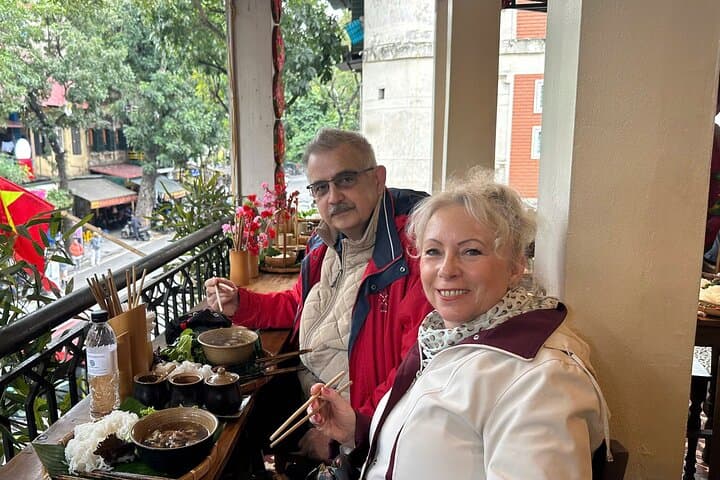
Yes — entrance fees and bottled water are included, and a lunch is provided as part of the tour package.
Hanoi’s Opera House reflects French colonial planning from the early 1900s; nearby sites like the Ho Chi Minh Mausoleum speak to Vietnam’s modern political history.
Travelers should minimize noise and litter in residential lanes, support local vendors directly, and avoid disturbing village farms to preserve community life.
Local Tours Ha Giang operates guided outdoor trips and adventures with an emphasis on safety, stewardship, and memorable experiences.
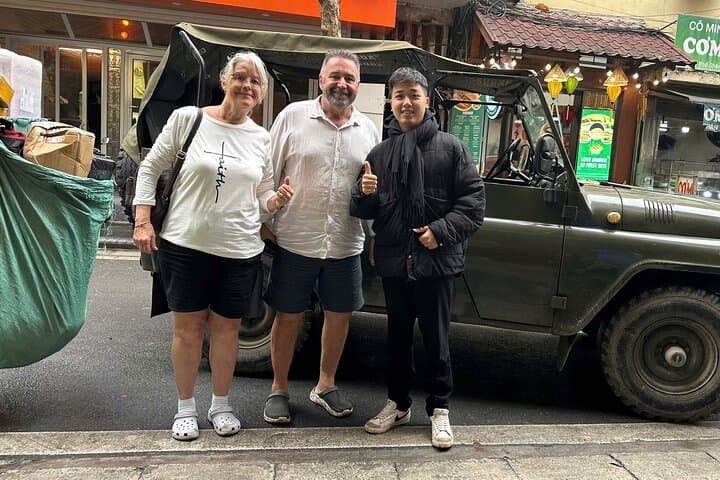

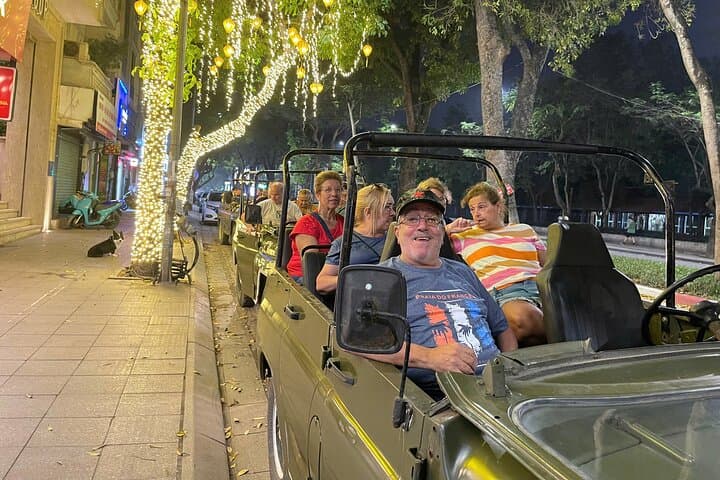
Morning light slips between colonial facades as a boxy vintage Jeep idles on a narrow Hanoi lane — engines hum, street vendors call, and the city’s layers begin to unspool. This half-day cultural run threads French-built boulevards, lakeside villages and tight alleys, offering the kind of close-up urban travel that feels less like sightseeing and more like an orientation to how the city moves.
Morning light slips between colonial facades as a boxy vintage Jeep idles on a narrow Hanoi lane — engines hum, street vendors call, and the city’s layers begin to unspool. This half-day cultural run threads French-built boulevards, lakeside villages and tight alleys, offering the kind of close-up urban travel that feels less like sightseeing and more like an orientation to how the city moves.
The route passes the Hanoi Opera House, a turn-of-the-century French neoclassical landmark, then moves through the solemn presence of the Ho Chi Minh Mausoleum and onto Thanh Nien’s lake-fringed avenues. Geologically the Red River Delta city sits on alluvial plains; here, pavement and paddy meet where small islands and rice plots—like Banana Island—still hold quiet agriculture within sight of skyscrapers. Cultural notes accumulate in short stops: a thousand-year pagoda, village tea stalls, and the B52 Memorial, which anchors memory and modern urban growth.
Practical guidance: expect four hours on mixed surfaces—paved roads, village tracks and short walks; wear comfortable sneakers, sun protection and a light layer for changing winds off West Lake. Bring cash for street snacks, carry bottled water (provided on the tour but useful to have extra), and travel light to move through alleys easily. Timing matters — early morning or late afternoon light keeps temperatures milder and streets lively. Respect local rhythms: narrow lanes are residential, slow down, ask before photographing people, and leave no trace. The trip is low-impact and accessible, a compact way to see Hanoi’s contrasts without extensive walking but with plenty of on-foot discoveries.