THE ADVENTURE COLLECTIVE® · Independent discovery and booking for outdoor travel

Ride Hanoi after dark with an all-female Vespa team, sampling iconic street dishes and slipping down train-track alleys. This four-hour evening tour mixes culinary discovery with landmark views and local storytelling.
Ride Hanoi after dark with an all-female Vespa team, sampling iconic street dishes and slipping down train-track alleys. This four-hour evening tour mixes culinary discovery with landmark views and local storytelling.
The engine hums like a city heartbeat as the Vespa team pulls away from Hoan Kiem’s lamplit sidewalks. You sit pillion and Hanoi’s night life unfolds: alleyway markets leaning into the road, neon signs flicking like conversation, and steam rising from bowls of broth that dare you to taste.
Verified experiences and guided adventures in the surrounding area.
Operated by Motorbike Tours Hanoi · Hanoi, Hanoi
The engine hums like a city heartbeat as the Vespa team pulls away from Hoan Kiem’s lamplit sidewalks. You sit pillion and Hanoi’s night life unfolds: alleyway markets leaning into the road, neon signs flicking like conversation, and steam rising from bowls of broth that dare you to taste.
Hanoi’s streets carry history — French colonial facades, the long span of Long Biên Bridge built during the early 20th century, and markets that have traded rice and spices for generations. Geology is subtle here: the Red River plain shaped the city’s grid and the wide lakes that cool summer nights. Culture arrives at the table — bun cha, banh mi, pho cuon — recipes refined in family kitchens and served at curbside plastic tables.
The tour threads landmarks and lesser-known alleys: a stop near the train tracks for egg coffee as a train slips past, a Bun Cha stall famous even beyond Hanoi, and a crossing of Chuong Duong Bridge with the city lighting the river. Guides narrate history between bites and protectors of local tradition run the stalls.
Practical side: the ride is four hours, largely as passenger on a piloted Vespa, so mobility demands are low but expect quick street maneuvers and roadside seating. Bring small bills, a light jacket for bridge-side breezes, and a camera with a strap. Plan for evening humidity in summer and a chill on winter nights. The result is an efficient, sensory city tour — equal parts food education and urban theater.
easy.
4 hours.
Minimal fitness required — passengers ride as pillion; must be able to climb on/off a scooter and sit for extended periods.
No — the tour provides professional female riders; participants ride as passengers, so no scooter license is required.
Guides select reputable stalls with fresh preparation; however, if you have a sensitive stomach, choose cooked dishes and avoid uncooked items.
Yes — notify the operator at booking and the guide will prioritize stalls and dishes that meet your needs when possible.
Pickup from central Hanoi hotels or nearby meeting points is typically provided; confirm your pickup location at booking.
Hanoi’s Old Quarter grew from centuries of river-trade lanes; Long Biên Bridge was constructed by engineers associated with Gustave Eiffel’s era and marks colonial-era transport history.
Night tours concentrate activity in compact areas — minimize waste by declining single-use plastics and support stalls that practice basic food hygiene and waste separation.
Motorbike Tours Hanoi operates guided outdoor trips and adventures with an emphasis on safety, stewardship, and memorable experiences.
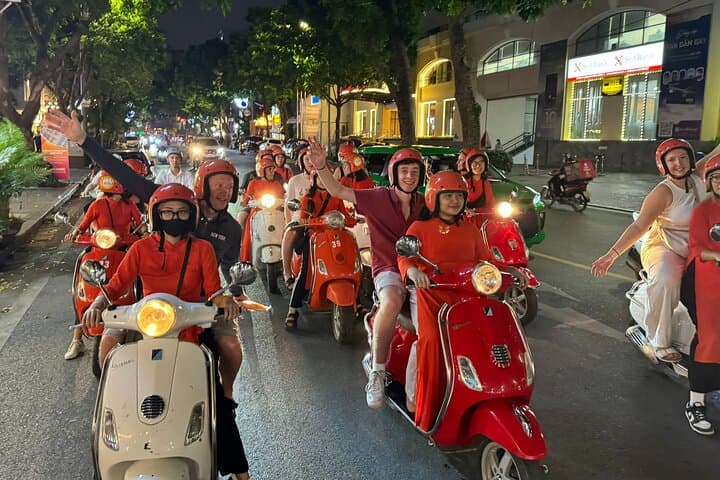
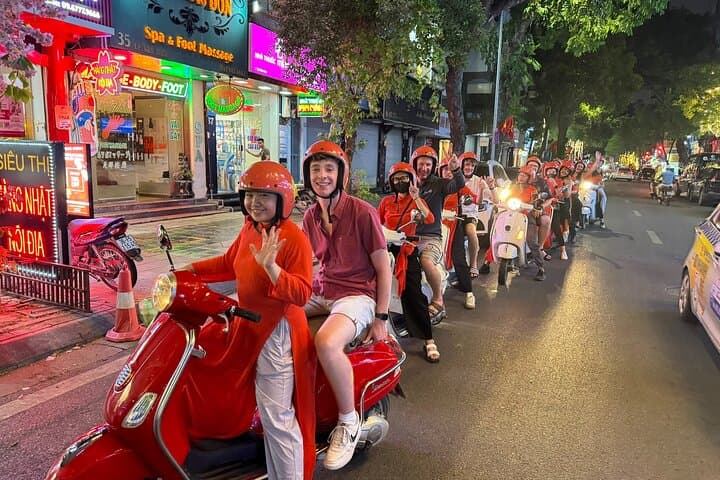
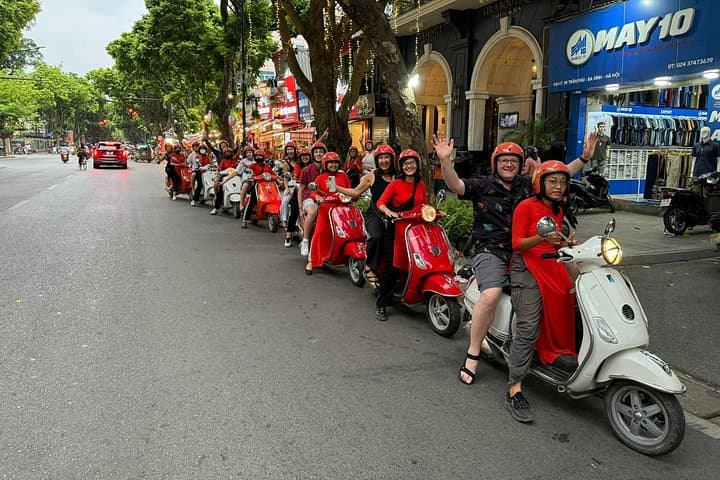
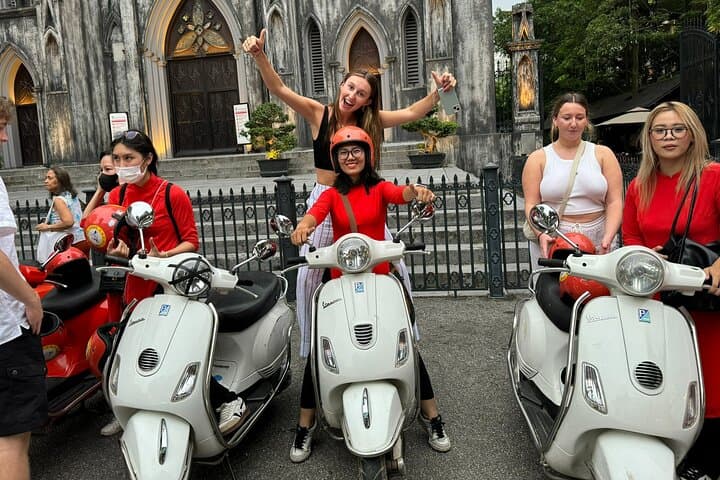
The engine hums like a city heartbeat as the Vespa team pulls away from Hoan Kiem’s lamplit sidewalks. You sit pillion and Hanoi’s night life unfolds: alleyway markets leaning into the road, neon signs flicking like conversation, and steam rising from bowls of broth that dare you to taste.
The engine hums like a city heartbeat as the Vespa team pulls away from Hoan Kiem’s lamplit sidewalks. You sit pillion and Hanoi’s night life unfolds: alleyway markets leaning into the road, neon signs flicking like conversation, and steam rising from bowls of broth that dare you to taste.
Hanoi’s streets carry history — French colonial facades, the long span of Long Biên Bridge built during the early 20th century, and markets that have traded rice and spices for generations. Geology is subtle here: the Red River plain shaped the city’s grid and the wide lakes that cool summer nights. Culture arrives at the table — bun cha, banh mi, pho cuon — recipes refined in family kitchens and served at curbside plastic tables.
The tour threads landmarks and lesser-known alleys: a stop near the train tracks for egg coffee as a train slips past, a Bun Cha stall famous even beyond Hanoi, and a crossing of Chuong Duong Bridge with the city lighting the river. Guides narrate history between bites and protectors of local tradition run the stalls.
Practical side: the ride is four hours, largely as passenger on a piloted Vespa, so mobility demands are low but expect quick street maneuvers and roadside seating. Bring small bills, a light jacket for bridge-side breezes, and a camera with a strap. Plan for evening humidity in summer and a chill on winter nights. The result is an efficient, sensory city tour — equal parts food education and urban theater.