THE ADVENTURE COLLECTIVE® · Independent discovery and booking for outdoor travel

Trade Hanoi’s bustle for mountain air on a 28-seat limousine bus to Sapa. Comfortable seats, onboard amenities and planned rest stops make this a practical option for travelers wanting a direct, daylight journey into the Hoàng Liên Sơn highlands.
Trade Hanoi’s bustle for mountain air on a 28-seat limousine bus to Sapa. Comfortable seats, onboard amenities and planned rest stops make this a practical option for travelers wanting a direct, daylight journey into the Hoàng Liên Sơn highlands.
Morning in Hanoi’s Old Quarter is a rush of scooters and street vendors; by midmorning the road eases and the mountains begin to loom. On the Sapa Limousine you trade city noise for a wide window and a reclining seat — travel becomes part of the itinerary rather than just transit.
Verified experiences and guided adventures in the surrounding area.
Operated by Authentic Hanoi Homestay & Travel · Sapa, Lao Cai
Morning in Hanoi’s Old Quarter is a rush of scooters and street vendors; by midmorning the road eases and the mountains begin to loom. On the Sapa Limousine you trade city noise for a wide window and a reclining seat — travel becomes part of the itinerary rather than just transit.
The route climbs out of the Red River Delta, following roads carved through volcanic and sedimentary formations toward the Hoàng Liên Sơn range. Sapa grew from a French hill-station into a multiethnic market town; today the bus links Hanoi’s colonial streets with rice-terraced highlands shaped by centuries of Hmong and Dao farming.
Expect tight mountain passes, forested slopes that lean over the road, and sweeping valley views as you cross from lowland humidity into cool, thin air. The journey passes through Km98 and Km237 rest stops used by generations of travelers; these practical pauses echo the region’s long history as a trade and transit corridor.
Practical guidance: bring layered clothing—the temperature can drop sharply after the pass—and motion-sickness measures if you’re prone to queasy stomachs on switchbacks. Keep passports and hotel details handy for check-in in Sapa; the company offers onboard English-speaking staff, Wi‑Fi, bottled water, and blankets.
Timing matters: morning departures from Hanoi reduce alpine fog risk and afternoon returns leave Sapa after its market hours. Luggage can be stored on board; if you need airport pickup arrange it 48+ hours in advance. This transfer is straightforward but pays dividends in comfort and time saved when you want to start exploring Sapa the moment you arrive.
easy.
6–12 hours.
Suitable for all fitness levels; mainly requires the ability to sit for extended periods.
Pickup in Hanoi is from hotels in the Old Quarter or at 70 Nguyen Huu Huan; drop-off in Sapa is at the company office on 06 Vuon Treo Street.
Yes—larger luggage is stored in the bus hold and smaller items may go in the cabin; staff assist with loading and unloading.
The service advertises onboard Wi‑Fi, but signal can be intermittent through mountain sections—plan for offline entertainment as backup.
Full refund is available if you cancel at least 24 hours before departure; cancel within 24 hours and the trip is nonrefundable.
Sapa developed as a French colonial hill station in the early 20th century and later became a regional market center for Hmong and Dao communities.
The region faces erosion pressure from tourism and agriculture; stick to marked roads and avoid buying wild-sourced plants or animal products.
Authentic Hanoi Homestay & Travel operates guided outdoor trips and adventures with an emphasis on safety, stewardship, and memorable experiences.
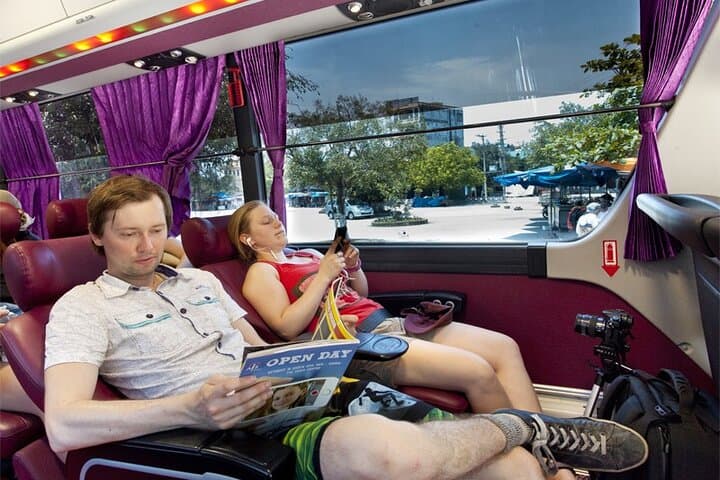


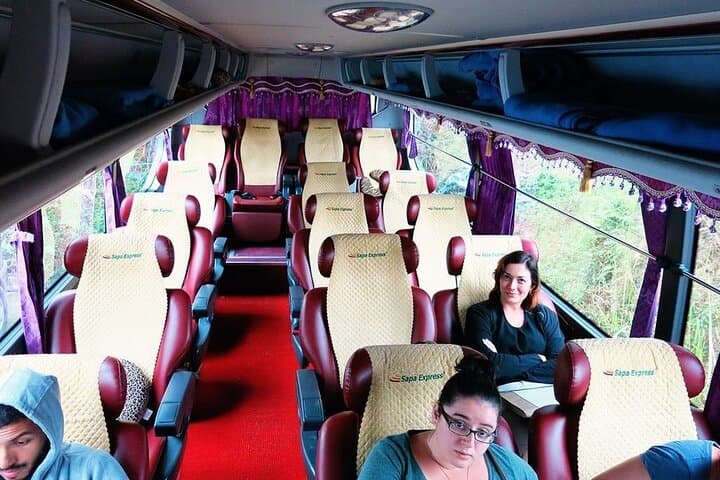
Morning in Hanoi’s Old Quarter is a rush of scooters and street vendors; by midmorning the road eases and the mountains begin to loom. On the Sapa Limousine you trade city noise for a wide window and a reclining seat — travel becomes part of the itinerary rather than just transit.
Morning in Hanoi’s Old Quarter is a rush of scooters and street vendors; by midmorning the road eases and the mountains begin to loom. On the Sapa Limousine you trade city noise for a wide window and a reclining seat — travel becomes part of the itinerary rather than just transit.
The route climbs out of the Red River Delta, following roads carved through volcanic and sedimentary formations toward the Hoàng Liên Sơn range. Sapa grew from a French hill-station into a multiethnic market town; today the bus links Hanoi’s colonial streets with rice-terraced highlands shaped by centuries of Hmong and Dao farming.
Expect tight mountain passes, forested slopes that lean over the road, and sweeping valley views as you cross from lowland humidity into cool, thin air. The journey passes through Km98 and Km237 rest stops used by generations of travelers; these practical pauses echo the region’s long history as a trade and transit corridor.
Practical guidance: bring layered clothing—the temperature can drop sharply after the pass—and motion-sickness measures if you’re prone to queasy stomachs on switchbacks. Keep passports and hotel details handy for check-in in Sapa; the company offers onboard English-speaking staff, Wi‑Fi, bottled water, and blankets.
Timing matters: morning departures from Hanoi reduce alpine fog risk and afternoon returns leave Sapa after its market hours. Luggage can be stored on board; if you need airport pickup arrange it 48+ hours in advance. This transfer is straightforward but pays dividends in comfort and time saved when you want to start exploring Sapa the moment you arrive.