THE ADVENTURE COLLECTIVE® · Independent discovery and booking for outdoor travel

Escape Hanoi for a day of karst cliffs, rice‑field lanes, and a river that moves like memory. This private day tour combines an uphill viewpoint, a peaceful sampan ride through Tam Coc, and a visit to Hoa Lu’s 10th‑century temples.
Escape Hanoi for a day of karst cliffs, rice‑field lanes, and a river that moves like memory. This private day tour combines an uphill viewpoint, a peaceful sampan ride through Tam Coc, and a visit to Hoa Lu’s 10th‑century temples.
You step out of the van onto a landscape that seems to have paused while Hanoi races on—rice fields flat as green mirrors and limestone towers rising like old islands from the plain. The Ngo Dong River threads through caves and paddies, daring you to follow its slow current by bamboo sampan. By midday the climb to Mua Cave breathes new perspective: a stair-lined ridge, wind cutting across your face, and a wide, folded view of Tam Coc’s karsts and patchwork fields below.
Verified experiences and guided adventures in the surrounding area.
Operated by Authentic Travel HOI AN · Tam Coc, Ninh Binh Province
You step out of the van onto a landscape that seems to have paused while Hanoi races on—rice fields flat as green mirrors and limestone towers rising like old islands from the plain. The Ngo Dong River threads through caves and paddies, daring you to follow its slow current by bamboo sampan. By midday the climb to Mua Cave breathes new perspective: a stair-lined ridge, wind cutting across your face, and a wide, folded view of Tam Coc’s karsts and patchwork fields below.
This corridor of Ninh Binh carries centuries of human story. Hoa Lu’s temples date to the 10th century and mark Vietnam’s early consolidation under the Dinh and Le dynasties; the limestone itself is a record of ancient coral reefs, uplifted and eroded into the steep towers travelers now row beneath.
Culturally, the route is intimate—three-generation homes, low-slung kitchens and easy hospitality that turns a visitor into a transient neighbor for a meal. Geologically, the karst channels light and rain into caves that boatmen have navigated for generations.
Practical guidance: the tour is a full day (about 12 hours) from Hanoi and mixes easy walking, a steep staircase to Hang Mua’s viewpoint (roughly 500 steps), flat bike riding on minor roads, and a seated sampan ride. Wear sturdy shoes for steps and wet boat decks, carry water and sunscreen, and bring a lightweight rain layer in monsoon months. Mornings offer softer light and cooler air; afternoons can be hot and busy. Respect private farmland and ask before photographing inside family compounds. With a local guide and private transfers, this circuit is an accessible, memorable introduction to Vietnam’s rural limestone country.
easy.
12 hours.
Suitable for travelers in average fitness—includes some stair climbing and easy cycling on flat rural roads
The traditional sampan ride along the Ngo Dong River typically lasts about 1.5 hours and is rowed by local boatmen through caves and past rice fields.
The climb involves several hundred steps with some steep sections; it’s manageable for most people but take breaks and wear good shoes.
Yes—operators can usually accommodate vegetarian, vegan, and common dietary restrictions if noted at booking.
Bring a small amount of local currency for incidental purchases, tips for boatmen, or small souvenirs; major costs are included in the tour price.
Hoa Lu was Vietnam’s capital in the 10th and 11th centuries; its remaining temples honor the Dinh and Le rulers and sit amid defensive limestone outcrops.
Tourism here is concentrated—stay on marked paths, avoid littering near waterways, and support local families by buying food or crafts directly to keep benefits local.
Authentic Travel HOI AN operates guided outdoor trips and adventures with an emphasis on safety, stewardship, and memorable experiences.


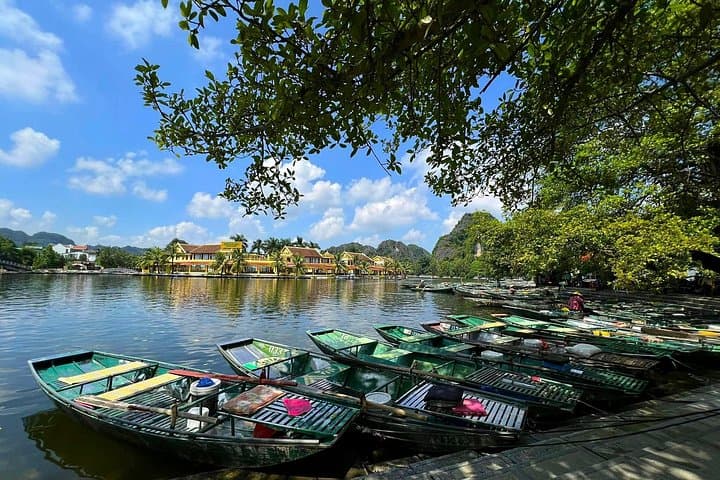

You step out of the van onto a landscape that seems to have paused while Hanoi races on—rice fields flat as green mirrors and limestone towers rising like old islands from the plain. The Ngo Dong River threads through caves and paddies, daring you to follow its slow current by bamboo sampan. By midday the climb to Mua Cave breathes new perspective: a stair-lined ridge, wind cutting across your face, and a wide, folded view of Tam Coc’s karsts and patchwork fields below.
You step out of the van onto a landscape that seems to have paused while Hanoi races on—rice fields flat as green mirrors and limestone towers rising like old islands from the plain. The Ngo Dong River threads through caves and paddies, daring you to follow its slow current by bamboo sampan. By midday the climb to Mua Cave breathes new perspective: a stair-lined ridge, wind cutting across your face, and a wide, folded view of Tam Coc’s karsts and patchwork fields below.
This corridor of Ninh Binh carries centuries of human story. Hoa Lu’s temples date to the 10th century and mark Vietnam’s early consolidation under the Dinh and Le dynasties; the limestone itself is a record of ancient coral reefs, uplifted and eroded into the steep towers travelers now row beneath.
Culturally, the route is intimate—three-generation homes, low-slung kitchens and easy hospitality that turns a visitor into a transient neighbor for a meal. Geologically, the karst channels light and rain into caves that boatmen have navigated for generations.
Practical guidance: the tour is a full day (about 12 hours) from Hanoi and mixes easy walking, a steep staircase to Hang Mua’s viewpoint (roughly 500 steps), flat bike riding on minor roads, and a seated sampan ride. Wear sturdy shoes for steps and wet boat decks, carry water and sunscreen, and bring a lightweight rain layer in monsoon months. Mornings offer softer light and cooler air; afternoons can be hot and busy. Respect private farmland and ask before photographing inside family compounds. With a local guide and private transfers, this circuit is an accessible, memorable introduction to Vietnam’s rural limestone country.