THE ADVENTURE COLLECTIVE® · Independent discovery and booking for outdoor travel

Travel from Hanoi’s pulsing streets into Mai Chau’s quiet rice-valley life over seven private days. Expect cultural homestays, short hikes, hot springs, cave visits, and a slow boat on Hoa Binh Lake.
Travel from Hanoi’s pulsing streets into Mai Chau’s quiet rice-valley life over seven private days. Expect cultural homestays, short hikes, hot springs, cave visits, and a slow boat on Hoa Binh Lake.
You arrive on a mist-soft morning, the highway folding away as limestone ridges and rice terraces stretch into the distance. The town of Mai Chau opens like a slow page—stilt houses, agricultural plots, and a river that seems to nudge travelers onward.
Verified experiences and guided adventures in the surrounding area.
Operated by Veiled Valley · Mai Chau, Hoa Binh
You arrive on a mist-soft morning, the highway folding away as limestone ridges and rice terraces stretch into the distance. The town of Mai Chau opens like a slow page—stilt houses, agricultural plots, and a river that seems to nudge travelers onward.
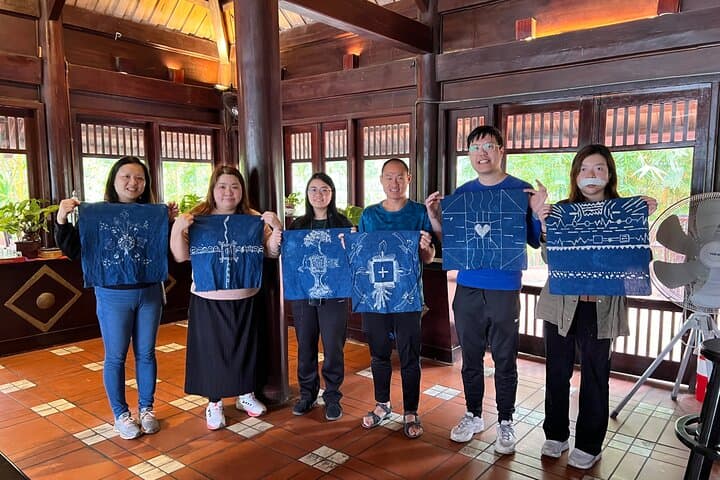
This seven-day loop pairs Hanoi’s colonial streets and museums with Mai Chau’s upland valleys. Geologically, the valley sits at the edge of the Truong Son Range; karst outcrops and caves record millennia of uplift and dissolution, while flat valley floors hold layered paddy soils shaped by seasonal floods. Culturally, the White Thai and Hmong communities maintain weaving, stilt-house living, and seasonal festivals—practices that travelers can witness during village visits, home-cooked meals, and a batik workshop.
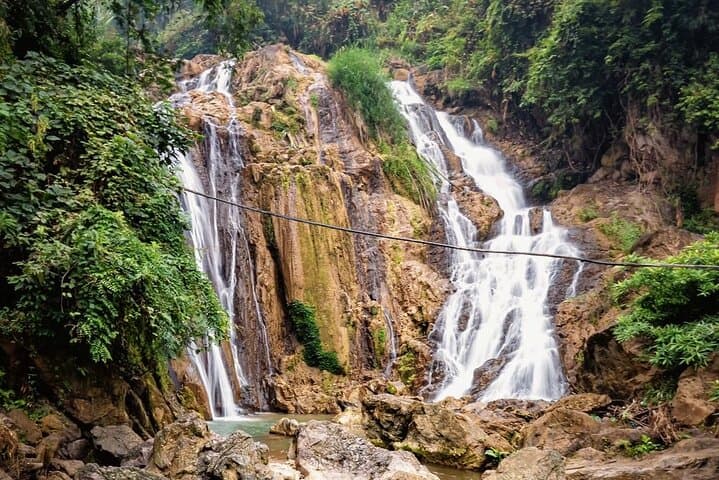
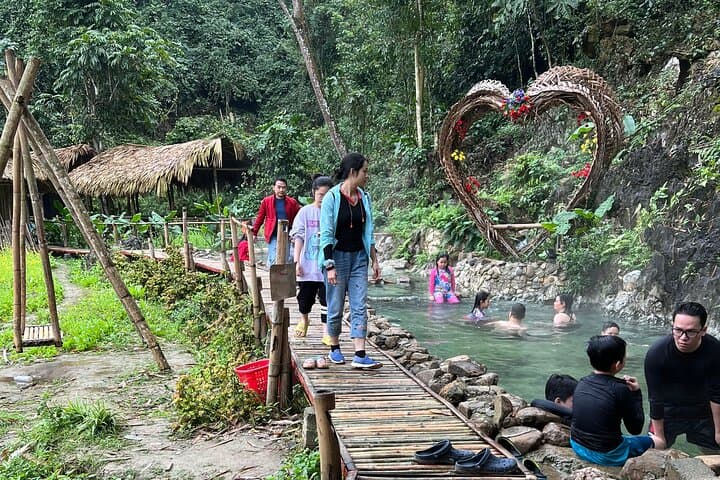
Expect a measured pace: guided walks through Hanoi’s Old Quarter, a pottery village visit, mountain passes en route to Mai Chau, short hikes to waterfalls, a calm boat ride on Hoa Binh Lake, and a cave with carved stalactites. Natural hot springs offer downtime; a floating fish farm shows local aquaculture.
Practical guidance: pack waterproof footwear and light layers for humid days and cool nights, carry cash for village purchases, and allow time on transit days (3–4 hours each way). Respect local customs—ask before photographing people—and bring modest gifts for hosts if you plan an extended homestay. Hydrate on longer drives and give yourself an extra day in Hanoi if you want to recover before departure.
moderate.
7 days.
Moderate—suitable for travelers comfortable with 2–4 hour days of walking and short hikes; minimal cardio training required.
Expect roughly 3–4 hours each way depending on traffic and stops; the tour includes scenic photo breaks en route.
Yes—this all‑inclusive private tour covers boutique hotel stays in Hanoi and quality hotels in Mai Chau for six nights.
Generally yes—activities are low-impact and the tour is labeled suitable for all fitness levels, but discuss mobility needs with the operator for waterfall or cave options.
Vietnamese dong is preferred; major hotels take cards but rural vendors and homestays usually require cash.
Mai Chau’s valleys have long been home to upland ethnic groups like the White Thai and Hmong, whose stilt houses and textile traditions reflect centuries of rice cultivation and mountain trade.
Tourism-focused operators often support village economies; travelers should minimize plastic waste, stay on marked paths, and avoid buying products made from protected wildlife.
Veiled Valley operates guided outdoor trips and adventures with an emphasis on safety, stewardship, and memorable experiences.
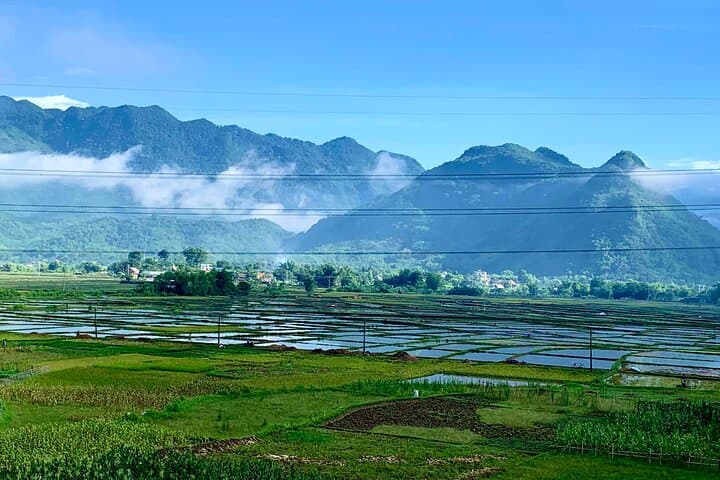
You arrive on a mist-soft morning, the highway folding away as limestone ridges and rice terraces stretch into the distance. The town of Mai Chau opens like a slow page—stilt houses, agricultural plots, and a river that seems to nudge travelers onward.
You arrive on a mist-soft morning, the highway folding away as limestone ridges and rice terraces stretch into the distance. The town of Mai Chau opens like a slow page—stilt houses, agricultural plots, and a river that seems to nudge travelers onward.
This seven-day loop pairs Hanoi’s colonial streets and museums with Mai Chau’s upland valleys. Geologically, the valley sits at the edge of the Truong Son Range; karst outcrops and caves record millennia of uplift and dissolution, while flat valley floors hold layered paddy soils shaped by seasonal floods. Culturally, the White Thai and Hmong communities maintain weaving, stilt-house living, and seasonal festivals—practices that travelers can witness during village visits, home-cooked meals, and a batik workshop.
Expect a measured pace: guided walks through Hanoi’s Old Quarter, a pottery village visit, mountain passes en route to Mai Chau, short hikes to waterfalls, a calm boat ride on Hoa Binh Lake, and a cave with carved stalactites. Natural hot springs offer downtime; a floating fish farm shows local aquaculture.
Practical guidance: pack waterproof footwear and light layers for humid days and cool nights, carry cash for village purchases, and allow time on transit days (3–4 hours each way). Respect local customs—ask before photographing people—and bring modest gifts for hosts if you plan an extended homestay. Hydrate on longer drives and give yourself an extra day in Hanoi if you want to recover before departure.