THE ADVENTURE COLLECTIVE® · Independent discovery and booking for outdoor travel

Ride the Ha Giang Loop from Hanoi to Ban Gioc across some of Vietnam’s best mountain passes. This 5-day motorbike tour blends highland passes, ethnic villages and the thunder of Ban Gioc Waterfall into a compact, challenging adventure.
Ride the Ha Giang Loop from Hanoi to Ban Gioc across some of Vietnam’s best mountain passes. This 5-day motorbike tour blends highland passes, ethnic villages and the thunder of Ban Gioc Waterfall into a compact, challenging adventure.
You wake before dawn in Hanoi’s Old Quarter, the city lights still clinging to the river as the sleeper bus hums north. By sunrise you’re on a bike, tires chewing into switchbacks that climb toward the Dong Van Karst Plateau; wind and limestone cliffs push at you, urging faster turns and sharper focus.
Verified experiences and guided adventures in the surrounding area.
Operated by Authentic Travel in Vietnam · Trung Khánh, Cao Bang Province
You wake before dawn in Hanoi’s Old Quarter, the city lights still clinging to the river as the sleeper bus hums north. By sunrise you’re on a bike, tires chewing into switchbacks that climb toward the Dong Van Karst Plateau; wind and limestone cliffs push at you, urging faster turns and sharper focus.
The route follows Ha Giang’s famed passes — Bac Sum, Tham Ma, Ma Pi Leng — each a spine of hairpins above terraced fields and the turquoise thread of the Nho Que River. Geologically, the region is ancient karst: weathered limestone folded into towers and gorges over hundreds of millions of years, now home to H’mong, Tay and Dao communities whose houses and markets carry regional recipes and crafts. The Vuong Palace and Lung Cam village give cultural context: local power structures, traditional architecture and seasonal buckwheat blooms that frame the plateau.
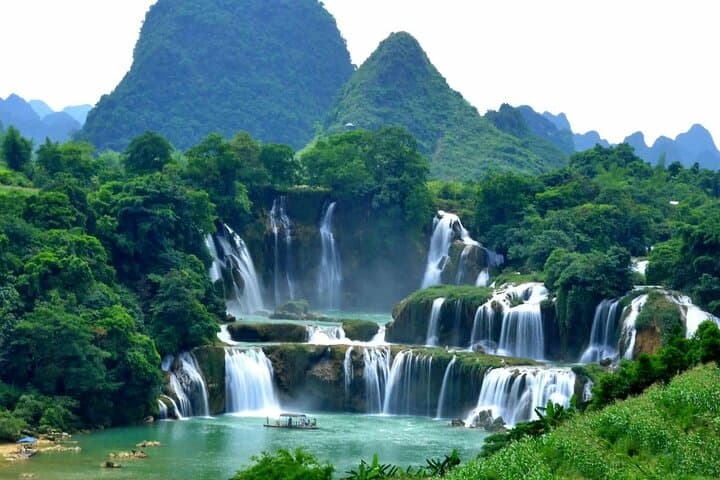
By day four the ride eases into the broad, thunderous sheets of Ban Gioc Waterfall on the Quây Sơn River — a border landmark where river and rock dramatize the frontier. Nearby, Ngườm Ngao cave shows the slow artistry of stalactites and caverns.
Practical guidance: expect long riding days, variable road surfaces and sudden weather. Start early to avoid afternoon rain and low winter fog; carry spare fuel and a basic tool kit. Wear a full-face helmet, sturdy boots and layered outerwear; keep hydration and cash for remote stretches. Respect homestay customs, follow your guide on mountain passes, and give extra space to local traffic and livestock.
challenging.
5 days.
Riders should be comfortable with sustained hours on a motorcycle, able to handle tight switchbacks and short hikes to viewpoints.
Most tours require a valid motorcycle license; local operators usually provide briefings and proxy arrangements but confirm with the operator before booking.
Intermediate-level experience on twisty, sometimes unpaved mountain roads is recommended—novice riders may struggle with long days and narrow passes.
The itinerary includes two hotel nights and two homestays; expect simple rooms, shared bathrooms in villages, and home-cooked meals at homestays.
Ban Gioc sits on the Vietnam–China border; stay on designated viewing areas and follow your guide’s instructions—do not attempt to cross or enter restricted border zones.
The Dong Van Karst Plateau is a UNESCO Global Geopark with a long history of ethnic settlement; sites like Vuong Palace reflect H'mong leadership during the early 20th century.
Tourism is growing; minimize waste, avoid taking plants or stones, and support homestays and local guides to keep economic benefits within communities.
Authentic Travel in Vietnam operates guided outdoor trips and adventures with an emphasis on safety, stewardship, and memorable experiences.
You wake before dawn in Hanoi’s Old Quarter, the city lights still clinging to the river as the sleeper bus hums north. By sunrise you’re on a bike, tires chewing into switchbacks that climb toward the Dong Van Karst Plateau; wind and limestone cliffs push at you, urging faster turns and sharper focus.
You wake before dawn in Hanoi’s Old Quarter, the city lights still clinging to the river as the sleeper bus hums north. By sunrise you’re on a bike, tires chewing into switchbacks that climb toward the Dong Van Karst Plateau; wind and limestone cliffs push at you, urging faster turns and sharper focus.
The route follows Ha Giang’s famed passes — Bac Sum, Tham Ma, Ma Pi Leng — each a spine of hairpins above terraced fields and the turquoise thread of the Nho Que River. Geologically, the region is ancient karst: weathered limestone folded into towers and gorges over hundreds of millions of years, now home to H’mong, Tay and Dao communities whose houses and markets carry regional recipes and crafts. The Vuong Palace and Lung Cam village give cultural context: local power structures, traditional architecture and seasonal buckwheat blooms that frame the plateau.
By day four the ride eases into the broad, thunderous sheets of Ban Gioc Waterfall on the Quây Sơn River — a border landmark where river and rock dramatize the frontier. Nearby, Ngườm Ngao cave shows the slow artistry of stalactites and caverns.
Practical guidance: expect long riding days, variable road surfaces and sudden weather. Start early to avoid afternoon rain and low winter fog; carry spare fuel and a basic tool kit. Wear a full-face helmet, sturdy boots and layered outerwear; keep hydration and cash for remote stretches. Respect homestay customs, follow your guide on mountain passes, and give extra space to local traffic and livestock.