THE ADVENTURE COLLECTIVE® · Independent discovery and booking for outdoor travel

Ride out from Hanoi to Duong Lam, Chuong Village, and Quang Phu Cau on a private day tour that pairs hands-on craft demonstrations with village cycling and a local lunch. Expect easy walking, short bike loops, and close encounters with Vietnam’s living artisan traditions.
Ride out from Hanoi to Duong Lam, Chuong Village, and Quang Phu Cau on a private day tour that pairs hands-on craft demonstrations with village cycling and a local lunch. Expect easy walking, short bike loops, and close encounters with Vietnam’s living artisan traditions.
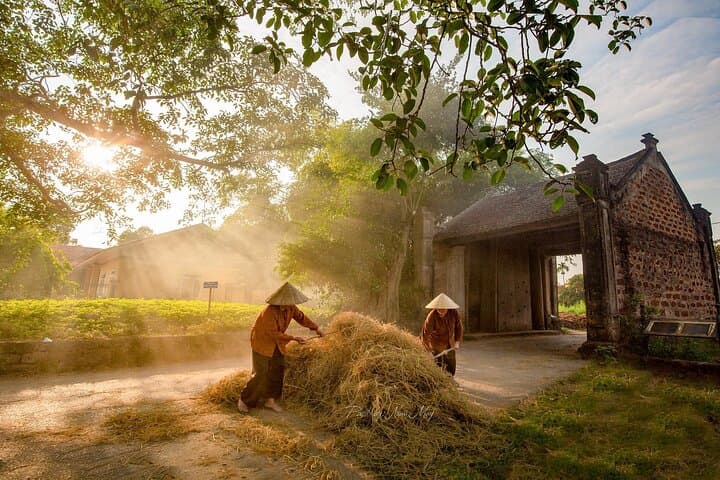
The day begins before the city stirs: your driver slips out of Hanoi’s Old Quarter and the road opens onto flat green fields. Wind pushes over the rice paddies and the villages ahead seem to live at a slower pulse—chimneys smoke, women weave hats under shady trees, and the narrow lanes invite you to dismount and walk.
Verified experiences and guided adventures in the surrounding area.
Operated by Local Tours ASIA · Hanoi, Hanoi
The day begins before the city stirs: your driver slips out of Hanoi’s Old Quarter and the road opens onto flat green fields. Wind pushes over the rice paddies and the villages ahead seem to live at a slower pulse—chimneys smoke, women weave hats under shady trees, and the narrow lanes invite you to dismount and walk.
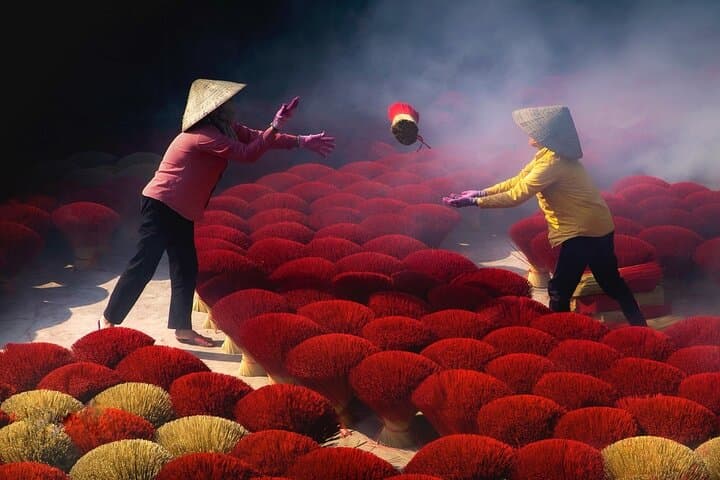
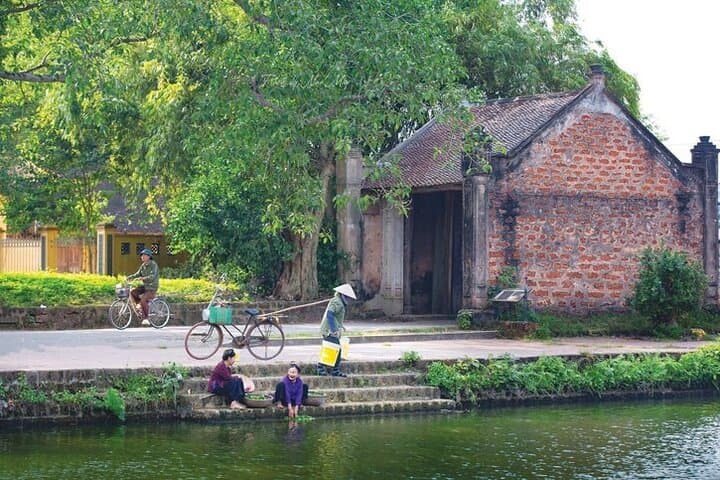
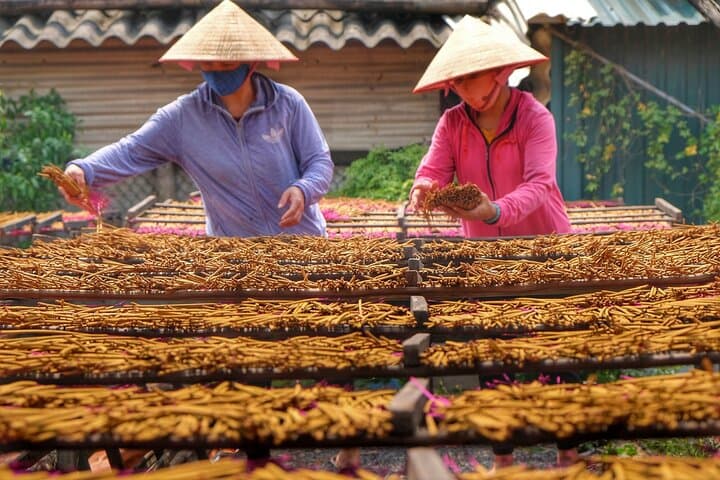
This private tour stitches three complementary traditions: Chuong Village’s age-old Non La (conical hat) workshops, Quang Phu Cau’s incense-makers whose process spans generations since the colonial era, and Duong Lam’s earthen houses and Mia Pagoda—the latter preserving some of northern Vietnam’s oldest carved statues. Geologically, you’re traveling the Red River Delta’s alluvial plain, a landscape shaped by silt and seasonal rivers that make the soil soft and the villages low-lying.
Culturally the route reads like a primer in craft continuity: simple materials—palm leaves, bamboo, sandalwood—are turned into objects that still mark identity and ritual. Guides explain social roles, local festivals, and how projects such as cottage-industry tourism support household incomes.
Practically: expect a 10–11 hour day with cycling for short village loops, multiple short walks on packed-earth lanes, and a village-style lunch included. Wear closed-toe shoes for dusty paths, bring sunscreen and insect repellent, and carry small cash for extra purchases. Plan for humidity in summer and occasional drizzle in winter; pacing is relaxed but the day is long—hydrate and set aside energy for the final pedal back to the coach.
easy.
10–11 hours.
Suitable for most fitness levels; you should be able to walk on uneven village lanes and handle short, flat cycling segments (a few kilometers total).
The tour runs about 10–11 hours (approximately 630 minutes) and includes hotel pickup/drop-off in Hanoi Old Quarter, guide, private transport, entrance fees, lunch, and three bottles of water per person.
Cycling is limited to short loops within Duong Lam and village lanes—basic cycling ability is recommended but routes are flat and relaxed.
Many villages allow close-up observation and some will let you try simple steps (hat weaving or incense rolling) under artisan supervision; verify with your guide for hands-on opportunities.
Yes—operators can handle vegetarian, vegan, and gluten-free requests if noted at booking; communicate any allergies ahead of time.
Duong Lam is one of Vietnam’s oldest preserved villages, with some houses and temples dating back several centuries; Quang Phu Cau’s incense craft developed into a regional trade during the French colonial period.
Tourism supports craft livelihoods but brings waste and traffic; bring reusable items, avoid plastic waste, and buy directly from artisans to support local economies.
Local Tours ASIA operates guided outdoor trips and adventures with an emphasis on safety, stewardship, and memorable experiences.
The day begins before the city stirs: your driver slips out of Hanoi’s Old Quarter and the road opens onto flat green fields. Wind pushes over the rice paddies and the villages ahead seem to live at a slower pulse—chimneys smoke, women weave hats under shady trees, and the narrow lanes invite you to dismount and walk.
The day begins before the city stirs: your driver slips out of Hanoi’s Old Quarter and the road opens onto flat green fields. Wind pushes over the rice paddies and the villages ahead seem to live at a slower pulse—chimneys smoke, women weave hats under shady trees, and the narrow lanes invite you to dismount and walk.
This private tour stitches three complementary traditions: Chuong Village’s age-old Non La (conical hat) workshops, Quang Phu Cau’s incense-makers whose process spans generations since the colonial era, and Duong Lam’s earthen houses and Mia Pagoda—the latter preserving some of northern Vietnam’s oldest carved statues. Geologically, you’re traveling the Red River Delta’s alluvial plain, a landscape shaped by silt and seasonal rivers that make the soil soft and the villages low-lying.
Culturally the route reads like a primer in craft continuity: simple materials—palm leaves, bamboo, sandalwood—are turned into objects that still mark identity and ritual. Guides explain social roles, local festivals, and how projects such as cottage-industry tourism support household incomes.
Practically: expect a 10–11 hour day with cycling for short village loops, multiple short walks on packed-earth lanes, and a village-style lunch included. Wear closed-toe shoes for dusty paths, bring sunscreen and insect repellent, and carry small cash for extra purchases. Plan for humidity in summer and occasional drizzle in winter; pacing is relaxed but the day is long—hydrate and set aside energy for the final pedal back to the coach.