THE ADVENTURE COLLECTIVE® · Independent discovery and booking for outdoor travel

Experience Hanoi by night on a vintage Vespa led mainly by female drivers—zipping through the Old Quarter to sample bun cha, banh cuon, seafood barbecue, and the city’s famed egg coffee. This four-hour ride combines local eateries, lakeside views, and a safety-first briefing for first-time pillion riders.
Experience Hanoi by night on a vintage Vespa led mainly by female drivers—zipping through the Old Quarter to sample bun cha, banh cuon, seafood barbecue, and the city’s famed egg coffee. This four-hour ride combines local eateries, lakeside views, and a safety-first briefing for first-time pillion riders.
Night falls and Hanoi recalibrates: streetlights flick on, vendors set out skewers, and a line of vintage Vespas hums against the backdrop of French boulevards and the Red River. Riders mount behind experienced, mainly female drivers who navigate narrow alleys, market crowds, and lakeside boulevards—turning the city’s nocturnal pulse into a moving food market.
Verified experiences and guided adventures in the surrounding area.
Operated by ASIA VESPA TOURS · Hanoi, Hanoi
Night falls and Hanoi recalibrates: streetlights flick on, vendors set out skewers, and a line of vintage Vespas hums against the backdrop of French boulevards and the Red River. Riders mount behind experienced, mainly female drivers who navigate narrow alleys, market crowds, and lakeside boulevards—turning the city’s nocturnal pulse into a moving food market.
Hanoi’s culinary identity grew along the Red River delta and through its Old Quarter lanes, where generations refined bánh cuốn, bún chả, and egg coffee in family-run stalls. The tour threads colonial-era avenues, the ceremonial routine at Ho Chi Minh Mausoleum, and the reflective surface of West Lake—each stop revealing layers of history, commerce, and community life rather than isolated attractions.
Geology is subtle here: the low-lying floodplain shapes streets and waterways, feeding the markets with river fish and seasonal greens, while urban ponds collect the city’s shifting weather patterns. Culture is immediate—vendors calling orders, cooks at open grills, elders debating over bowls of pho—and the ride amplifies those encounters by placing travelers shoulder-to-shoulder with locals.
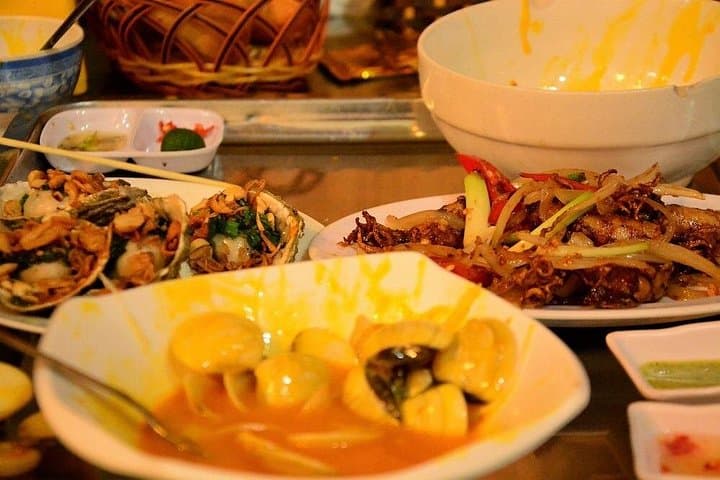
Practical guidance: the four-hour route includes a safety briefing and instruction for pillion riders before departures from Old Quarter hotels or the Opera House meeting point. Expect several short food stops—banh cuon, a 45-year-old bún chả joint, seafood barbecue, and a vintage coffee shop for egg coffee. Bring cash for small vendors, wear closed-toe shoes and a light jacket for lakeside breeze, and be prepared for traffic noise and upright seating on the Vespa. The experience favors curiosity, basic mobility, and a readiness to eat where locals do.
easy.
4 hours.
Suitable for most travelers with basic mobility; must be able to mount a scooter and sit upright for short periods.
No—professional drivers operate the scooters; participants ride as pillions after a short safety briefing.
Guides ask about allergies and preferences during the briefing and can avoid certain dishes, but advance notice is recommended.
Pick-up is offered for hotels in Hanoi’s Old Quarter or you can meet in front of the Hanoi Opera House as listed in the booking details.
The tour notes that infants must sit on laps and it is not recommended for pregnant travelers or those with serious back or heart conditions.
Hanoi’s street-food culture evolved from riverside markets and French colonial influences; many recipes are preserved in family-run eateries dating back several decades.
Support small, local vendors and avoid single-use plastics where possible; the tour encourages respectful photography and low-impact behavior in busy neighborhood streets.
ASIA VESPA TOURS operates guided outdoor trips and adventures with an emphasis on safety, stewardship, and memorable experiences.
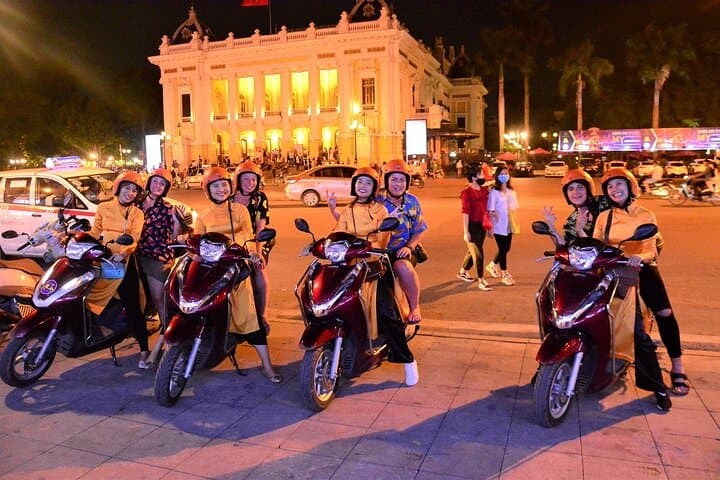
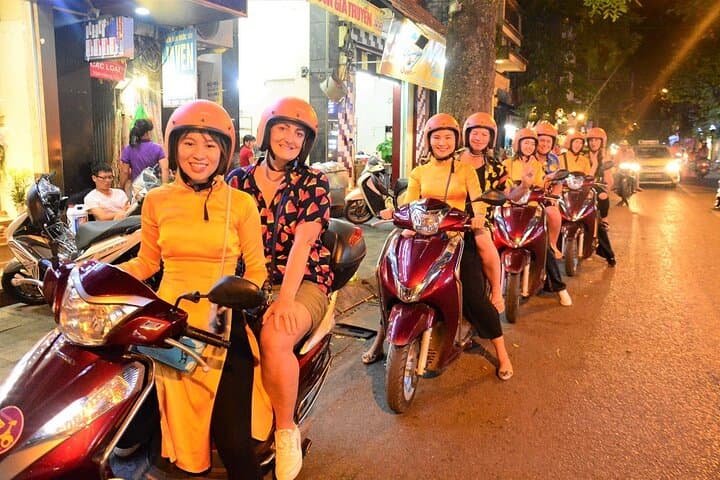
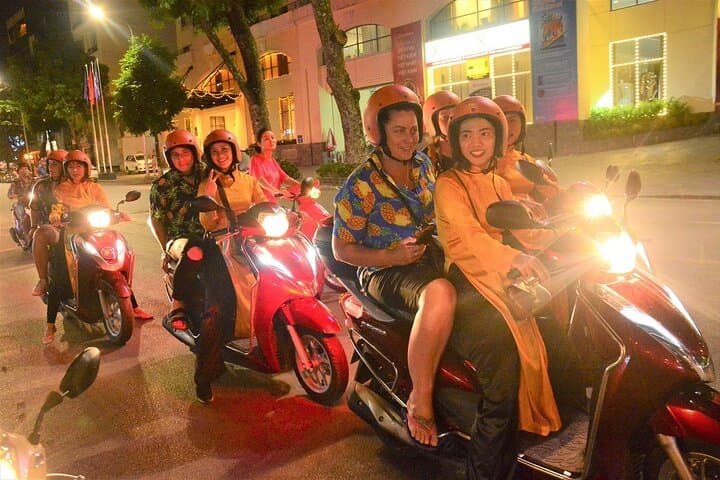
Night falls and Hanoi recalibrates: streetlights flick on, vendors set out skewers, and a line of vintage Vespas hums against the backdrop of French boulevards and the Red River. Riders mount behind experienced, mainly female drivers who navigate narrow alleys, market crowds, and lakeside boulevards—turning the city’s nocturnal pulse into a moving food market.
Night falls and Hanoi recalibrates: streetlights flick on, vendors set out skewers, and a line of vintage Vespas hums against the backdrop of French boulevards and the Red River. Riders mount behind experienced, mainly female drivers who navigate narrow alleys, market crowds, and lakeside boulevards—turning the city’s nocturnal pulse into a moving food market.
Hanoi’s culinary identity grew along the Red River delta and through its Old Quarter lanes, where generations refined bánh cuốn, bún chả, and egg coffee in family-run stalls. The tour threads colonial-era avenues, the ceremonial routine at Ho Chi Minh Mausoleum, and the reflective surface of West Lake—each stop revealing layers of history, commerce, and community life rather than isolated attractions.
Geology is subtle here: the low-lying floodplain shapes streets and waterways, feeding the markets with river fish and seasonal greens, while urban ponds collect the city’s shifting weather patterns. Culture is immediate—vendors calling orders, cooks at open grills, elders debating over bowls of pho—and the ride amplifies those encounters by placing travelers shoulder-to-shoulder with locals.
Practical guidance: the four-hour route includes a safety briefing and instruction for pillion riders before departures from Old Quarter hotels or the Opera House meeting point. Expect several short food stops—banh cuon, a 45-year-old bún chả joint, seafood barbecue, and a vintage coffee shop for egg coffee. Bring cash for small vendors, wear closed-toe shoes and a light jacket for lakeside breeze, and be prepared for traffic noise and upright seating on the Vespa. The experience favors curiosity, basic mobility, and a readiness to eat where locals do.