THE ADVENTURE COLLECTIVE® · Independent discovery and booking for outdoor travel

Spend a day leaving Hanoi to photograph incense workshops in Quang Phu Cau and drift through Tam Coc’s karst river caves on a sampan. This full-day trip pairs hands-on cultural insight with easy river paddling through ‘Ha Long Bay on land.’
Spend a day leaving Hanoi to photograph incense workshops in Quang Phu Cau and drift through Tam Coc’s karst river caves on a sampan. This full-day trip pairs hands-on cultural insight with easy river paddling through ‘Ha Long Bay on land.’
A low-slung minivan eases out of Hanoi’s Old Quarter before sunrise, river mist still clinging to the road. By midmorning the landscape has traded concrete for rice paddies and karst peaks: the sampan waits at Tam Coc, a narrow river threading under three cave mouths as a local rower begins to push the boat forward with practiced strokes. The air carries incense smoke layered over wet earth; later, in Quang Phu Cau, rows of red- and ochre-colored sticks dry in geometric stacks while artisans bend over trays, twisting fragrant strands by hand.
Verified experiences and guided adventures in the surrounding area.
Operated by Authentuc PU LUONG · Ninh Binh, Ninh Bình Province
A low-slung minivan eases out of Hanoi’s Old Quarter before sunrise, river mist still clinging to the road. By midmorning the landscape has traded concrete for rice paddies and karst peaks: the sampan waits at Tam Coc, a narrow river threading under three cave mouths as a local rower begins to push the boat forward with practiced strokes. The air carries incense smoke layered over wet earth; later, in Quang Phu Cau, rows of red- and ochre-colored sticks dry in geometric stacks while artisans bend over trays, twisting fragrant strands by hand.
The route stitches together two distinct cultural landscapes. Tam Coc sits in the same limestone system that shaped Hoa Lu, Vietnam’s 10th–11th century capital; the karst towers are carbonate rock sculpted by millennia of river erosion. Quang Phu Cau preserves a living craft: incense making that supplies temples and household altars across the region. Expect close-up views of stalactites in dim cave passages, low-slung sampans steered from the stern, and intimate encounters with village workshops.
Practically, this is a full-day excursion (approximately 9–10 hours round trip from Hanoi). There is minimal elevation gain—terrain is flat at both villages—but the boat requires balance getting on and off. Bring water, a sun hat, and a lightweight rain layer in monsoon months. Cash is useful for tips and small purchases in the villages.
Photography rewards patience: shoot against the low light in caves, frame workers with stacked incense, and time the return drive for golden-hour vistas over rice fields. The day pairs cultural insight with quiet river travel—an accessible, sensory-rich slice of northern Vietnam best done with a local guide who can translate history, technique, and temple lore.
easy.
9–10 hours.
Suitable for most fitness levels; minimal walking on flat terrain and brief balance for boarding boats.
Yes — pickup and drop-off in Hanoi’s Old Quarter are included; confirm your hotel name and address at booking.
The sampan portion typically lasts around 1–2 hours, part of a 3-hour visit to the Tam Coc area as noted in the itinerary.
Yes — lunch with traditional Vietnamese dishes is included; the operator can usually accommodate dietary needs if requested in advance.
The tour is rated easy overall, but boarding the sampan requires balance; infants must sit on laps and travelers with serious mobility or cardiovascular concerns should consult the operator.
Hoa Lu served as Vietnam’s capital in the 10th–11th centuries; the temples here recall that early independent Vietnamese polity amid the karst plain.
The karst-rice landscape is sensitive to litter and boat traffic; favor local guides who limit group sizes and avoid single-use plastics to reduce impact.
Authentuc PU LUONG operates guided outdoor trips and adventures with an emphasis on safety, stewardship, and memorable experiences.
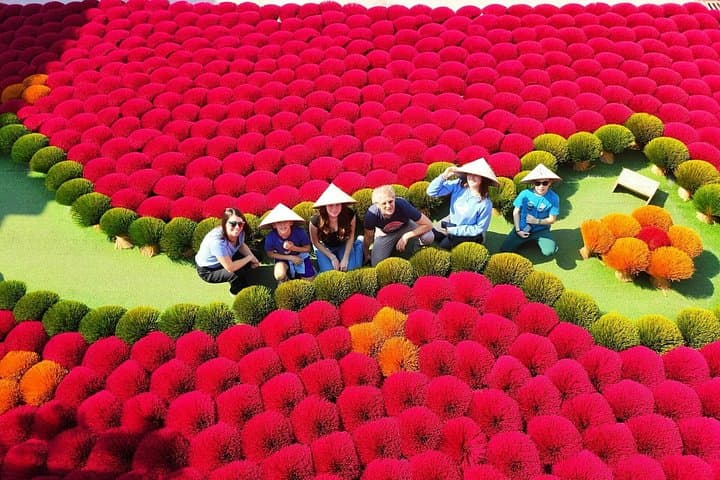
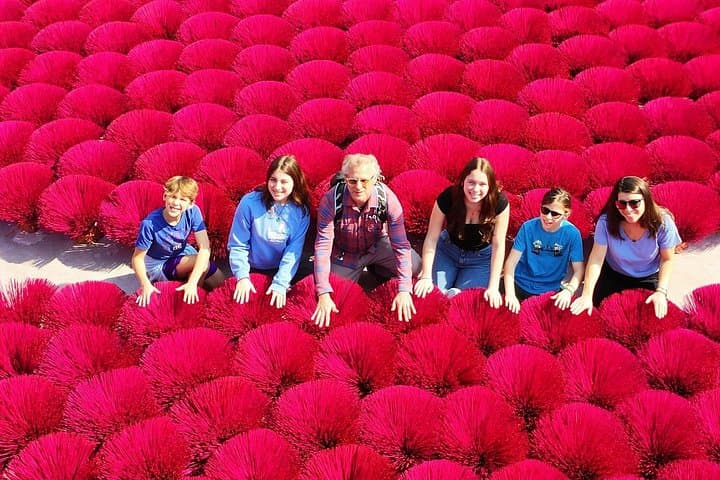
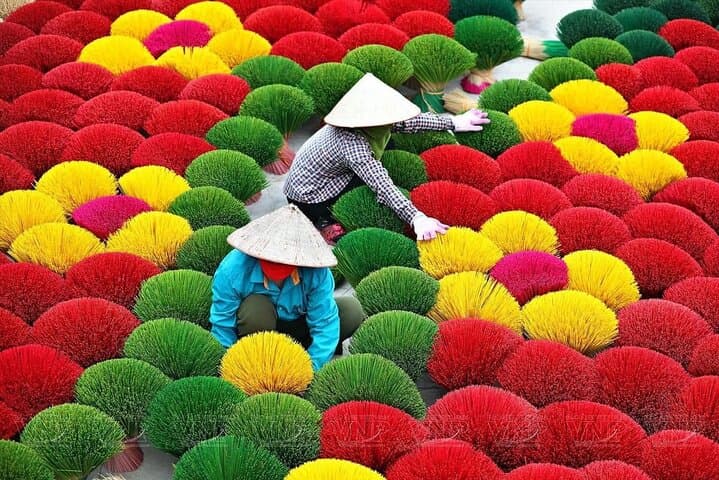
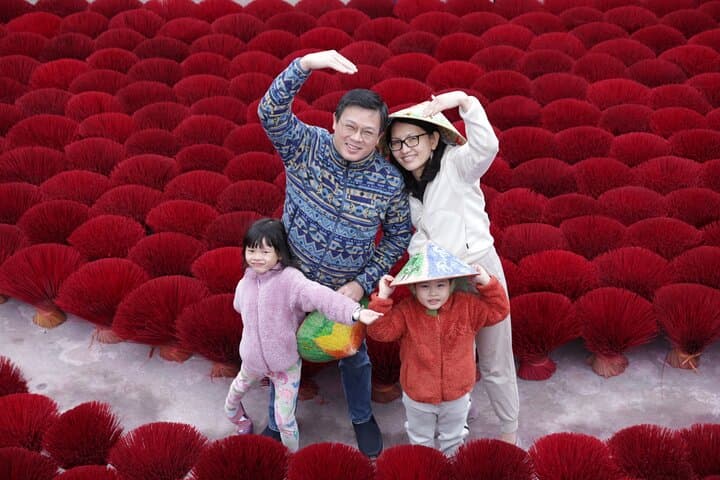
A low-slung minivan eases out of Hanoi’s Old Quarter before sunrise, river mist still clinging to the road. By midmorning the landscape has traded concrete for rice paddies and karst peaks: the sampan waits at Tam Coc, a narrow river threading under three cave mouths as a local rower begins to push the boat forward with practiced strokes. The air carries incense smoke layered over wet earth; later, in Quang Phu Cau, rows of red- and ochre-colored sticks dry in geometric stacks while artisans bend over trays, twisting fragrant strands by hand.
A low-slung minivan eases out of Hanoi’s Old Quarter before sunrise, river mist still clinging to the road. By midmorning the landscape has traded concrete for rice paddies and karst peaks: the sampan waits at Tam Coc, a narrow river threading under three cave mouths as a local rower begins to push the boat forward with practiced strokes. The air carries incense smoke layered over wet earth; later, in Quang Phu Cau, rows of red- and ochre-colored sticks dry in geometric stacks while artisans bend over trays, twisting fragrant strands by hand.
The route stitches together two distinct cultural landscapes. Tam Coc sits in the same limestone system that shaped Hoa Lu, Vietnam’s 10th–11th century capital; the karst towers are carbonate rock sculpted by millennia of river erosion. Quang Phu Cau preserves a living craft: incense making that supplies temples and household altars across the region. Expect close-up views of stalactites in dim cave passages, low-slung sampans steered from the stern, and intimate encounters with village workshops.
Practically, this is a full-day excursion (approximately 9–10 hours round trip from Hanoi). There is minimal elevation gain—terrain is flat at both villages—but the boat requires balance getting on and off. Bring water, a sun hat, and a lightweight rain layer in monsoon months. Cash is useful for tips and small purchases in the villages.
Photography rewards patience: shoot against the low light in caves, frame workers with stacked incense, and time the return drive for golden-hour vistas over rice fields. The day pairs cultural insight with quiet river travel—an accessible, sensory-rich slice of northern Vietnam best done with a local guide who can translate history, technique, and temple lore.