THE ADVENTURE COLLECTIVE® · Independent discovery and booking for outdoor travel

A single day that stitches northern Vietnam’s rural craft, limestone rivers and ancient capital into one route. Visit Quang Phu Cau’s incense workshops, glide through Tam Coc’s karst passages by sampan, and explore Hoa Lu’s compact imperial temples.
A single day that stitches northern Vietnam’s rural craft, limestone rivers and ancient capital into one route. Visit Quang Phu Cau’s incense workshops, glide through Tam Coc’s karst passages by sampan, and explore Hoa Lu’s compact imperial temples.
You step out of a cool limousine into a wash of color: rows of incense sticks propped like paintbrushes drying in the sun, smoke-scented hands deftly winding bamboo, and the steady rhythm of a village that has made scent for generations. That is Quang Phu Cau, a working craft village about 35 km from central Hanoi, and it’s the first act in a full-day route that folds culture into limestone country.
Verified experiences and guided adventures in the surrounding area.
Operated by Asia Group Tour · Ninh Binh, Ninh Binh Province
You step out of a cool limousine into a wash of color: rows of incense sticks propped like paintbrushes drying in the sun, smoke-scented hands deftly winding bamboo, and the steady rhythm of a village that has made scent for generations. That is Quang Phu Cau, a working craft village about 35 km from central Hanoi, and it’s the first act in a full-day route that folds culture into limestone country.
By midday the landscape shifts. Rice fields flatten to reveal a ribbon of water threading between karst towers—Tam Coc’s river dares you to slow down. A local rower pilots a flat sampan under low cave mouths; stalactites hang like old teeth and the boat nudges close to farmers tending water buffalo. Later, Hoa Lu’s compact temple complex explains why Vietnam’s early kings chose this low valley for a capital in the 10th–11th centuries: defensible hills, fertile plains and control of river routes.
Geology here is blunt and immediate—limestone worn into steep cliffs, caves and tunnels carved by slow underground waterways. Culture is hands-on: incense production, village households and temple rituals explained by guides who point out ritual objects and dynastic markers.
Practical side: this is a 10–11 hour day with door-to-door pickup from Hanoi Old Quarter, roughly 180 km round-trip. Expect long but comfortable drives, short walks on flat terrain and a seated, low-profile boat ride of about an hour. Bring sun protection, modest clothing for temple visits, cash for tips and a small daypack. The rhythm of the day alternates motion and stillness—plan for early pickup, a relaxed lunch, and pockets of photo time between sites.
easy.
10–11 hours.
Basic fitness for sitting during drives, short flat walks, and boarding low sampan boats; no steep hiking required.
Yes — the tour includes limousine pickup and drop-off from hotels in Hanoi Old Quarter.
The sampan segment typically lasts about 45–60 minutes depending on river conditions and stops at caves.
Yes — entrance fees and a Vietnamese lunch are included in the tour price as listed.
Yes — vegetarian, vegan and common dietary requests can be accommodated if communicated when booking.
Hoa Lu served as Vietnam’s capital in the 10th–11th centuries under the Đinh and Early Lê dynasties; its temples honor those early kings and strategic river routes.
Tourism pressure is rising—stick to paths, avoid littering in fields and caves, and tip local rowers and guides to support community livelihoods.
Asia Group Tour operates guided outdoor trips and adventures with an emphasis on safety, stewardship, and memorable experiences.

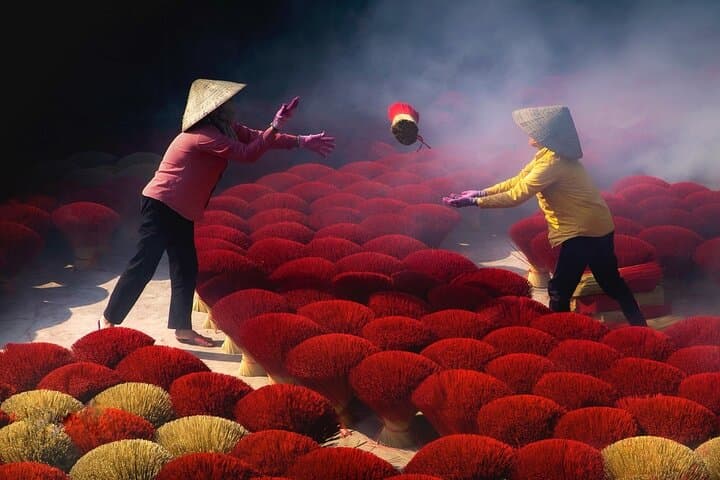
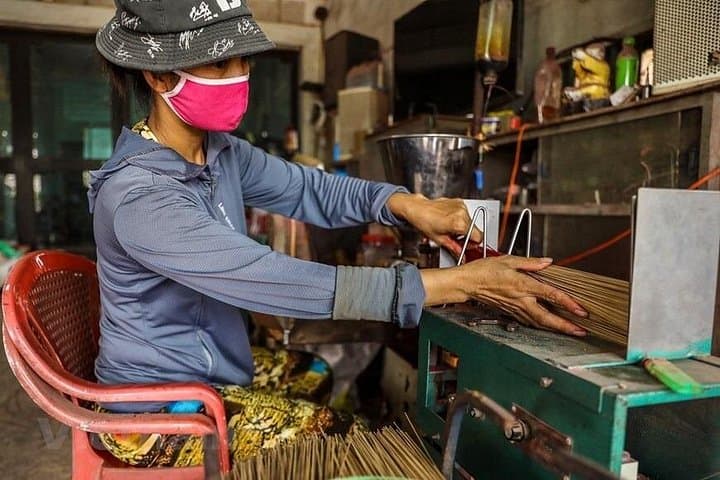
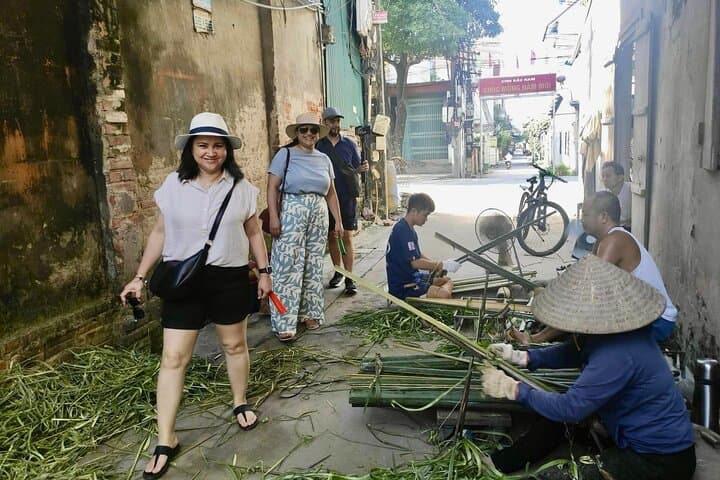
You step out of a cool limousine into a wash of color: rows of incense sticks propped like paintbrushes drying in the sun, smoke-scented hands deftly winding bamboo, and the steady rhythm of a village that has made scent for generations. That is Quang Phu Cau, a working craft village about 35 km from central Hanoi, and it’s the first act in a full-day route that folds culture into limestone country.
You step out of a cool limousine into a wash of color: rows of incense sticks propped like paintbrushes drying in the sun, smoke-scented hands deftly winding bamboo, and the steady rhythm of a village that has made scent for generations. That is Quang Phu Cau, a working craft village about 35 km from central Hanoi, and it’s the first act in a full-day route that folds culture into limestone country.
By midday the landscape shifts. Rice fields flatten to reveal a ribbon of water threading between karst towers—Tam Coc’s river dares you to slow down. A local rower pilots a flat sampan under low cave mouths; stalactites hang like old teeth and the boat nudges close to farmers tending water buffalo. Later, Hoa Lu’s compact temple complex explains why Vietnam’s early kings chose this low valley for a capital in the 10th–11th centuries: defensible hills, fertile plains and control of river routes.
Geology here is blunt and immediate—limestone worn into steep cliffs, caves and tunnels carved by slow underground waterways. Culture is hands-on: incense production, village households and temple rituals explained by guides who point out ritual objects and dynastic markers.
Practical side: this is a 10–11 hour day with door-to-door pickup from Hanoi Old Quarter, roughly 180 km round-trip. Expect long but comfortable drives, short walks on flat terrain and a seated, low-profile boat ride of about an hour. Bring sun protection, modest clothing for temple visits, cash for tips and a small daypack. The rhythm of the day alternates motion and stillness—plan for early pickup, a relaxed lunch, and pockets of photo time between sites.