THE ADVENTURE COLLECTIVE® · Independent discovery and booking for outdoor travel

Step out of Hanoi’s crowded streets into a day of hands-on craft: lacquer painting in Ha Thai, hat-making in Chuong, and colorful incense production in Quang Phu Cau. This full-day tour pairs cultural history with practical workshops and local hospitality.
Step out of Hanoi’s crowded streets into a day of hands-on craft: lacquer painting in Ha Thai, hat-making in Chuong, and colorful incense production in Quang Phu Cau. This full-day tour pairs cultural history with practical workshops and local hospitality.
Morning light filters through the streets of Hanoi’s Old Quarter as an air-conditioned van eases out of the city and into rice-paddy country. Within an hour the skyline thins and low-roofed workshops appear: lacquer smoke, bundles of brightly dyed incense, and rows of palm fibers waiting to become conical hats. The day unfolds at a steady rural pace—meet artisans, try traditional techniques, and trade the city’s cacophony for the measured rhythm of craft.
Verified experiences and guided adventures in the surrounding area.
Operated by Authentic Travel Ho Chi Minh · Hanoi, Hanoi
Morning light filters through the streets of Hanoi’s Old Quarter as an air-conditioned van eases out of the city and into rice-paddy country. Within an hour the skyline thins and low-roofed workshops appear: lacquer smoke, bundles of brightly dyed incense, and rows of palm fibers waiting to become conical hats. The day unfolds at a steady rural pace—meet artisans, try traditional techniques, and trade the city’s cacophony for the measured rhythm of craft.
These villages carry centuries of craft tradition. Lacquer painting in Ha Thai dates back to the 17th century and uses layered sap techniques that produce deep sheen; Chuong Village has been shaping conical hats for roughly 300 years, each hat reflecting local methods; Quang Phu Cau’s household factories still dye and bundle incense with family recipes passed down through generations.
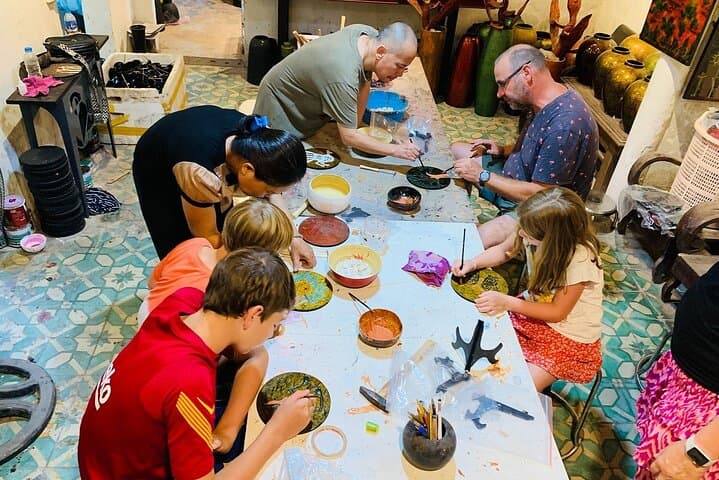
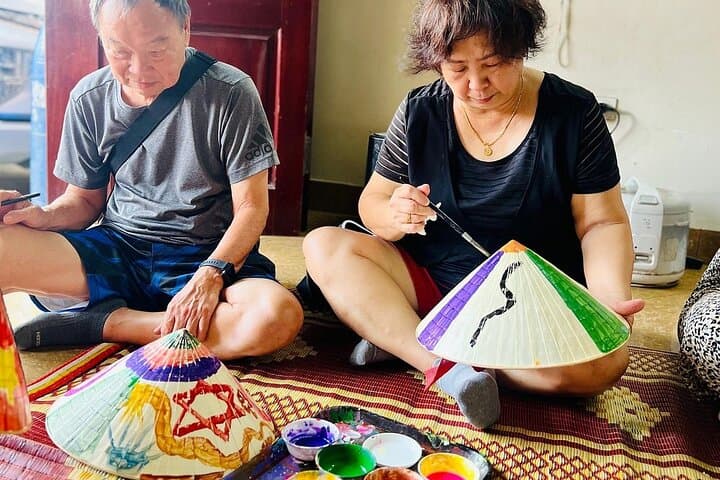
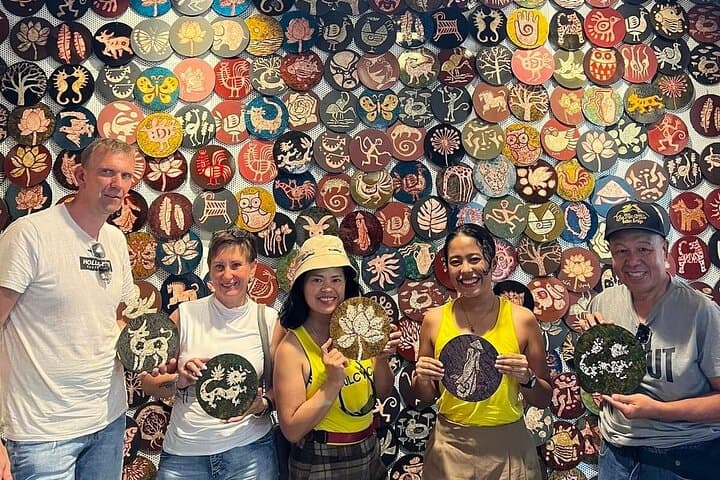
The terrain is flat and walkable—lanes, courtyard workshops, and farm-edge paths—so physical strain is minimal. Expect hands-on sessions: painting lacquer, dyeing incense sticks, and assembling or decorating a conical hat. Guides explain materials and the social history—how craft networks supported rural economies and families—and point out visual cues that mark higher-quality pieces.
Practical notes: the full loop is a roughly 9-hour door-to-door trip from Hanoi Old Quarter with multiple short walks and time indoors. Bring sun protection, small change for extra purchases, and a camera with permission before shooting inside homes. The experience is tactile and immediate: you leave with a hand-painted hat and a clearer sense of how traditional craft fits into contemporary Vietnamese life.
easy.
8–9 hours.
Suitable for most travelers; requires only short, flat walks and standing during workshops.
The full trip runs about 9 hours from pickup in Hanoi Old Quarter to return in the early evening.
Yes—air-conditioned pick-up and drop-off in the Old Quarter are included in the tour price.
Yes—the home-cooked lunch can accommodate vegetarian, vegan, and other dietary requirements if requested at booking.
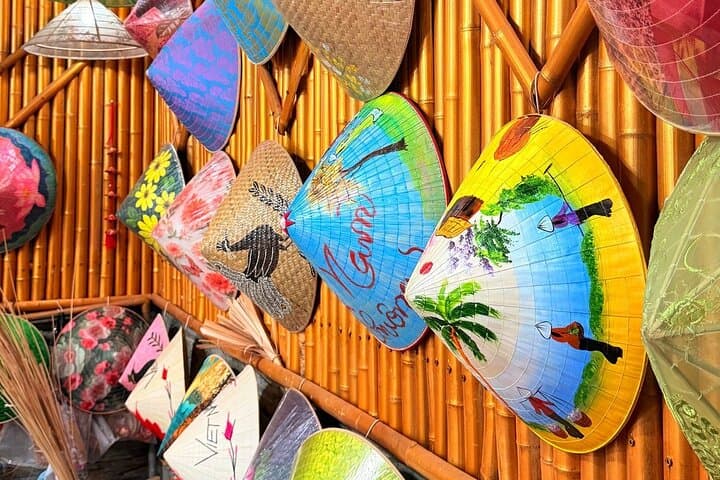
Yes—participants receive one conical hat and have guided opportunities to paint lacquer pieces and try hat-making techniques.
The villages visited have craft lineages going back centuries—lacquer techniques from the 1600s, conical hat traditions in Chuong for about 300 years, and household incense production rooted in rural market supply chains.
Tours support local livelihoods but can increase waste; bring reusable items, buy directly from artisans, and follow guides’ advice on respectful behavior to minimize impact.
Authentic Travel Ho Chi Minh operates guided outdoor trips and adventures with an emphasis on safety, stewardship, and memorable experiences.
Morning light filters through the streets of Hanoi’s Old Quarter as an air-conditioned van eases out of the city and into rice-paddy country. Within an hour the skyline thins and low-roofed workshops appear: lacquer smoke, bundles of brightly dyed incense, and rows of palm fibers waiting to become conical hats. The day unfolds at a steady rural pace—meet artisans, try traditional techniques, and trade the city’s cacophony for the measured rhythm of craft.
Morning light filters through the streets of Hanoi’s Old Quarter as an air-conditioned van eases out of the city and into rice-paddy country. Within an hour the skyline thins and low-roofed workshops appear: lacquer smoke, bundles of brightly dyed incense, and rows of palm fibers waiting to become conical hats. The day unfolds at a steady rural pace—meet artisans, try traditional techniques, and trade the city’s cacophony for the measured rhythm of craft.
These villages carry centuries of craft tradition. Lacquer painting in Ha Thai dates back to the 17th century and uses layered sap techniques that produce deep sheen; Chuong Village has been shaping conical hats for roughly 300 years, each hat reflecting local methods; Quang Phu Cau’s household factories still dye and bundle incense with family recipes passed down through generations.
The terrain is flat and walkable—lanes, courtyard workshops, and farm-edge paths—so physical strain is minimal. Expect hands-on sessions: painting lacquer, dyeing incense sticks, and assembling or decorating a conical hat. Guides explain materials and the social history—how craft networks supported rural economies and families—and point out visual cues that mark higher-quality pieces.
Practical notes: the full loop is a roughly 9-hour door-to-door trip from Hanoi Old Quarter with multiple short walks and time indoors. Bring sun protection, small change for extra purchases, and a camera with permission before shooting inside homes. The experience is tactile and immediate: you leave with a hand-painted hat and a clearer sense of how traditional craft fits into contemporary Vietnamese life.