THE ADVENTURE COLLECTIVE® · Independent discovery and booking for outdoor travel

Step outside Hanoi for a half-day visit to Chuong and Quang Phu Cau—two working craft villages where conical hats are formed by hand and incense is dyed and bundled. Expect hands-on crafting, vivid photography opportunities, and close encounters with rural artisans.
Step outside Hanoi for a half-day visit to Chuong and Quang Phu Cau—two working craft villages where conical hats are formed by hand and incense is dyed and bundled. Expect hands-on crafting, vivid photography opportunities, and close encounters with rural artisans.
Sunlight slants across narrow lanes as a minivan slips out of Hanoi’s Old Quarter and the city’s roar recedes.
Verified experiences and guided adventures in the surrounding area.
Operated by Authentic Travel VIETNAM · Hanoi, Hanoi
Sunlight slants across narrow lanes as a minivan slips out of Hanoi’s Old Quarter and the city’s roar recedes.
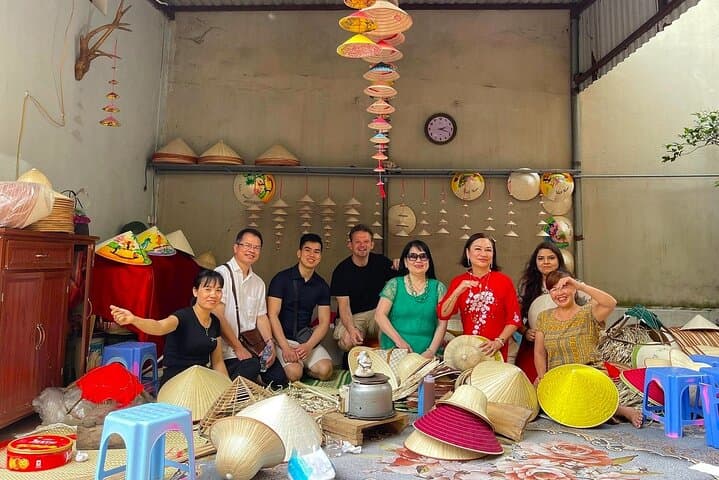
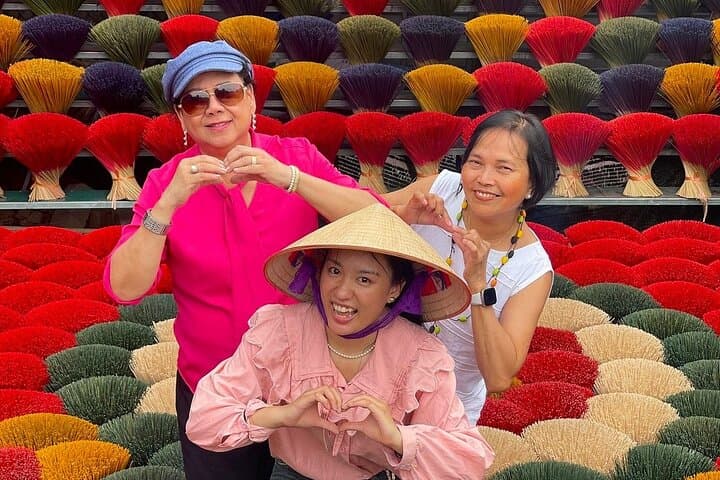
Within an hour the road opens to low houses, drying racks of dyed incense and the rhythmic tap of bamboo being shaped. At Chuong village, rows of artisans bend over palm and bamboo—hands moving with a practiced language—to form the iconic non la, Vietnam’s conical hat. Later, Quang Phu Cau spills color into the street: bundles of incense stacked like small, fragrant flags, dye vats steaming in the shade.
These villages preserve crafts that predate modern Hanoi—Chuong’s hat-making dates back roughly 300 years, while Quang Phu Cau evolved into an incense center over the last century, linking household industry to the region’s spiritual and domestic life. The soil here is Red River plain alluvium; modest fields and canals still shape village rhythms and supply raw materials.
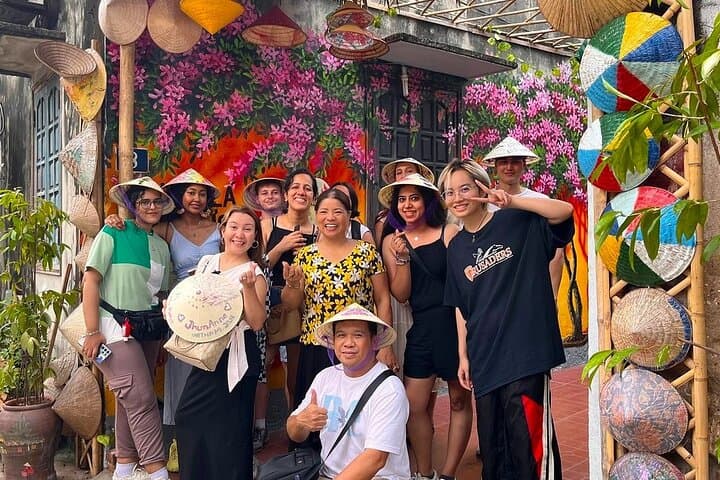
Expect hands-on time: painting and assembling a conical hat, watching dye processes, and touring a family-run incense workshop. The tour is low-impact but intimate—ask before photographing people and follow local etiquette.
Practical notes: bring cash for small purchases, wear comfortable shoes for uneven village paths, and plan snacks since lunch isn’t included. Morning pickups avoid peak heat; late afternoons cast warmer light for photos. The experience is as much about people and process as it is about souvenirs—leave space for curiosity and respect.
easy.
4–5 hours.
Suitable for most fitness levels; involves short walks on village lanes and standing during demonstrations.
Yes—pickup and drop-off in Hanoi Old Quarter are included; confirm your pickup point when you book.
No—this half-day tour does not include lunch, so eat beforehand or bring snacks.
Yes—one conical hat per person is included, and you’ll be able to take home your finished piece.
Yes—the tour is family-friendly and suitable for all ages, with hands-on activities tailored by guides.
Chuong’s hat-making tradition stretches back around 300 years; Quang Phu Cau developed as a community incense center over the past century, linking craft to local ritual and trade.
Small workshops are sensitive to resource use—supporting local artisans helps sustain craft economies; avoid plastic packaging and ask about dye practices to reduce chemical runoff.
Authentic Travel VIETNAM operates guided outdoor trips and adventures with an emphasis on safety, stewardship, and memorable experiences.

Sunlight slants across narrow lanes as a minivan slips out of Hanoi’s Old Quarter and the city’s roar recedes.
Sunlight slants across narrow lanes as a minivan slips out of Hanoi’s Old Quarter and the city’s roar recedes.
Within an hour the road opens to low houses, drying racks of dyed incense and the rhythmic tap of bamboo being shaped. At Chuong village, rows of artisans bend over palm and bamboo—hands moving with a practiced language—to form the iconic non la, Vietnam’s conical hat. Later, Quang Phu Cau spills color into the street: bundles of incense stacked like small, fragrant flags, dye vats steaming in the shade.
These villages preserve crafts that predate modern Hanoi—Chuong’s hat-making dates back roughly 300 years, while Quang Phu Cau evolved into an incense center over the last century, linking household industry to the region’s spiritual and domestic life. The soil here is Red River plain alluvium; modest fields and canals still shape village rhythms and supply raw materials.
Expect hands-on time: painting and assembling a conical hat, watching dye processes, and touring a family-run incense workshop. The tour is low-impact but intimate—ask before photographing people and follow local etiquette.
Practical notes: bring cash for small purchases, wear comfortable shoes for uneven village paths, and plan snacks since lunch isn’t included. Morning pickups avoid peak heat; late afternoons cast warmer light for photos. The experience is as much about people and process as it is about souvenirs—leave space for curiosity and respect.