THE ADVENTURE COLLECTIVE® · Independent discovery and booking for outdoor travel

Turn a Phuket morning into a hands-on culinary crash course—visit a local market, grind your own curry paste, then cook and eat classic Thai dishes. Perfect for travelers who want practical technique and local context in three hours.
Turn a Phuket morning into a hands-on culinary crash course—visit a local market, grind your own curry paste, then cook and eat classic Thai dishes. Perfect for travelers who want practical technique and local context in three hours.
Morning light hits an open-air market just off the Andaman coast; the air is dense with citrus, galangal and the sharp snap of fresh chilies. From that bustle you move into a clean, well-equipped kitchen where mortar and pestle replace shortcuts and instructors speak as much about ingredient substitutions as technique. The class unfolds like a short expedition into local food culture—market stalls leading to private cooking stations, hands-on chopping, pounding curry paste from scratch, then steaming mango sticky rice to finish.
Verified experiences and guided adventures in the surrounding area.
Operated by Phuket Thai Cooking Class by Chef VJ · Phuket, Phuket Province
Morning light hits an open-air market just off the Andaman coast; the air is dense with citrus, galangal and the sharp snap of fresh chilies. From that bustle you move into a clean, well-equipped kitchen where mortar and pestle replace shortcuts and instructors speak as much about ingredient substitutions as technique. The class unfolds like a short expedition into local food culture—market stalls leading to private cooking stations, hands-on chopping, pounding curry paste from scratch, then steaming mango sticky rice to finish.
Phuket’s cuisine reflects its island history: Malay and Chinese trade, tin-mining boomtowns, and abundant coastal seafood shaped flavors and recipes. Geology and climate—tropical soils and a coastline on the Andaman Sea—mean markets brim with tropical fruits, seafood, and herbs unique to southern Thailand. Expect instructors fluent in English who explain ingredient origins, proper knife technique, and menu variations like massaman, green curry or tom yum.
Practically, the workshop lasts about three hours. Classes with a market tour include a short walk through a local produce market—wear sun protection and bring a small bag for purchases. Kitchens provide ingredients and private stations; recipes are emailed afterward. Communicate allergies or dietary needs in advance; vegetarian, vegan and halal options are available. Free transfers operate from common beach areas on a minimum group size; check pickup details when booking.
This is a fast, tactile way to bring Thai technique home: arrive curious, dress for a kitchen and a short market stroll, and be ready to pound, taste and ask why a dish balances sweet, salty, sour and heat.
easy.
3 hours.
No special fitness required; you should be comfortable standing for 2–3 hours and walking short market distances.
Yes—vegetarian, vegan, gluten-free and halal classes are available; note your needs when booking so the chef can prepare alternatives.
Some class options include a market tour; others bring market produce to the kitchen—check the specific listing and confirm pickup and minimums for transfers.
Yes—recipes and secret tips are emailed after the class so you can recreate dishes at home.
Free round-trip transfers are offered from select beaches (Kata, Karon, Patong, Rawai, Nai Harn) for classes meeting minimum passenger requirements; confirm your pickup point at booking.
Phuket’s food culture evolved through Malay and Chinese trade and the island’s tin-mining era, producing a cuisine that blends coastal seafood with southern Thai spices.
Choose sustainable seafood when sampling local dishes and decline single-use plastics at markets; supporting small vendors helps preserve local food systems.
Phuket Thai Cooking Class by Chef VJ operates guided outdoor trips and adventures with an emphasis on safety, stewardship, and memorable experiences.
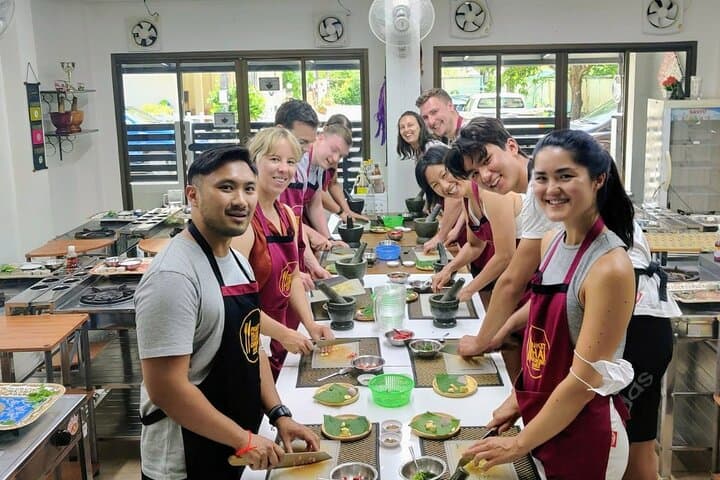
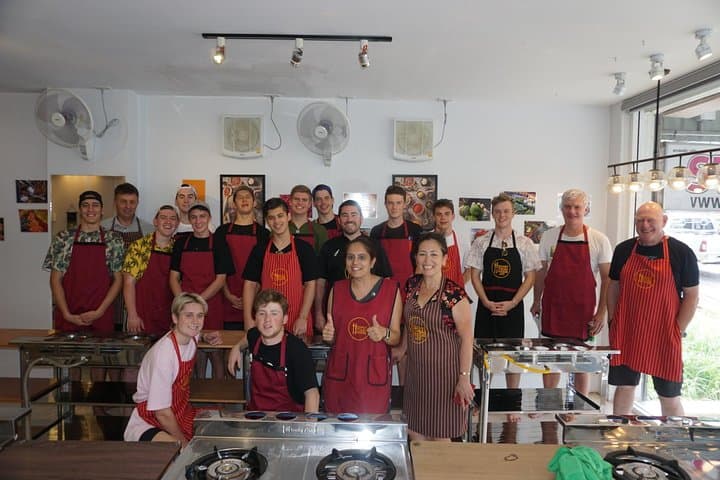
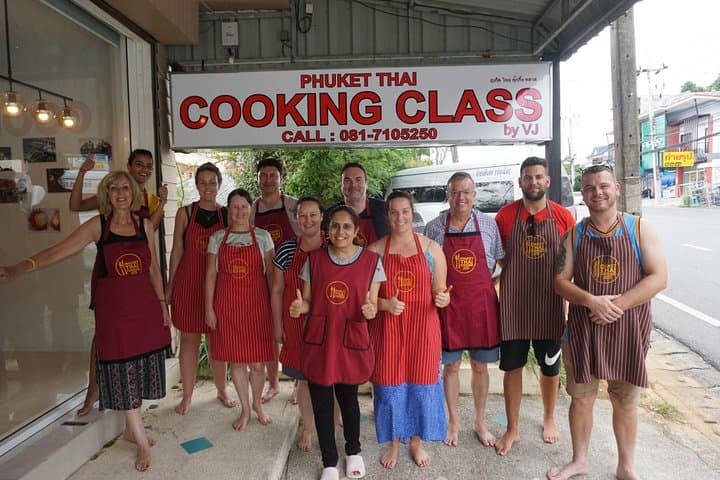
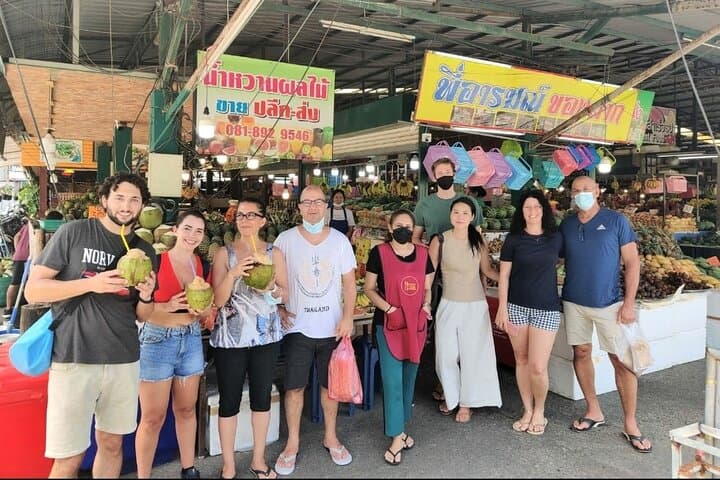
Morning light hits an open-air market just off the Andaman coast; the air is dense with citrus, galangal and the sharp snap of fresh chilies. From that bustle you move into a clean, well-equipped kitchen where mortar and pestle replace shortcuts and instructors speak as much about ingredient substitutions as technique. The class unfolds like a short expedition into local food culture—market stalls leading to private cooking stations, hands-on chopping, pounding curry paste from scratch, then steaming mango sticky rice to finish.
Morning light hits an open-air market just off the Andaman coast; the air is dense with citrus, galangal and the sharp snap of fresh chilies. From that bustle you move into a clean, well-equipped kitchen where mortar and pestle replace shortcuts and instructors speak as much about ingredient substitutions as technique. The class unfolds like a short expedition into local food culture—market stalls leading to private cooking stations, hands-on chopping, pounding curry paste from scratch, then steaming mango sticky rice to finish.
Phuket’s cuisine reflects its island history: Malay and Chinese trade, tin-mining boomtowns, and abundant coastal seafood shaped flavors and recipes. Geology and climate—tropical soils and a coastline on the Andaman Sea—mean markets brim with tropical fruits, seafood, and herbs unique to southern Thailand. Expect instructors fluent in English who explain ingredient origins, proper knife technique, and menu variations like massaman, green curry or tom yum.
Practically, the workshop lasts about three hours. Classes with a market tour include a short walk through a local produce market—wear sun protection and bring a small bag for purchases. Kitchens provide ingredients and private stations; recipes are emailed afterward. Communicate allergies or dietary needs in advance; vegetarian, vegan and halal options are available. Free transfers operate from common beach areas on a minimum group size; check pickup details when booking.
This is a fast, tactile way to bring Thai technique home: arrive curious, dress for a kitchen and a short market stroll, and be ready to pound, taste and ask why a dish balances sweet, salty, sour and heat.