THE ADVENTURE COLLECTIVE® · Independent discovery and booking for outdoor travel

Make takoyaki with a local host, toast with all-you-can-drink pours, then explore Shinjuku’s neon-lit alleys on an optional photo walk. This intimate home-party pairs hands-on cooking with a guided night stroll through Kabukicho, Golden Gai and Hanazono Shrine.
Make takoyaki with a local host, toast with all-you-can-drink pours, then explore Shinjuku’s neon-lit alleys on an optional photo walk. This intimate home-party pairs hands-on cooking with a guided night stroll through Kabukicho, Golden Gai and Hanazono Shrine.
Steam rises from a round iron griddle as batter hissingly meets hot oil — the host calls for a kanpai and chopsticks clink. Inside a real Tokyo home, strangers become collaborators, turning batter into browned takoyaki while laughter and the scent of dashi fill the room. After the cooking session, an optional guided walk threads through Shinjuku’s neon veins: Kabukicho’s garish lights, Golden Gai’s narrow alleys and lantern-glow, and the quiet gate of Hanazono Shrine.
Verified experiences and guided adventures in the surrounding area.
Operated by Isseki · Tokyo, Tokyo
Steam rises from a round iron griddle as batter hissingly meets hot oil — the host calls for a kanpai and chopsticks clink. Inside a real Tokyo home, strangers become collaborators, turning batter into browned takoyaki while laughter and the scent of dashi fill the room. After the cooking session, an optional guided walk threads through Shinjuku’s neon veins: Kabukicho’s garish lights, Golden Gai’s narrow alleys and lantern-glow, and the quiet gate of Hanazono Shrine.
Takoyaki started as Osaka street food in the 1930s but has become a pan-Japan comfort food; this home-party format reflects Japan’s communal dining culture. Shinjuku itself grew rapidly after World War II into Tokyo’s entertainment and transport hub, and pockets like Golden Gai preserve mid-century bar culture. Expect compact rooms, low tables and a relaxed, conversational pace — hosts supply ingredients and show technique, and octopus can be omitted on request.
Practical guidance: bring valid ID if you plan to drink — hosts serve beer, sake and sours to guests 20+. Arrive hungry and ready to stand or sit on cushions; small-group sizes keep the evening intimate. Public transit is the easiest way to reach the meeting area; trains run late but check the last train times if you plan to continue afterward. Notify hosts ahead of time about allergies or dietary restrictions to ensure substitutions. Finally, carry a small tote for souvenirs and a portable charger for low-light photos — Shinjuku’s neon patrol will tempt long exposures.
easy.
2–3 hours.
Minimal fitness required — suitable for most travelers who can stand for short periods and climb a few stairs
Yes, traditional takoyaki includes octopus but hosts can prepare alternatives without octopus if requested in advance.
Yes — the price includes all-you-can-drink for guests aged 20 and over; bring valid ID to drink legally.
Meeting is in Shinjuku; precise meeting instructions are provided after booking and the area is easily reached by JR and subway lines.
Yes — the host welcomes families and can accommodate non-alcoholic drink options; check stroller accessibility when booking.
Shinjuku evolved from a postwar entertainment district into Tokyo’s major transit and nightlife center; Golden Gai retains tiny bars from the Showa period that resist modern redevelopment.
Small-group home parties reduce waste compared with large tourist venues — guests are encouraged to use public transit and minimize single-use plastics during the evening.
Isseki operates guided outdoor trips and adventures with an emphasis on safety, stewardship, and memorable experiences.
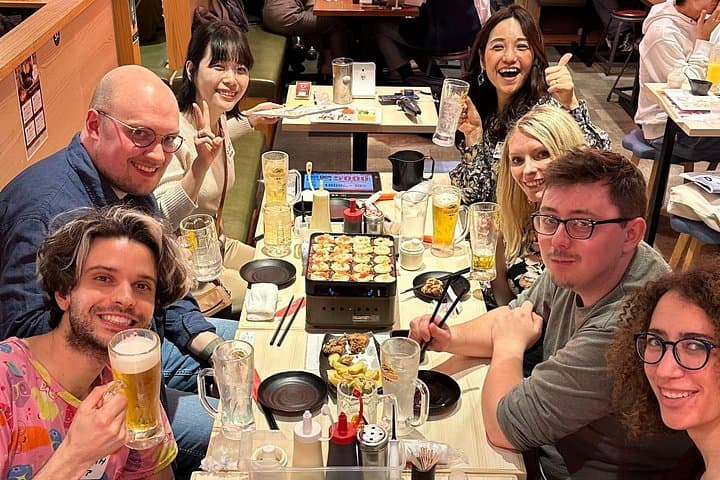

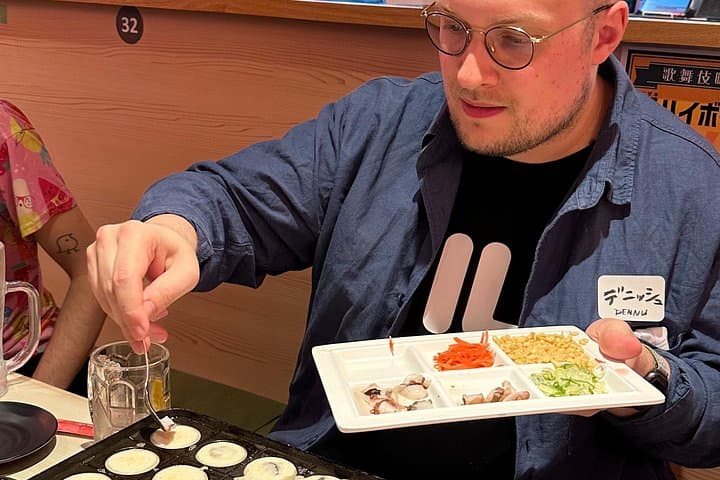
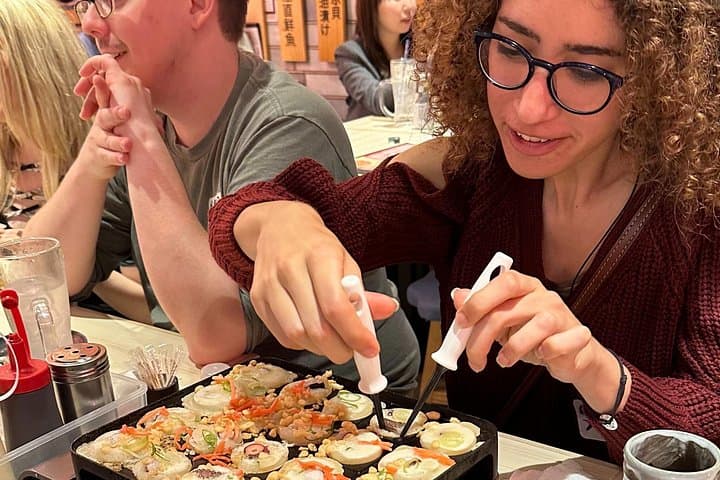
Steam rises from a round iron griddle as batter hissingly meets hot oil — the host calls for a kanpai and chopsticks clink. Inside a real Tokyo home, strangers become collaborators, turning batter into browned takoyaki while laughter and the scent of dashi fill the room. After the cooking session, an optional guided walk threads through Shinjuku’s neon veins: Kabukicho’s garish lights, Golden Gai’s narrow alleys and lantern-glow, and the quiet gate of Hanazono Shrine.
Steam rises from a round iron griddle as batter hissingly meets hot oil — the host calls for a kanpai and chopsticks clink. Inside a real Tokyo home, strangers become collaborators, turning batter into browned takoyaki while laughter and the scent of dashi fill the room. After the cooking session, an optional guided walk threads through Shinjuku’s neon veins: Kabukicho’s garish lights, Golden Gai’s narrow alleys and lantern-glow, and the quiet gate of Hanazono Shrine.
Takoyaki started as Osaka street food in the 1930s but has become a pan-Japan comfort food; this home-party format reflects Japan’s communal dining culture. Shinjuku itself grew rapidly after World War II into Tokyo’s entertainment and transport hub, and pockets like Golden Gai preserve mid-century bar culture. Expect compact rooms, low tables and a relaxed, conversational pace — hosts supply ingredients and show technique, and octopus can be omitted on request.
Practical guidance: bring valid ID if you plan to drink — hosts serve beer, sake and sours to guests 20+. Arrive hungry and ready to stand or sit on cushions; small-group sizes keep the evening intimate. Public transit is the easiest way to reach the meeting area; trains run late but check the last train times if you plan to continue afterward. Notify hosts ahead of time about allergies or dietary restrictions to ensure substitutions. Finally, carry a small tote for souvenirs and a portable charger for low-light photos — Shinjuku’s neon patrol will tempt long exposures.