THE ADVENTURE COLLECTIVE® · Independent discovery and booking for outdoor travel

Train with real sumo wrestlers in central Shinjuku: a 90-minute, beginner-friendly workshop that mixes technique, ritual, and a live bout. Learn shiko, mawashi etiquette, and sumo history in a compact class steps from Tokyo transit.
Train with real sumo wrestlers in central Shinjuku: a 90-minute, beginner-friendly workshop that mixes technique, ritual, and a live bout. Learn shiko, mawashi etiquette, and sumo history in a compact class steps from Tokyo transit.
You step off the neon streets of Shinjuku and into a room that hums differently — the mat underfoot, the low focus of athletes adjusting belts, the coach's measured voice cutting through the chatter. The city outside presses in with glass and traffic; inside, the rhythm is physical and ancient as you learn to stamp, slide, and grapple with grown professionals who have carried Japan's ritual sport into an approachable workshop.
Verified experiences and guided adventures in the surrounding area.
Operated by Amita Sumo Dojo / Authentic Sumo Experience in Tokyo produced by "Sanctuary" Sumo Director · Tokyo, Tokyo
You step off the neon streets of Shinjuku and into a room that hums differently — the mat underfoot, the low focus of athletes adjusting belts, the coach's measured voice cutting through the chatter. The city outside presses in with glass and traffic; inside, the rhythm is physical and ancient as you learn to stamp, slide, and grapple with grown professionals who have carried Japan's ritual sport into an approachable workshop.
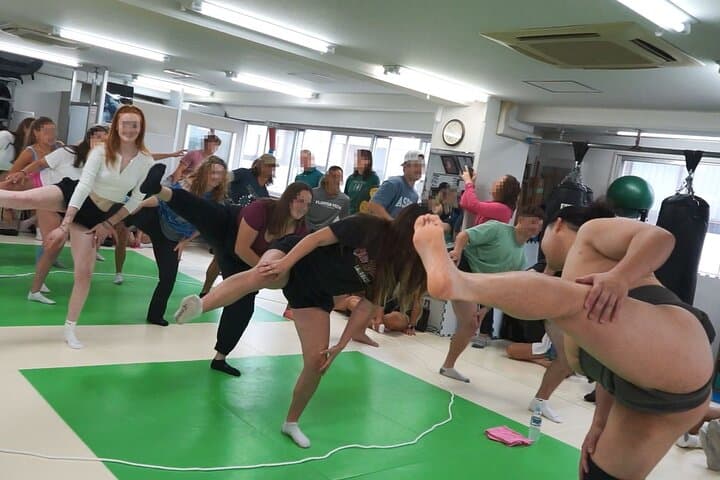
Sumo traces back more than a millennium as a Shinto ritual and court spectacle; today it sits at the intersection of sport, ceremony, and popular culture. In this Shinjuku class you'll practice shiko (leg stamps), suwari-waza (squat work), and the etiquette of the dohyo — though on a mat rather than a raised ring — and hear short histories from coaches who bridge tradition and modern training.
Practical guidance is straightforward. Sessions run about 90 minutes and welcome all fitness levels and ages (participants under certain ages may observe). Wear tight-fitting athletic leggings or shorts under the optional mawashi provided; remove jewelry and glasses. Bring a towel and change of clothes — showers are available for a small fee. Trains to Shinjuku are frequent; plan to arrive 10–15 minutes early. Staff emphasize safety: avoid participation if you have heart, spine, or pregnancy concerns.
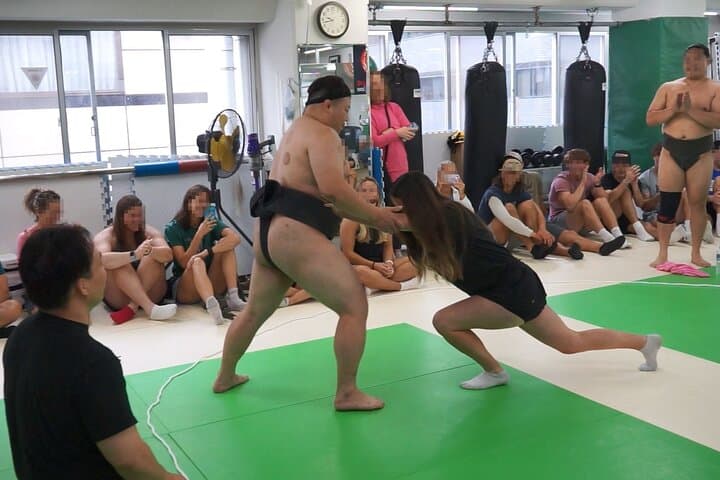
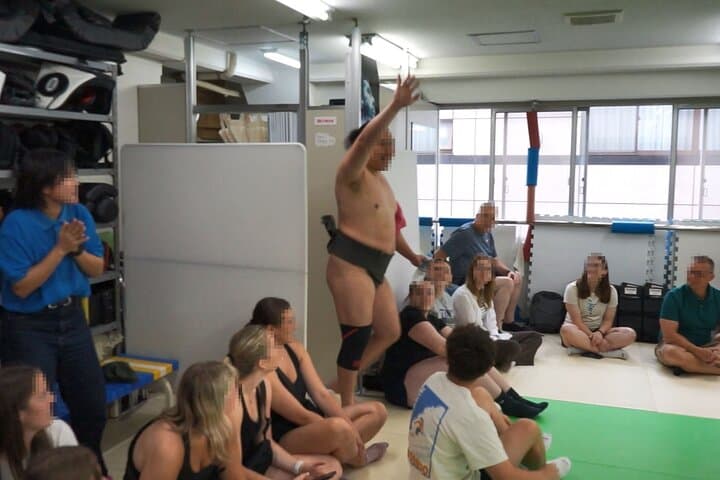
The experience blends technique, cultural context, and a live bout with coaches — a compact, social way to engage with one of Japan's most iconic sports while in the heart of Tokyo.
easy.
1–1.5 hours.
Suitable for beginners and casual fitness levels; expect short bursts of strength and balance work.
Yes—sessions are designed to welcome first-timers with progressive drills and hands-on coaching; no prior sumo experience required.
Children aged 5 and older may participate (book per child); under-5s may observe free of charge—check the operator’s age rules before booking.
No—the operator provides mawashi and pants if needed; wear tight athletic clothing underneath for comfort and modesty.
Full refund is available if you cancel at least 24 hours before the scheduled start time; within 24 hours bookings are non-refundable.
Sumo evolved from Shinto rites and imperial court contests into Japan’s national sport; many rituals in the class echo those ceremonial origins.
Respect for cultural heritage is key — follow etiquette around ritual gestures and photography; the operator limits disruptive filming to protect participants and tradition.
Amita Sumo Dojo / Authentic Sumo Experience in Tokyo produced by "Sanctuary" Sumo Director operates guided outdoor trips and adventures with an emphasis on safety, stewardship, and memorable experiences.
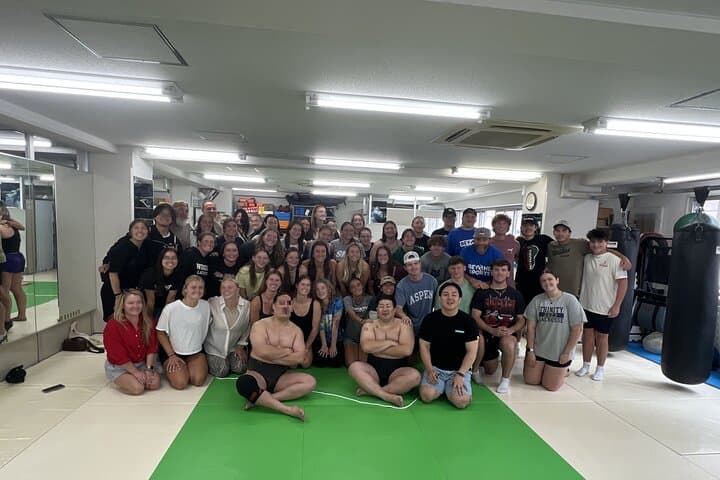
You step off the neon streets of Shinjuku and into a room that hums differently — the mat underfoot, the low focus of athletes adjusting belts, the coach's measured voice cutting through the chatter. The city outside presses in with glass and traffic; inside, the rhythm is physical and ancient as you learn to stamp, slide, and grapple with grown professionals who have carried Japan's ritual sport into an approachable workshop.
You step off the neon streets of Shinjuku and into a room that hums differently — the mat underfoot, the low focus of athletes adjusting belts, the coach's measured voice cutting through the chatter. The city outside presses in with glass and traffic; inside, the rhythm is physical and ancient as you learn to stamp, slide, and grapple with grown professionals who have carried Japan's ritual sport into an approachable workshop.
Sumo traces back more than a millennium as a Shinto ritual and court spectacle; today it sits at the intersection of sport, ceremony, and popular culture. In this Shinjuku class you'll practice shiko (leg stamps), suwari-waza (squat work), and the etiquette of the dohyo — though on a mat rather than a raised ring — and hear short histories from coaches who bridge tradition and modern training.
Practical guidance is straightforward. Sessions run about 90 minutes and welcome all fitness levels and ages (participants under certain ages may observe). Wear tight-fitting athletic leggings or shorts under the optional mawashi provided; remove jewelry and glasses. Bring a towel and change of clothes — showers are available for a small fee. Trains to Shinjuku are frequent; plan to arrive 10–15 minutes early. Staff emphasize safety: avoid participation if you have heart, spine, or pregnancy concerns.
The experience blends technique, cultural context, and a live bout with coaches — a compact, social way to engage with one of Japan's most iconic sports while in the heart of Tokyo.