THE ADVENTURE COLLECTIVE® · Independent discovery and booking for outdoor travel

Train Yon no Kata under an 8th-degree Shito-ryu master in a compact Kobe dojo. This two-hour hands-on lesson blends precise technical coaching with cultural context—and includes uniform rental and a certificate scroll.
Train Yon no Kata under an 8th-degree Shito-ryu master in a compact Kobe dojo. This two-hour hands-on lesson blends precise technical coaching with cultural context—and includes uniform rental and a certificate scroll.
You step off the street and the city noise thins—the dojo’s wooden floor greets your feet, the polished boards warm underfoot and the master’s quiet countenance frames the room. For two hours in central Kobe you move through Yon no Kata, a four-direction form that trains blocking, striking and spatial awareness; the rhythm is exact, the breath deliberate.
Verified experiences and guided adventures in the surrounding area.
Operated by 神戸武術研究所 律芯館 · Kobe, Hyogo
You step off the street and the city noise thins—the dojo’s wooden floor greets your feet, the polished boards warm underfoot and the master’s quiet countenance frames the room. For two hours in central Kobe you move through Yon no Kata, a four-direction form that trains blocking, striking and spatial awareness; the rhythm is exact, the breath deliberate.
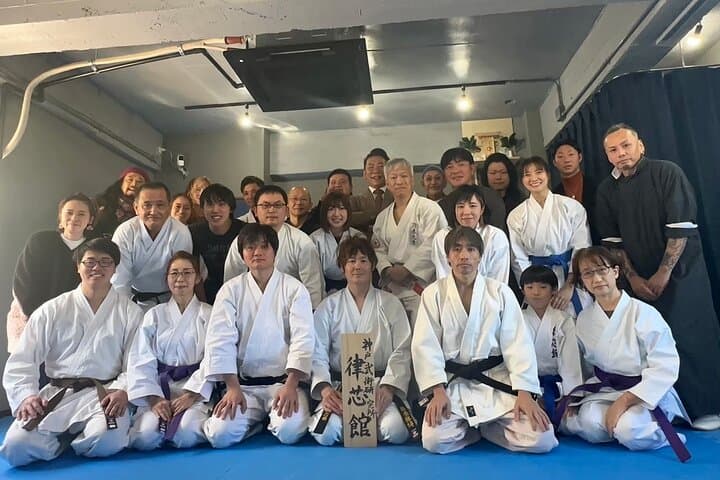
Shito-ryu traces to Kenwa Mabuni in the early 20th century and blends hard and soft techniques from Okinawan traditions. Practicing this kata in Kobe connects modern urban life to that lineage: a port city shaped by international exchange and a local culture that respects ritual and precision. Expect a compact class in a small, traditional dojo—uniform rental and a certificate scroll are included. The instructor is an 8th-degree master; his English is limited, so translation tools or an interpreter help deepen instruction.
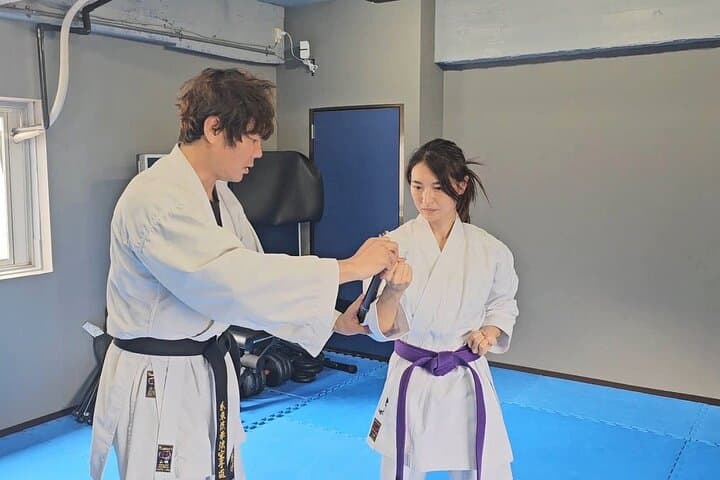
Practically: arrive 10–15 minutes early to change into a gi or workout clothes, remove shoes, and warm up. The lesson accommodates all levels—beginners receive foundational breakdowns while experienced practitioners receive technical corrections. It’s low-impact but demands attention to posture and core engagement; participants with spinal, heart, or pregnancy concerns should avoid the session. Public transit serves the neighborhood; bring water (bottled water is provided) and a small towel.
This lesson is both cultural immersion and focused training: you’ll leave with a clearer sense of kata mechanics, a hand-written scroll, and a practiced sequence you can refine after you return home.
easy.
2 hours.
Suitable for most fitness levels; should be able to stand, move, and perform basic bodyweight movements for short periods.
No—this lesson is tailored to all levels; beginners learn fundamentals while experienced students get technical refinement.
Not recommended for pregnant travelers or those with spinal or serious cardiovascular conditions; disclose issues when booking.
You receive a scroll certifying completion of Yon no Kata from the instructor; it’s a memento rather than a formal belt promotion.
The dojo is accessible by Kobe public transit—book confirmation includes location details; arrive early to change and warm up.
Shito-ryu was systematized by Kenwa Mabuni in the early 20th century, combining Okinawan karate traditions; practicing kata here links that lineage to modern Japanese dojo culture.
Dojo activity has minimal environmental impact—respect facilities, use public transit, and support local cultural preservation by following etiquette and leaving spaces as found.
神戸武術研究所 律芯館 operates guided outdoor trips and adventures with an emphasis on safety, stewardship, and memorable experiences.
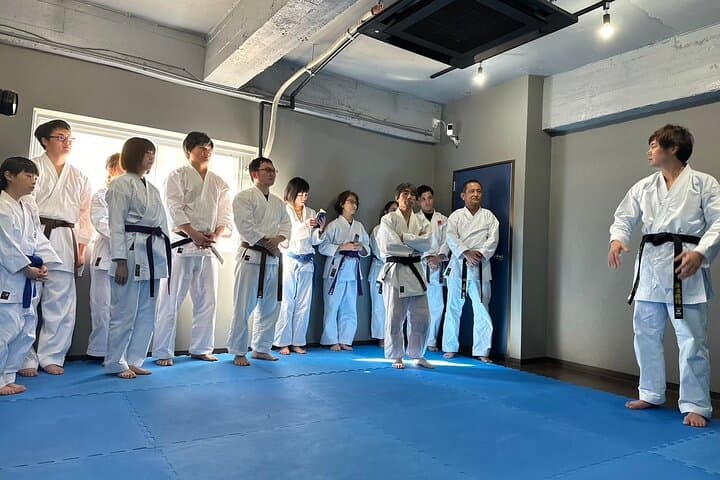
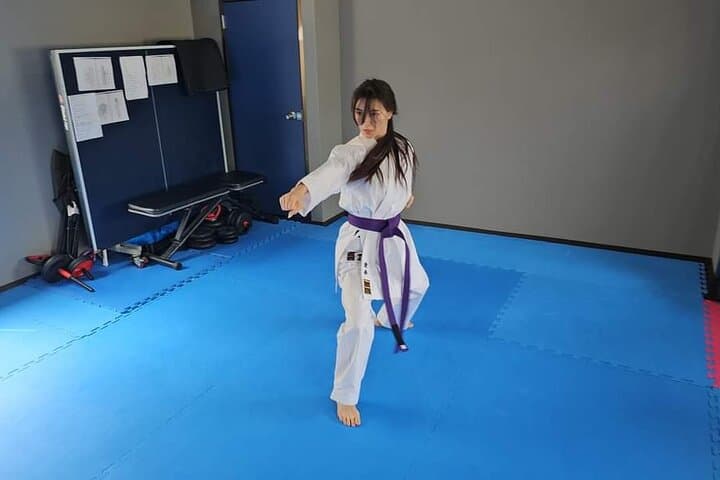
You step off the street and the city noise thins—the dojo’s wooden floor greets your feet, the polished boards warm underfoot and the master’s quiet countenance frames the room. For two hours in central Kobe you move through Yon no Kata, a four-direction form that trains blocking, striking and spatial awareness; the rhythm is exact, the breath deliberate.
You step off the street and the city noise thins—the dojo’s wooden floor greets your feet, the polished boards warm underfoot and the master’s quiet countenance frames the room. For two hours in central Kobe you move through Yon no Kata, a four-direction form that trains blocking, striking and spatial awareness; the rhythm is exact, the breath deliberate.
Shito-ryu traces to Kenwa Mabuni in the early 20th century and blends hard and soft techniques from Okinawan traditions. Practicing this kata in Kobe connects modern urban life to that lineage: a port city shaped by international exchange and a local culture that respects ritual and precision. Expect a compact class in a small, traditional dojo—uniform rental and a certificate scroll are included. The instructor is an 8th-degree master; his English is limited, so translation tools or an interpreter help deepen instruction.
Practically: arrive 10–15 minutes early to change into a gi or workout clothes, remove shoes, and warm up. The lesson accommodates all levels—beginners receive foundational breakdowns while experienced practitioners receive technical corrections. It’s low-impact but demands attention to posture and core engagement; participants with spinal, heart, or pregnancy concerns should avoid the session. Public transit serves the neighborhood; bring water (bottled water is provided) and a small towel.
This lesson is both cultural immersion and focused training: you’ll leave with a clearer sense of kata mechanics, a hand-written scroll, and a practiced sequence you can refine after you return home.